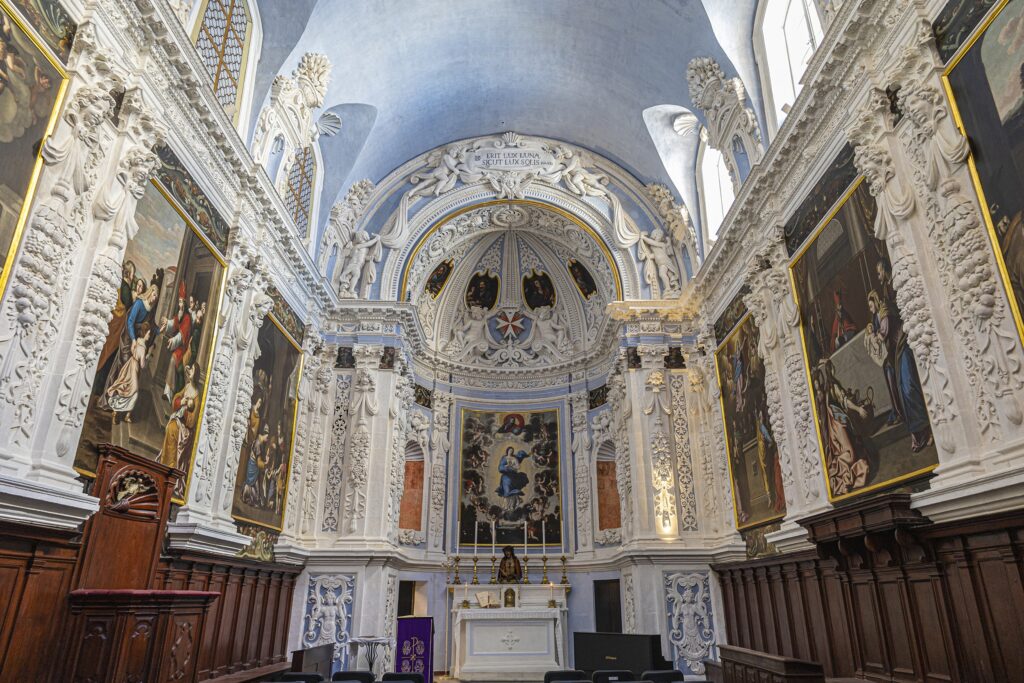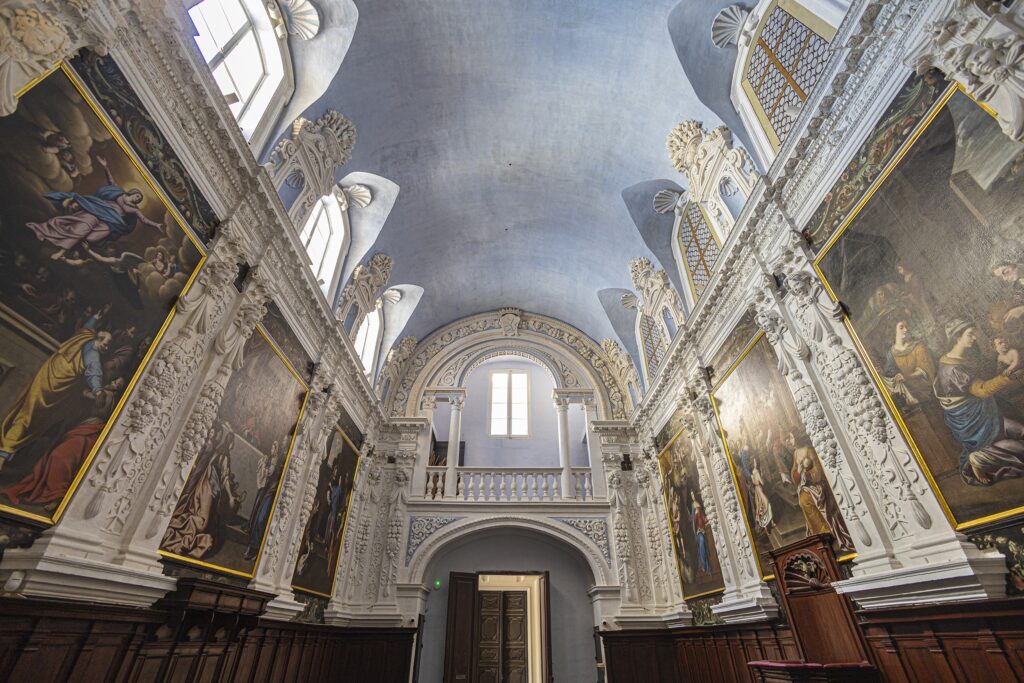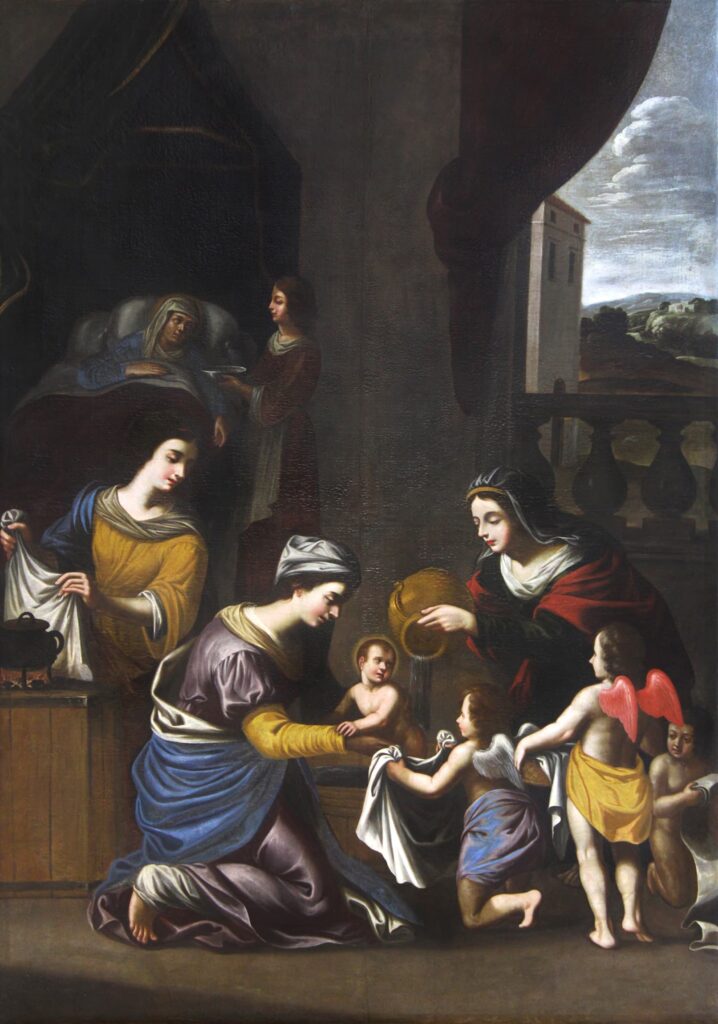
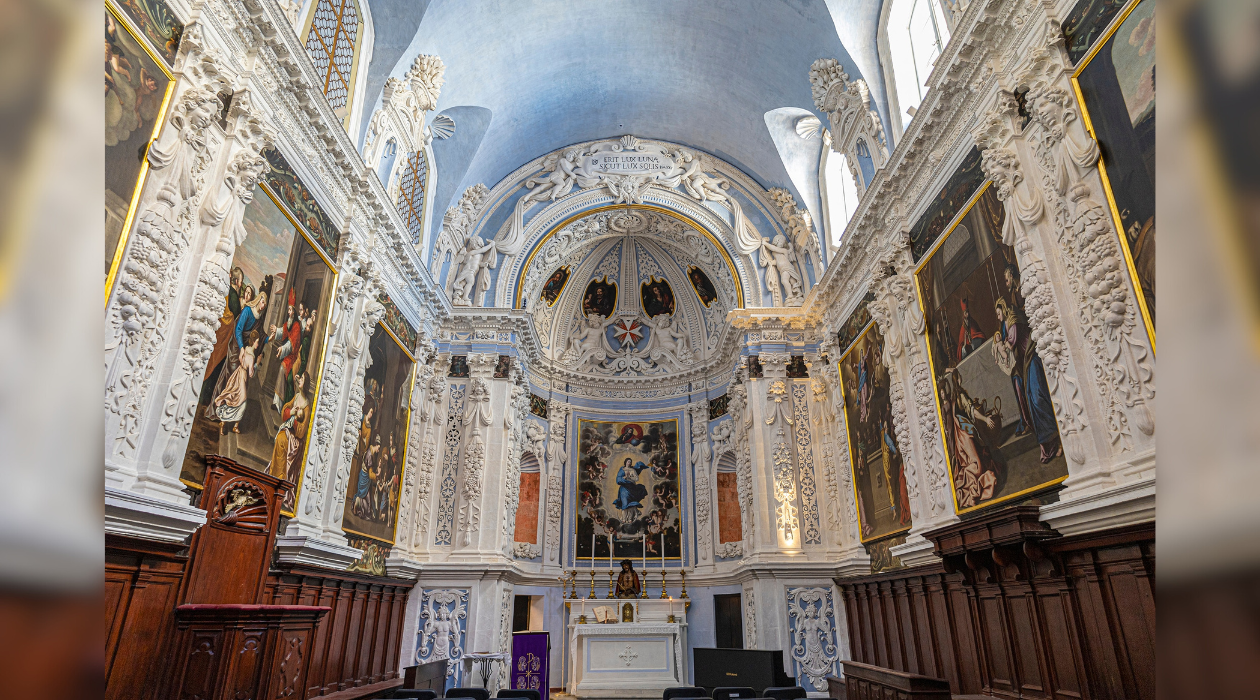
The Jesuit Church has a cruciform plan, with a central nave and four interconnected bays that house seven side chapels. On the Archbishop Street side, the central bay was designated as a lateral entrance instead of an eighth side chapel. At this lateral entrance are two oratories, one dedicated to the Immaculate Conception and the other to Saint Honoria, which is why it became best known as the Oratory of the Onorati.
A Baroque Masterpiece and the Life of the Virgin
Also known as the Church of the Circumcision of Christ, this temple is one of Valletta’s most important architectural gems. Its origins date back to the early 17th century, with a design by the Jesuit Giuseppe Valeriano, but it was the architect Francesco Buonamici who, around 1637, transformed its façade and interior into the Baroque masterpiece we admire today. The façade stands out for its exquisite carved stone decoration, featuring cherubic heads, floral motifs, scallop shell–shaped windows, and elegant seraphs on the volutes—elements that defined the visual language of the period in Malta.
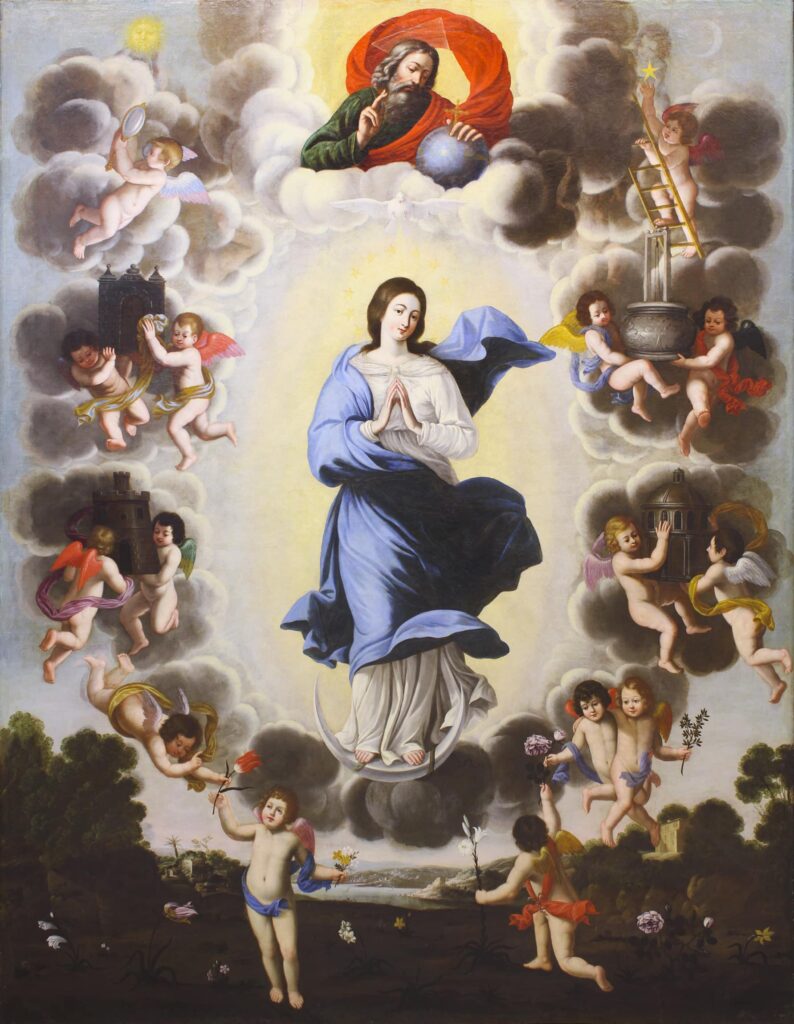
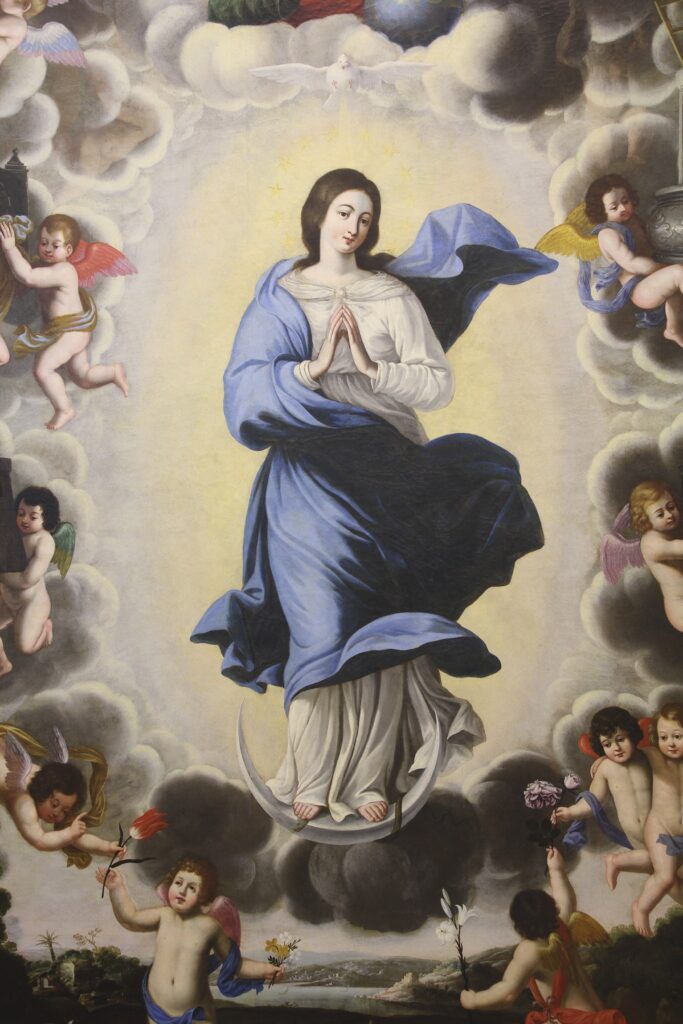
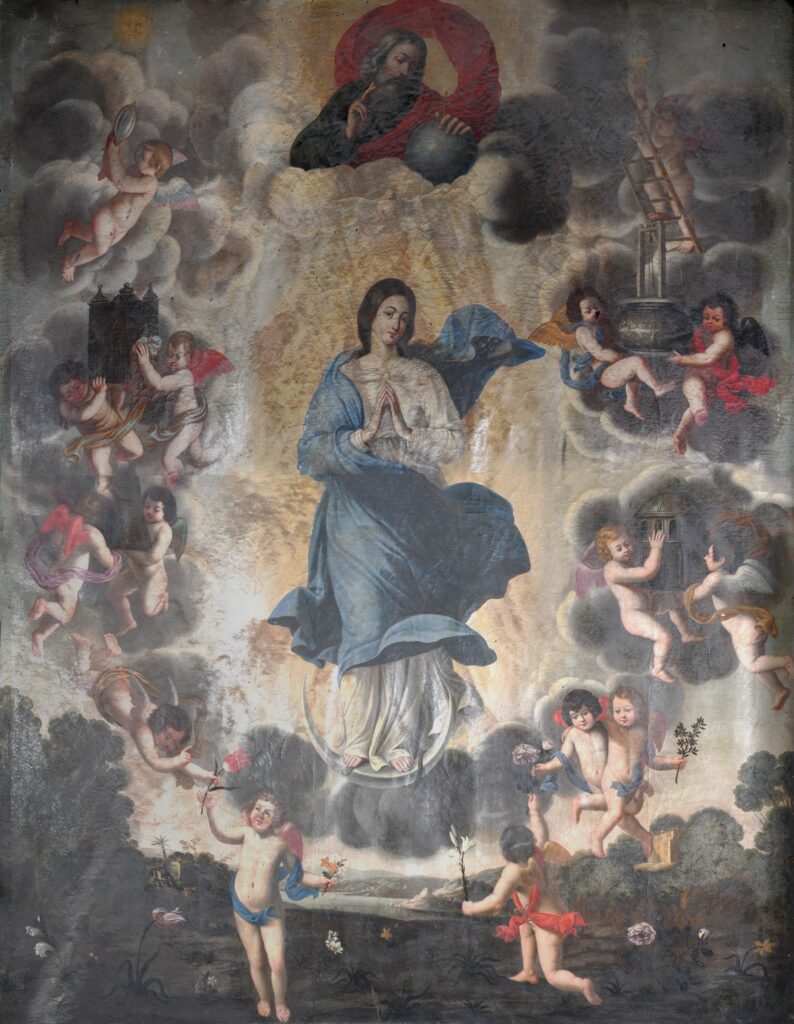
One of the most sublime spaces in the complex is the Chapel of the Immaculate Conception, completed in 1651. This oratory is notable for its lavish high-relief decoration by the Casanova family and a series of unique wooden paintings depicting roses—a symbol of the Virgin as the “rose without thorns.” The chapel’s main altar houses the titular painting of the Immaculate Conception, by Filippino Dingli, whose canvas is curved to fit the concave altarpiece. The work follows Apocalypse-inspired iconography, depicting a young Mary surrounded by putti bearing symbols of the litanies, under the watchful gaze of God the Father.
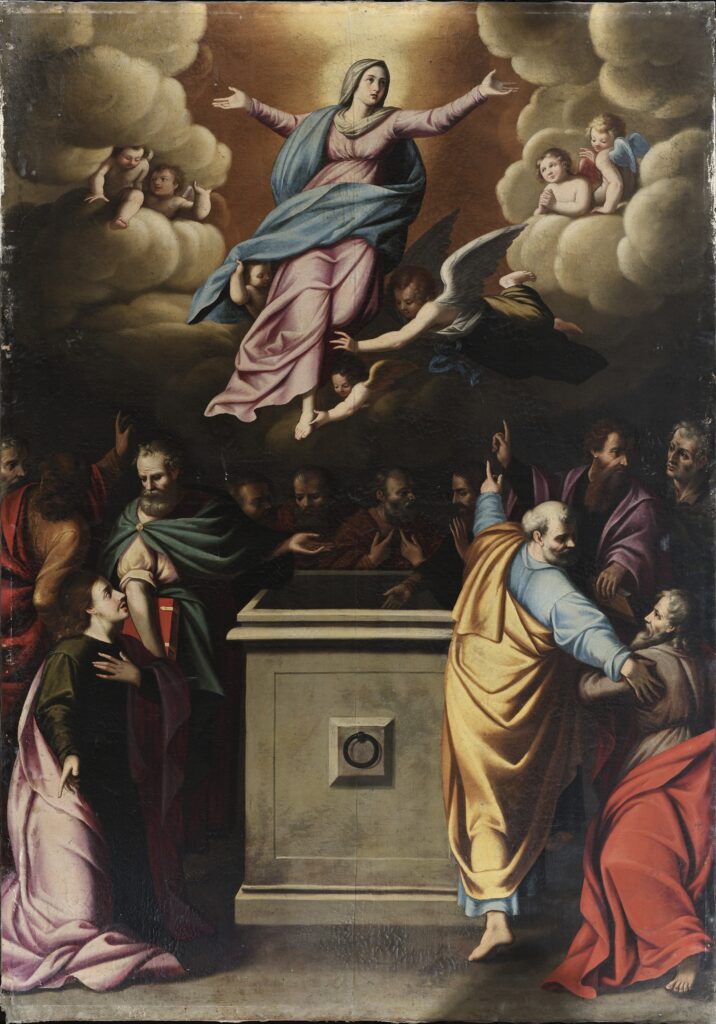
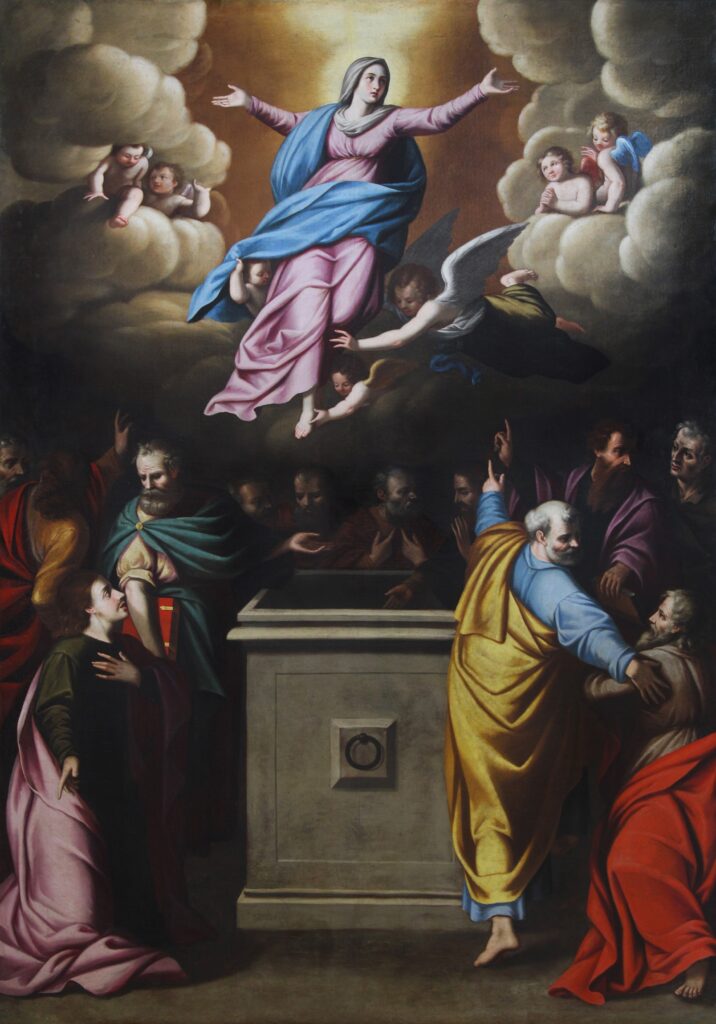
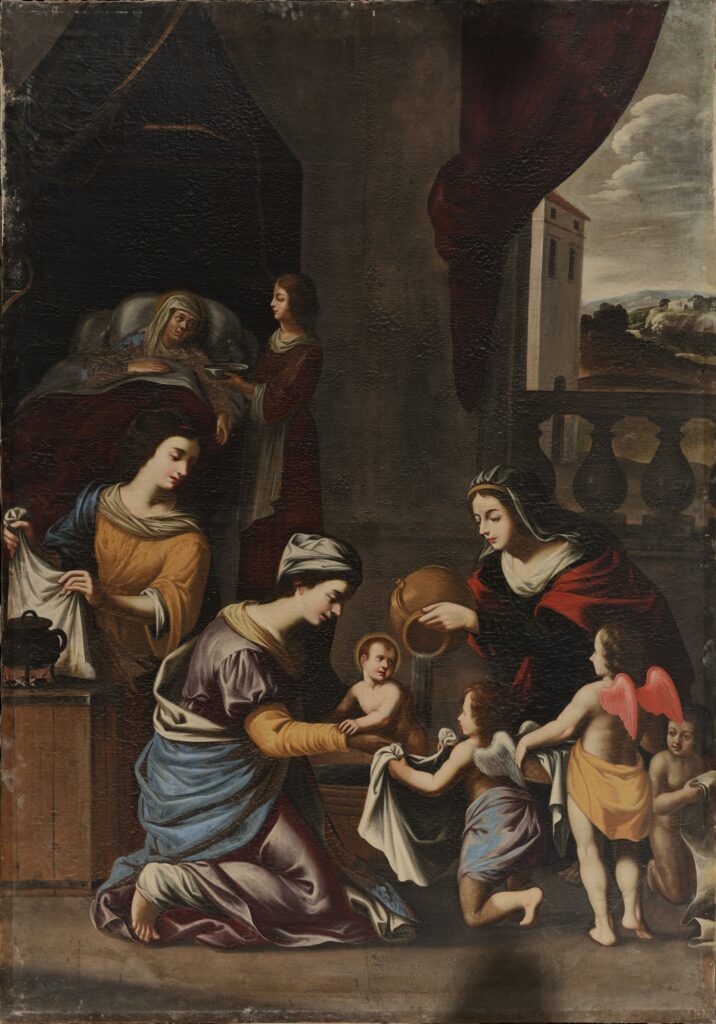
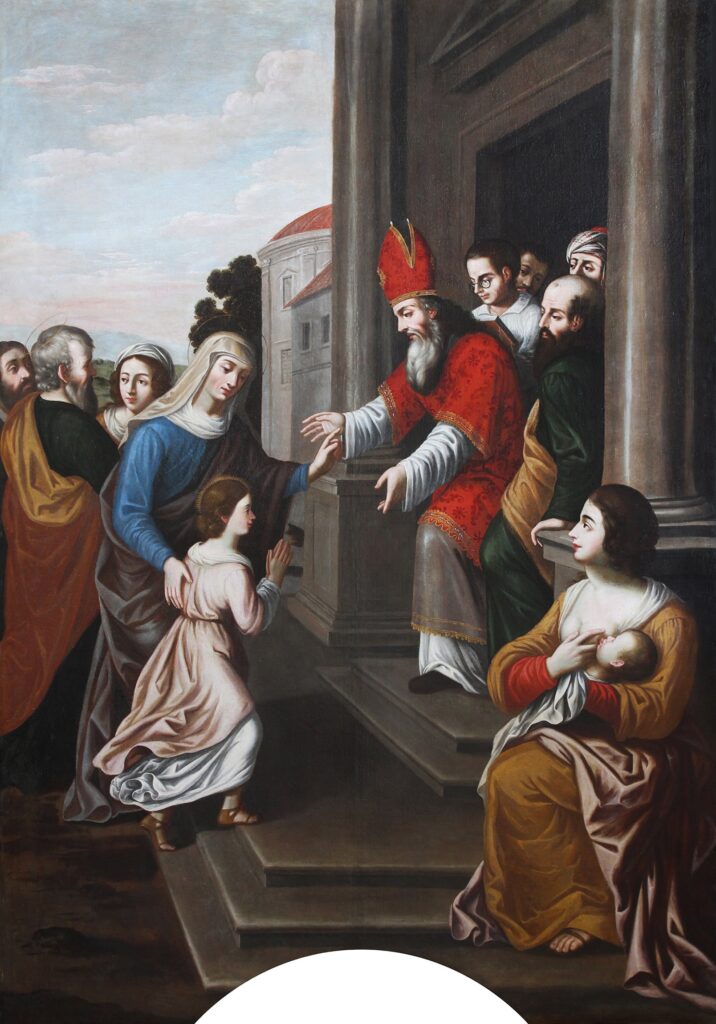
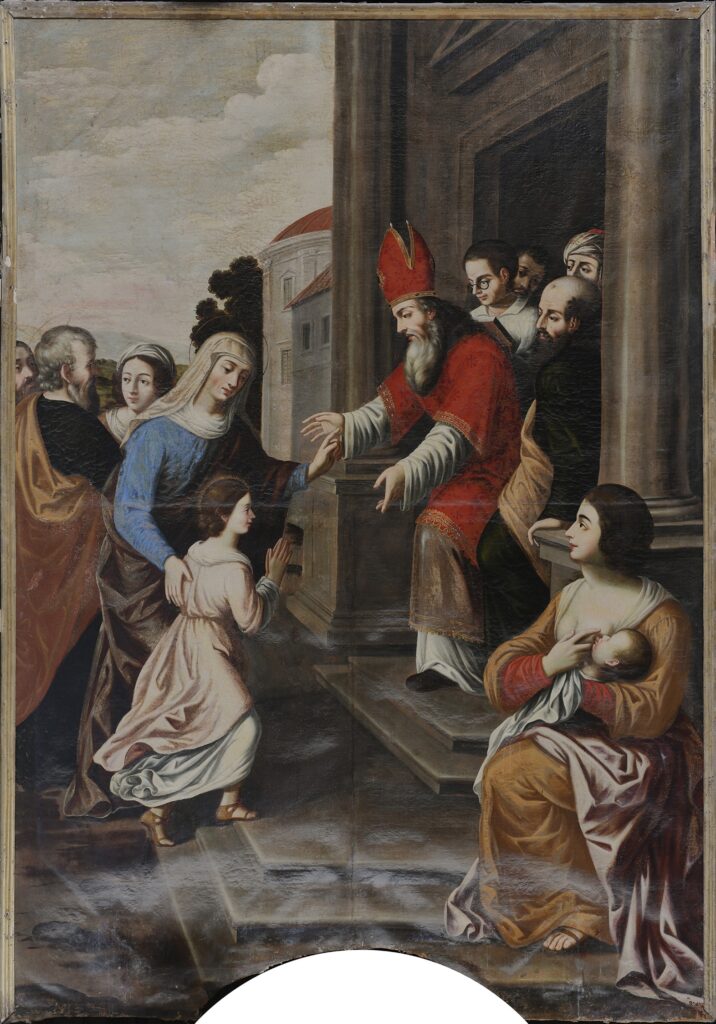
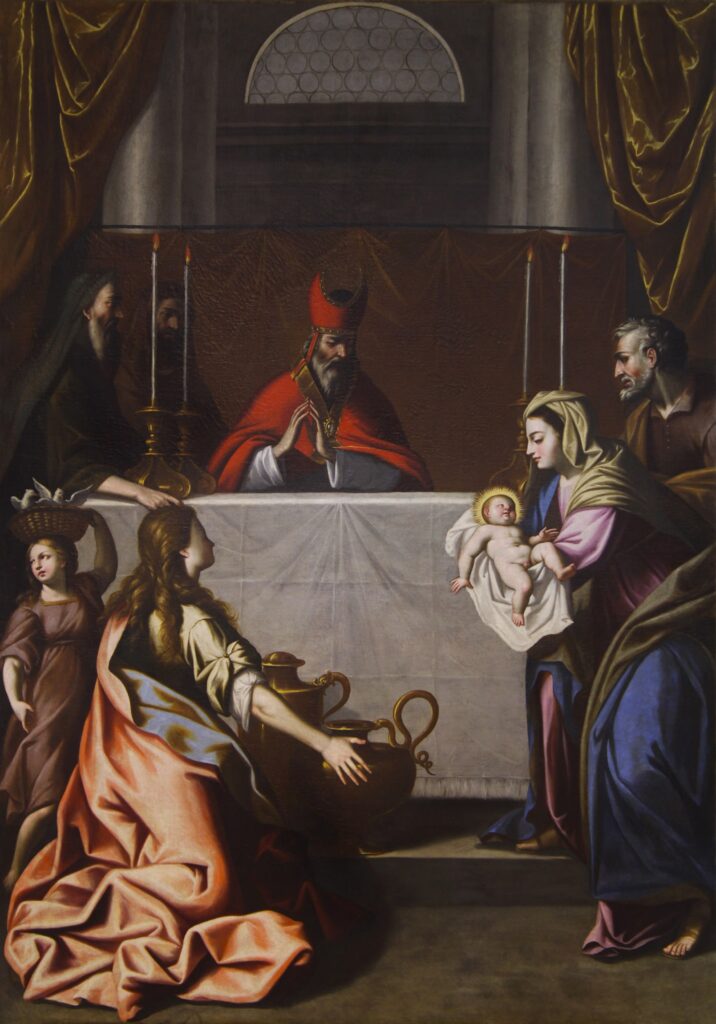
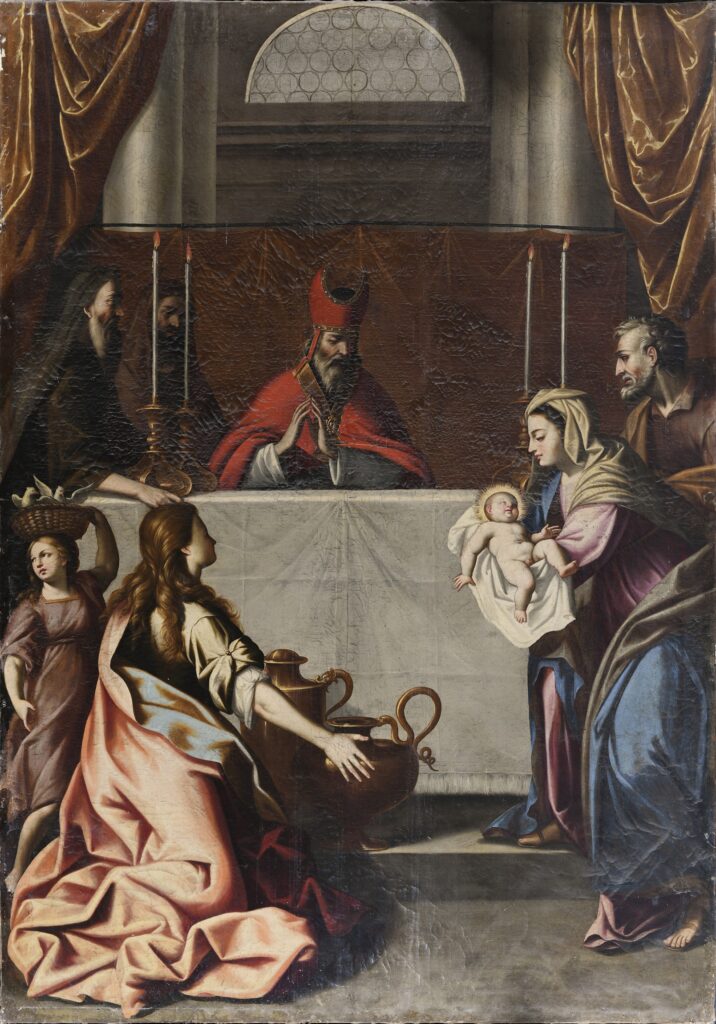
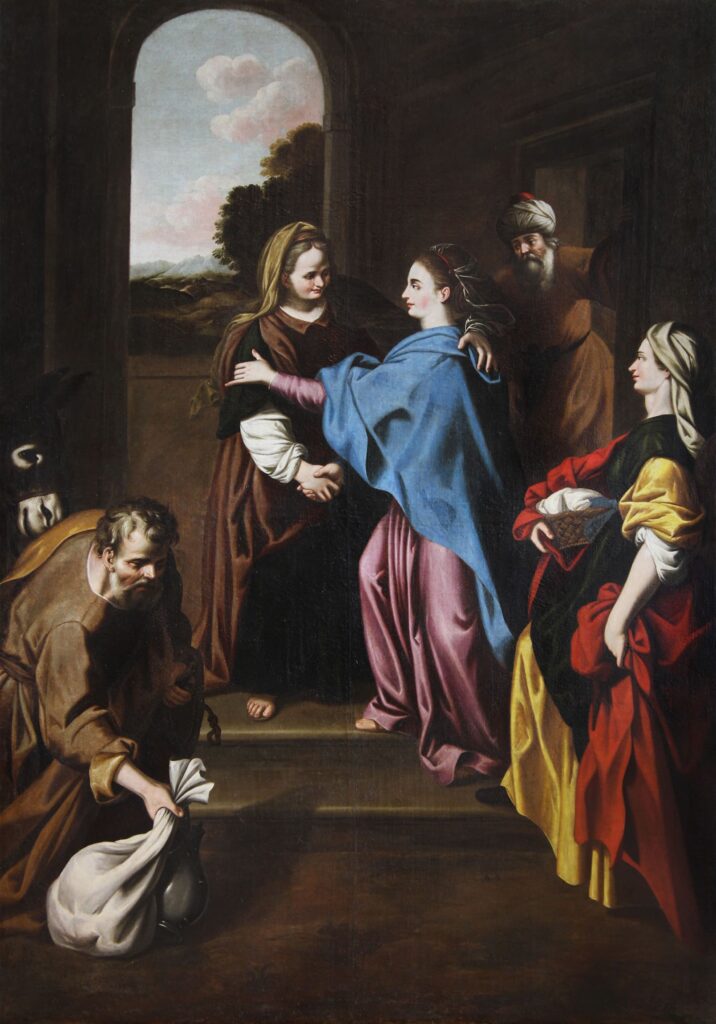
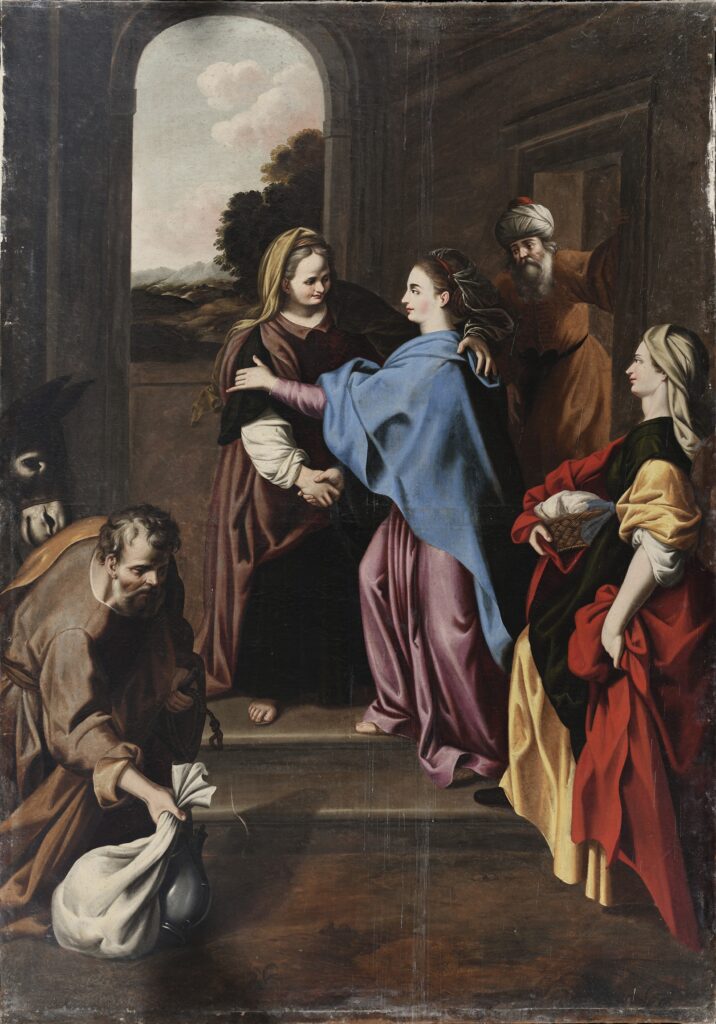
The artistic heritage extends to a cycle of six large canvases depicting key episodes in the life of Mary, from her Birth to her Assumption. This ensemble is believed to be the result of a collaboration between Filippino Dingli and his prominent disciple Stefano Erardi. To protect this legacy within a World Heritage site, a project co-financed by the European Union carried out an extensive restoration of the paintings, addressing damage caused by humidity, water infiltration, and insect activity on the canvases and stretchers, ensuring that this sacred visual narrative endures at the heart of the community.