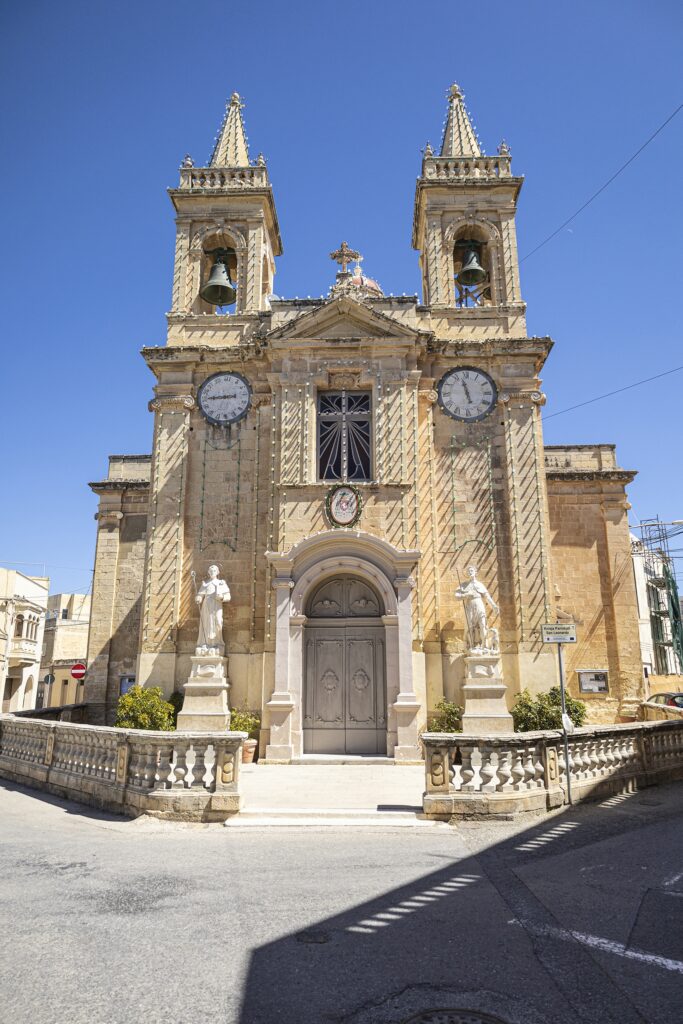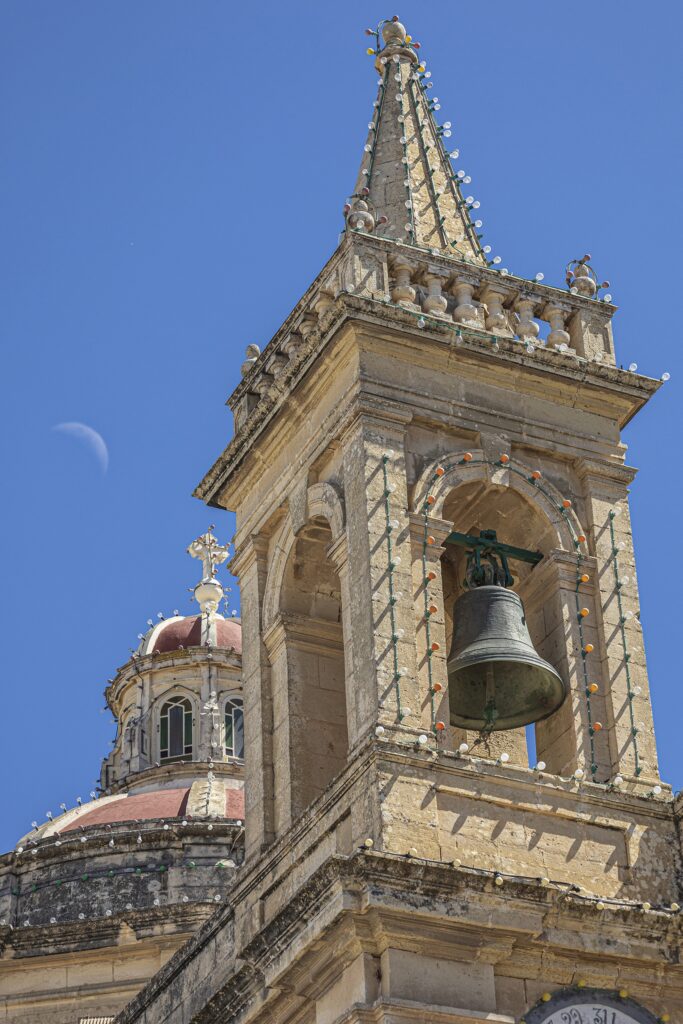
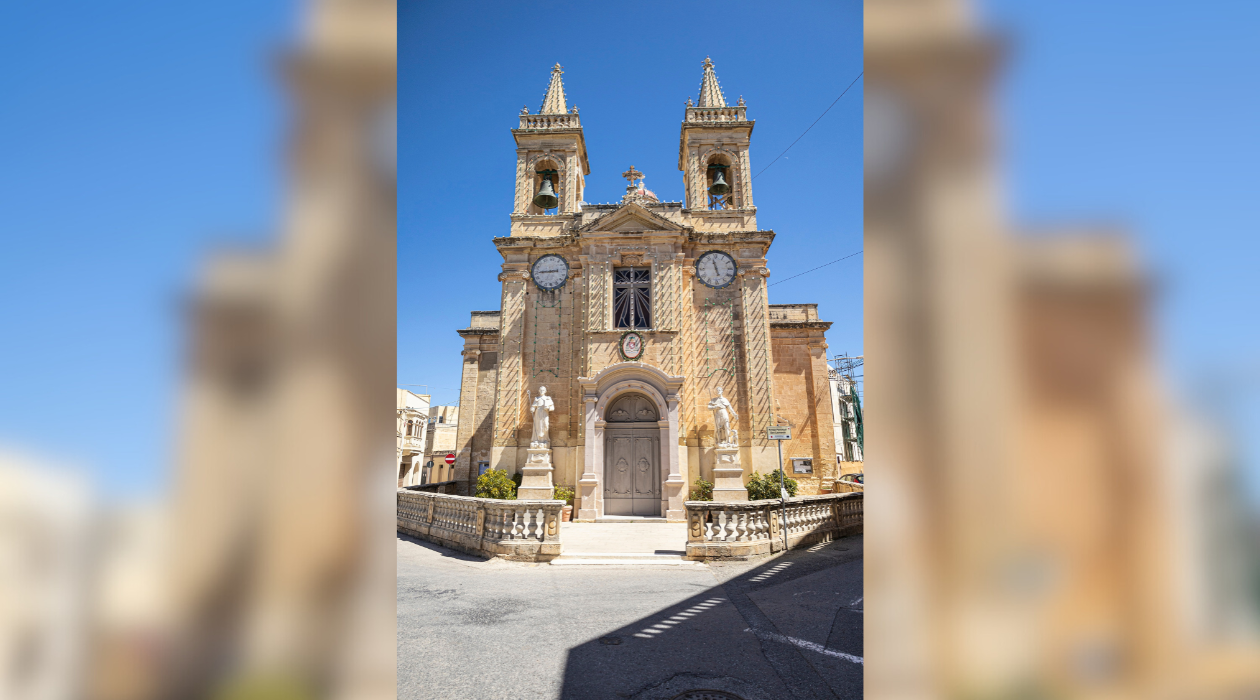
The parish church of Kirkop was first built in 1706 on the site of an older 17th-century church dedicated to Saint Leonard and Saint Mary. The Baroque church continued to be expanded until 1862, when the bell towers were constructed according to a design by the architect Giuseppe Cristoforo. The church is built on elevated ground and is surrounded by a parvis with balustrades.
Baroque Evolution and Devotion in Kirkop
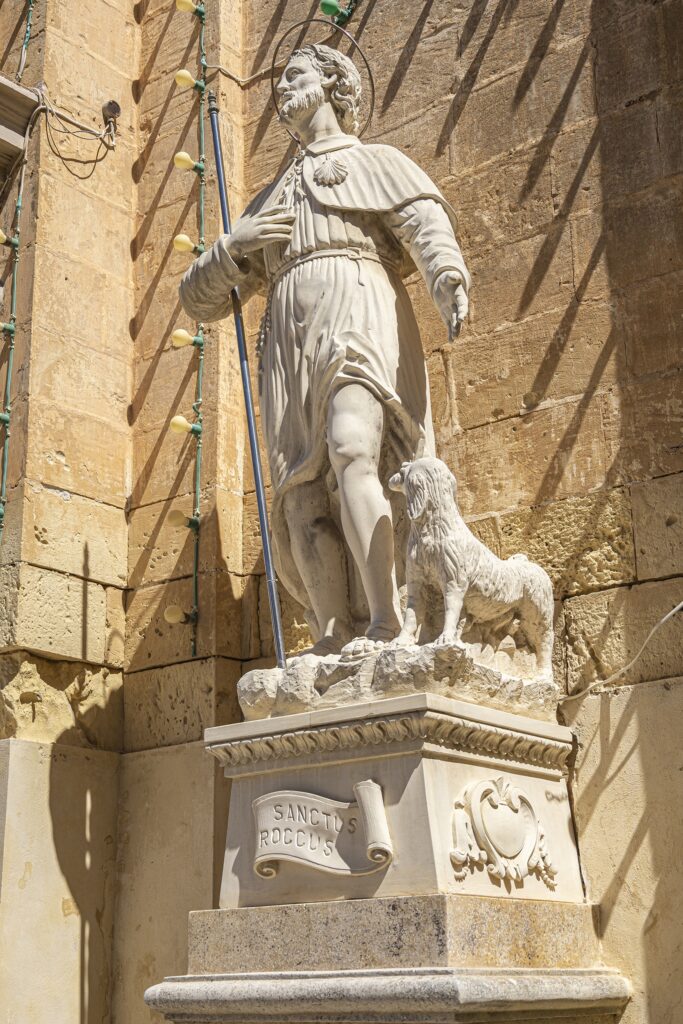
The Parish Church of Kirkop is a living testament to Maltese architectural evolution. Originally built in the 17th century on a simple rectangular plan, the church was progressively expanded: in 1706, the façade was rebuilt and the choir enlarged; in 1779, the dome with its lantern was completed; and in 1862, the current bell towers with spires were added. Finally, in 1878, the addition of transepts gave the church its present cruciform plan. The main façade is flanked by statues of Saint Roch and Saint Leonard, while the lateral entrances of the transepts feature a refined design with Ionic pilasters and broken pediments adorned with busts.
Inside, the church houses works of great artistic and religious value. Notably, the silver antependium of the main altar, designed by the renowned sculptor Antonio Sciortino and crafted in 1949 by the firm Robinich, depicts Saint Leonard freeing the captives. The presbytery is enhanced by a canopy with embroidered gold-thread drapery and has, since 1791, safeguarded the relics of the martyr Saint Benedict, donated by Pope Pius VI. The structure is completed by a sacristy and small side chapels that further enrich the sacred space.
The titular painting, San Leonardo invocado por los encarceladosIt was painted in 1751 by Rocco Buhagiar, the foremost exponent of 18th-century decorative Baroque on the island. The oil depicts the saint in a Benedictine habit guiding freed prisoners, who lift their gratitude to God following the patron’s gesture. To ensure the survival of this monument in the town center, a project co-financed by the European Union has consolidated ornamental elements and eroded capitals, reversing damage caused by pollution and earlier poorly executed restorations, thus safeguarding its structural integrity for future generations.