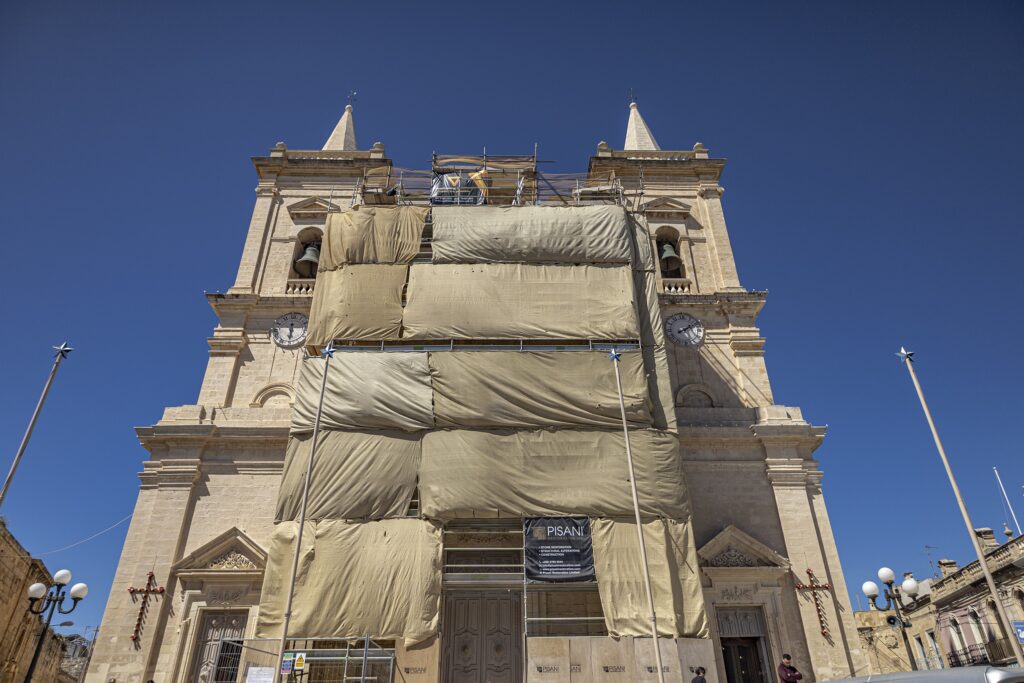
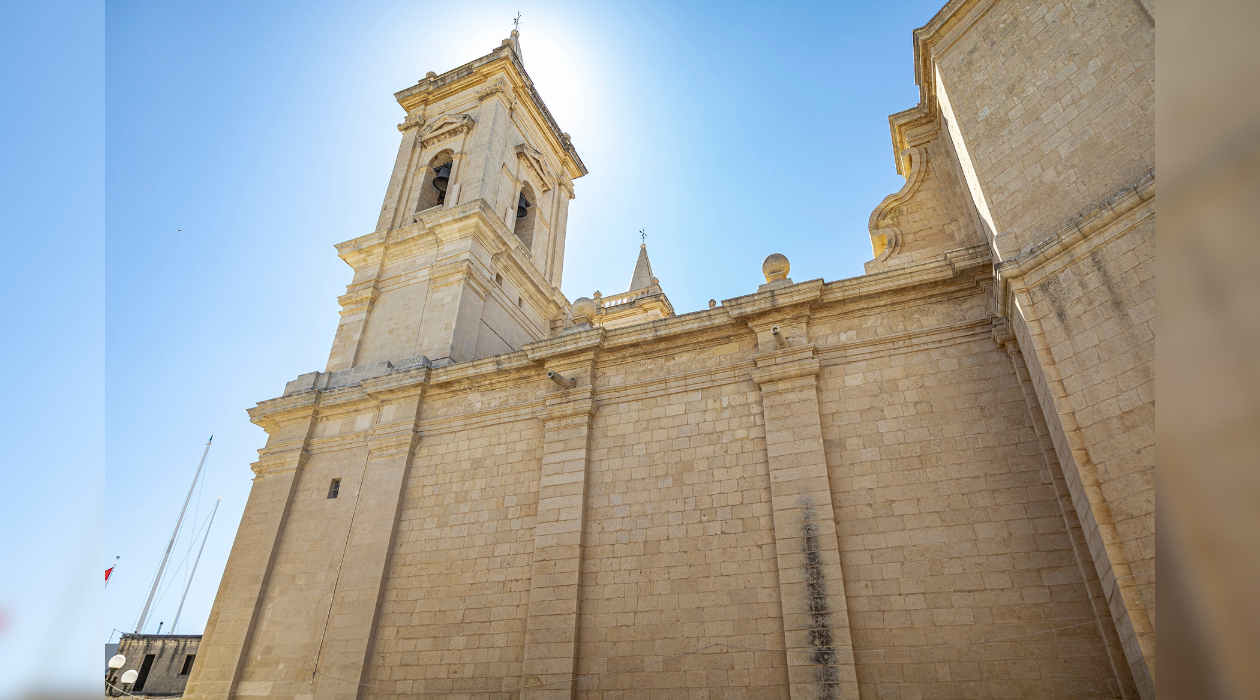
The Parish Church of the Annunciation in Tarxien, built between 1610 and 1627, is a beautiful example of early Baroque architecture in Malta. Its design is attributed to the Maltese architect Gerolamo Cassar (c.1520–1592), with later contributions by his son Vittorio (1550–1607). Its floor plan was inspired by that of the Jesuit Church in Valletta.
The Legacy of Lorenzo Gafà and Historical Devotion
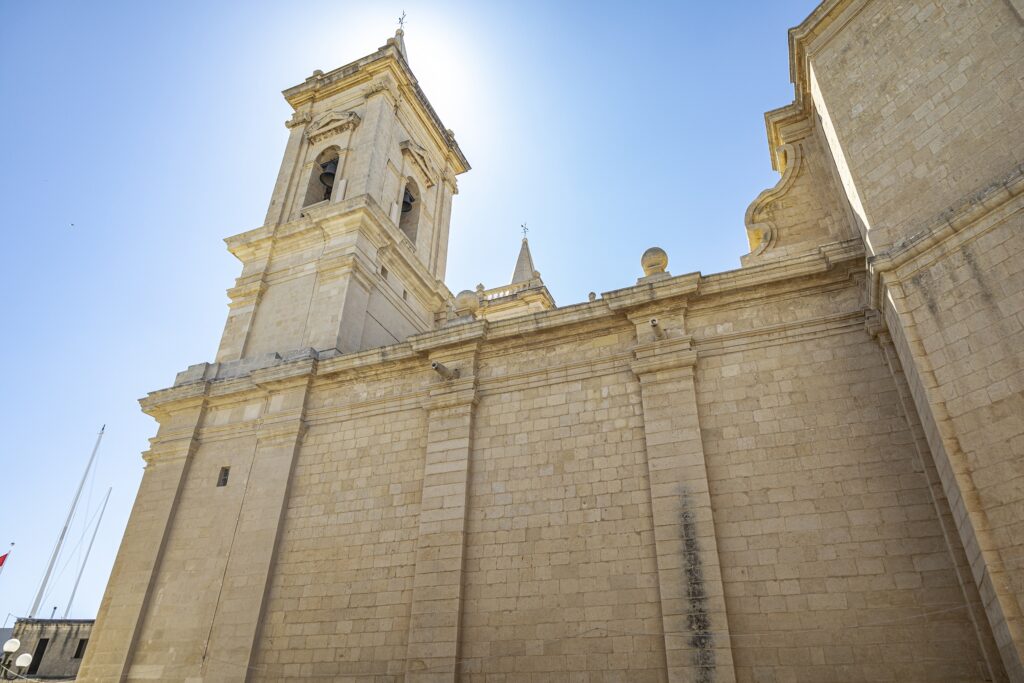
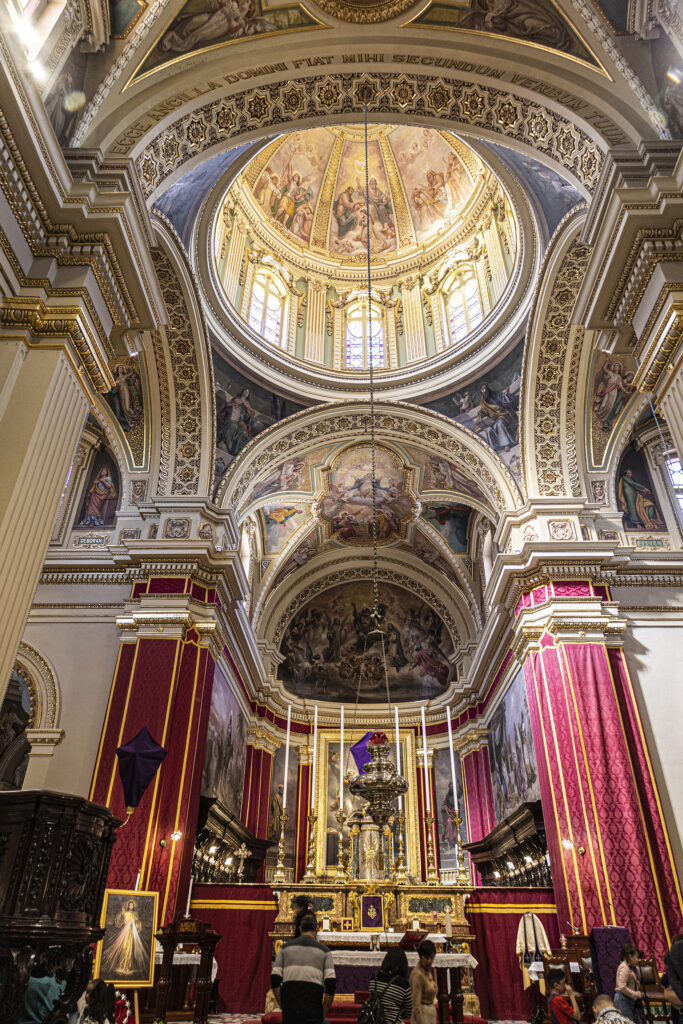
The Church of the Annunciation is a fascinating testament to Maltese architectural evolution, having been built on the site of three previous temples dedicated to Saint Luke, Saint Paul, and Saint Nicholas. Between the late 17th and mid-18th centuries, the renowned architect Lorenzo Gafà transformed the original structure: he expanded the choir with an apsidal termination, constructed the transepts, added side aisles, and erected a new dome. Despite these renovations, the church retains its original early 17th-century bell towers, to which only a balustrade was added in 1714. The church’s ensemble of bells spans several centuries, from the oldest dating back to 1673 to the most recent cast in 1960 by the Italian firm Barigozzi.
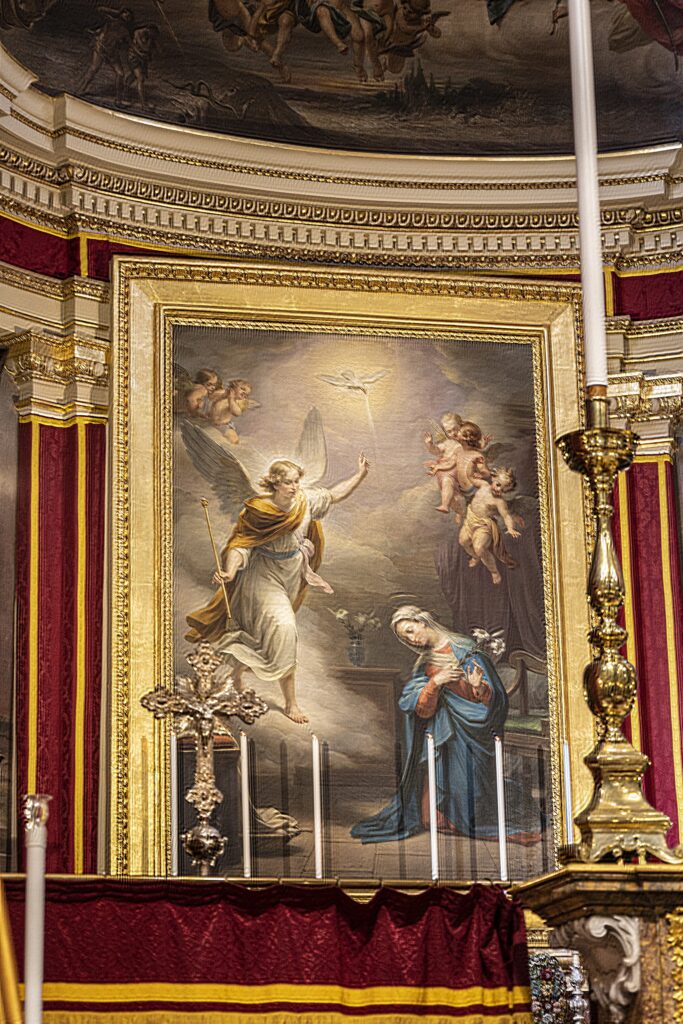
The interior stands out for its decorative balance and its titular artwork, “The Annunciation”, painted in 1874 by the Italian artist Pietro Gagliardi on commission from Bishop Pace Forno. This work, which replaced an earlier piece by Alessio Erardi, gently and reverently depicts the moment when the Archangel Gabriel descends on a cloud to deliver the divine message to the Virgin Mary. The composition is bathed in celestial light and surrounded by putti, capturing the Virgin’s meekness under the presence of the Holy Spirit.
To ensure the survival of this historic monument, a project co-financed by the European Union has carried out conservation work on its decorated side façades. The interventions focused on mitigating deterioration caused by pollution, weather, and the natural aging of materials, which threatened both the building’s aesthetics and structural integrity. Thanks to these efforts, the church continues to stand as a heritage pillar at the heart of its community.