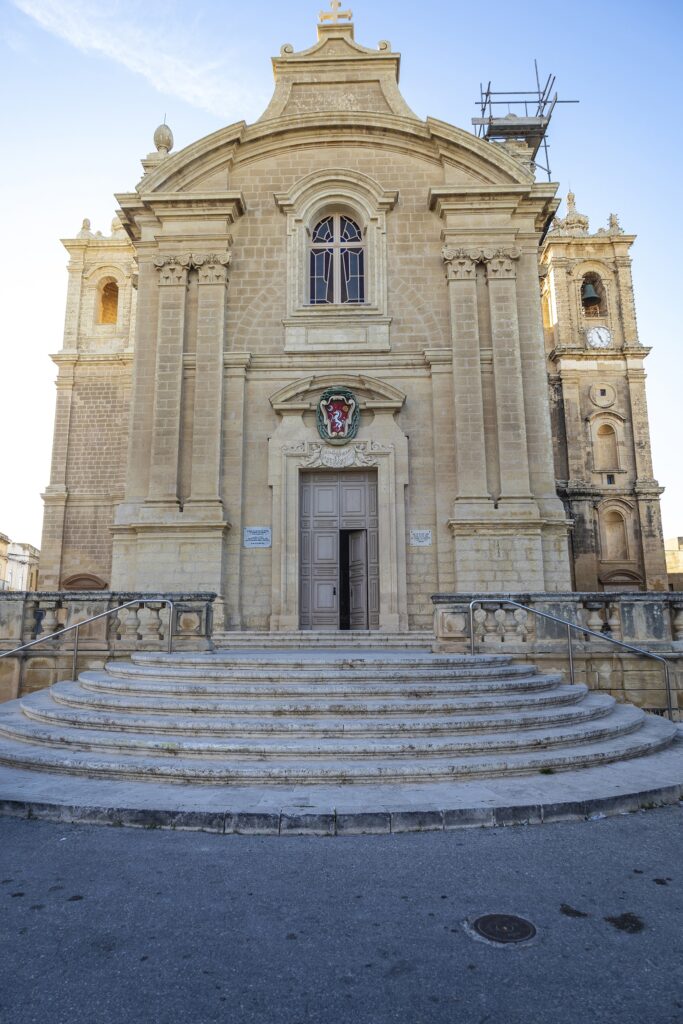
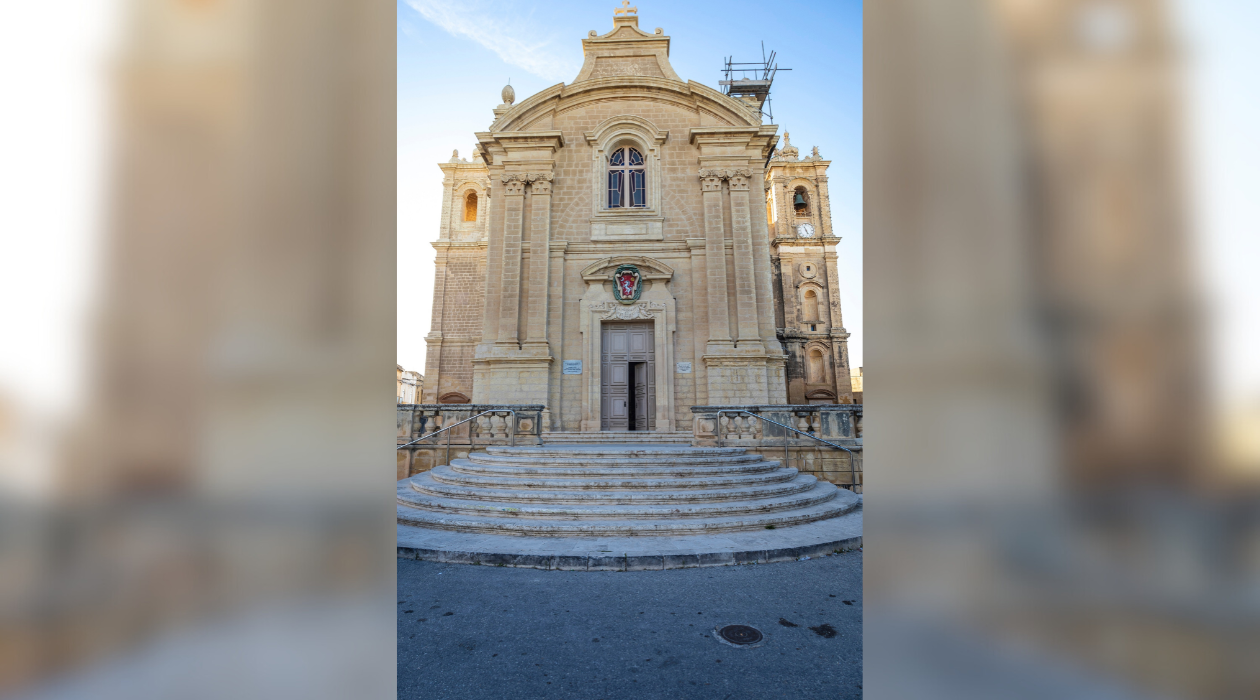
The parish church of Qrendi was built between 1620 and 1655 according to a design attributed to the Maltese architect Vittorio Cassar (c.1550–c.1609). It was constructed on the site of two smaller churches dedicated to the Assumption and to Saint Anthony. Between 1668 and 1679, the Maltese architect Lorenzo Gafa’ carried out a major remodeling and expansion of the church. The façade design was inspired by the style of the French architect Mederico Blondel in his Church of St. Francis in Valletta, as well as the Carmelite church in Mdina.
A Dialogue Between Styles and the Legacy of Giuseppe Calì
The architecture of this church stands out as a harmonious blend of various motifs and styles, where the current façade successfully integrates parts of the old temple through superimposed Tuscan pilasters and giant “Palladian” pilasters. The structure is crowned by a large broken pediment spanning the full width of the central section, evoking the style of Blondel’s churches. Above the main door is an omega-shaped window that extends into the pediment, while the ensemble is completed by a hemispherical dome resting on a stone drum. Outside, a courtyard with a balustrade and a semicircular staircase surrounds the church, accompanied by a statue of Saint Roch designed by Mariano Gerada and completed by P.P. Azzopardi.
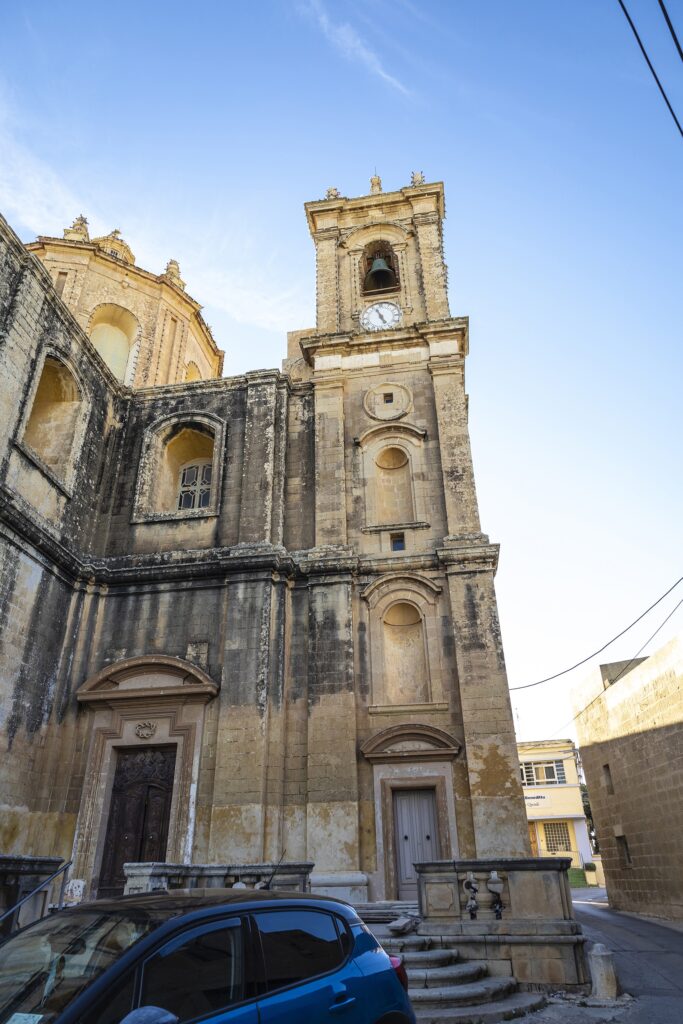
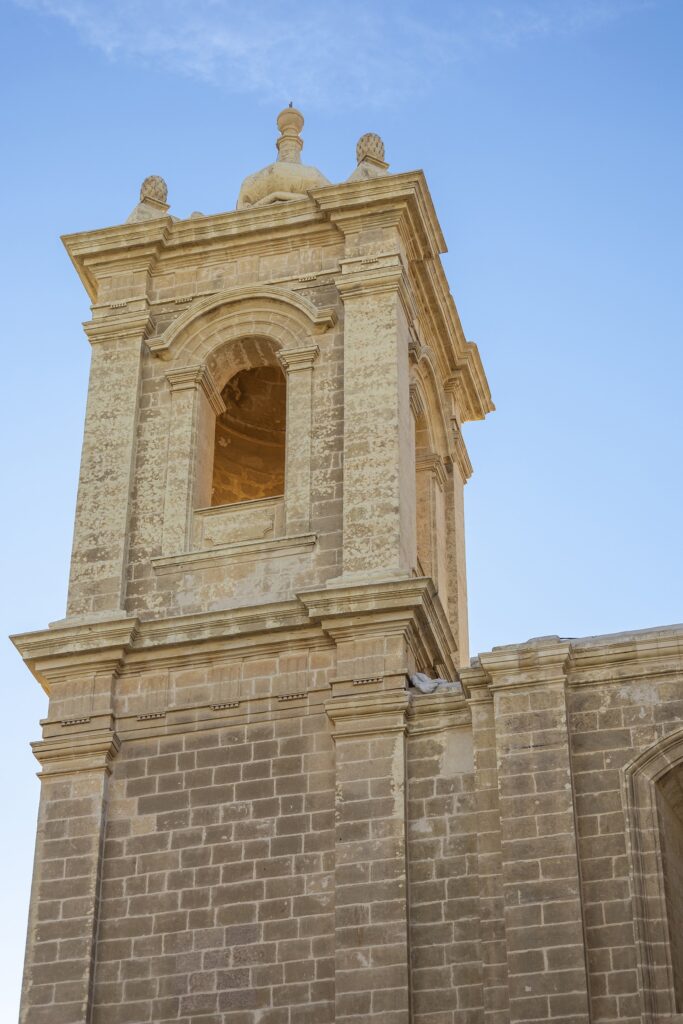
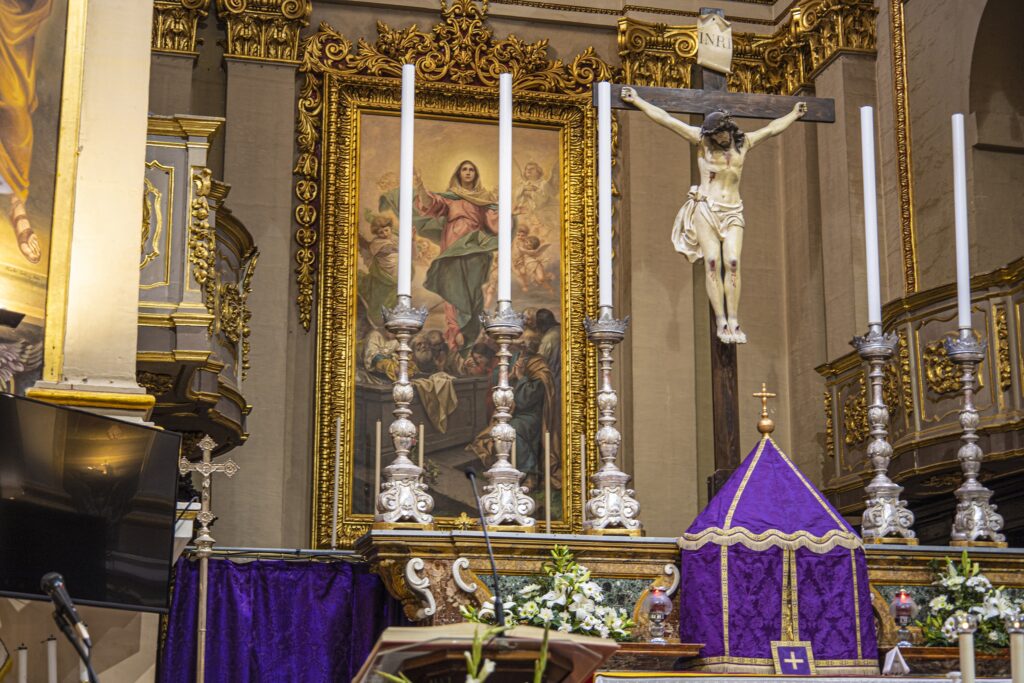
A unique aspect of its design is the placement of the twin bell towers, which, due to the limited width of the new façade, were set back toward the transepts, visually creating the impression of an exceptionally wide frontage. The towers house historically significant bells, including two ancient pieces from 1640 and 1690, alongside the main bell cast by Trigance in 1788. However, the church’s greatest artistic treasure is its titular painting of the Assumption of the Virginpainted in 1917 by Giuseppe Calì, marking the artist’s final titular work. In it, Calì breaks with tradition by depicting the Virgin ascending with a unique dynamism and without direct assistance from angels, employing a striking contrast between the celestial light above and the chiaroscuro of the apostles positioned near the tomb.
Through a project co-financed by the European Union, critical conservation work has been carried out on the main and side façades of the building. These interventions have helped mitigate the deterioration caused by weather and pollution, factors that not only affected the church’s appearance but also threatened its structural integrity. Thanks to this work, the long-term protection and enjoyment of this historic monument at the heart of its community are ensured.