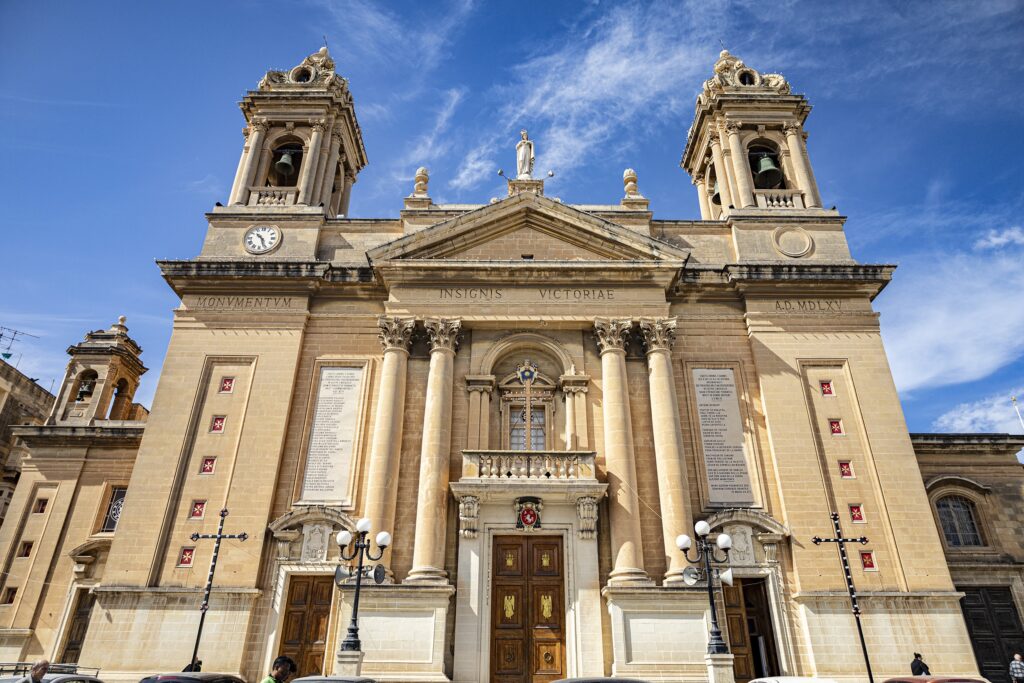
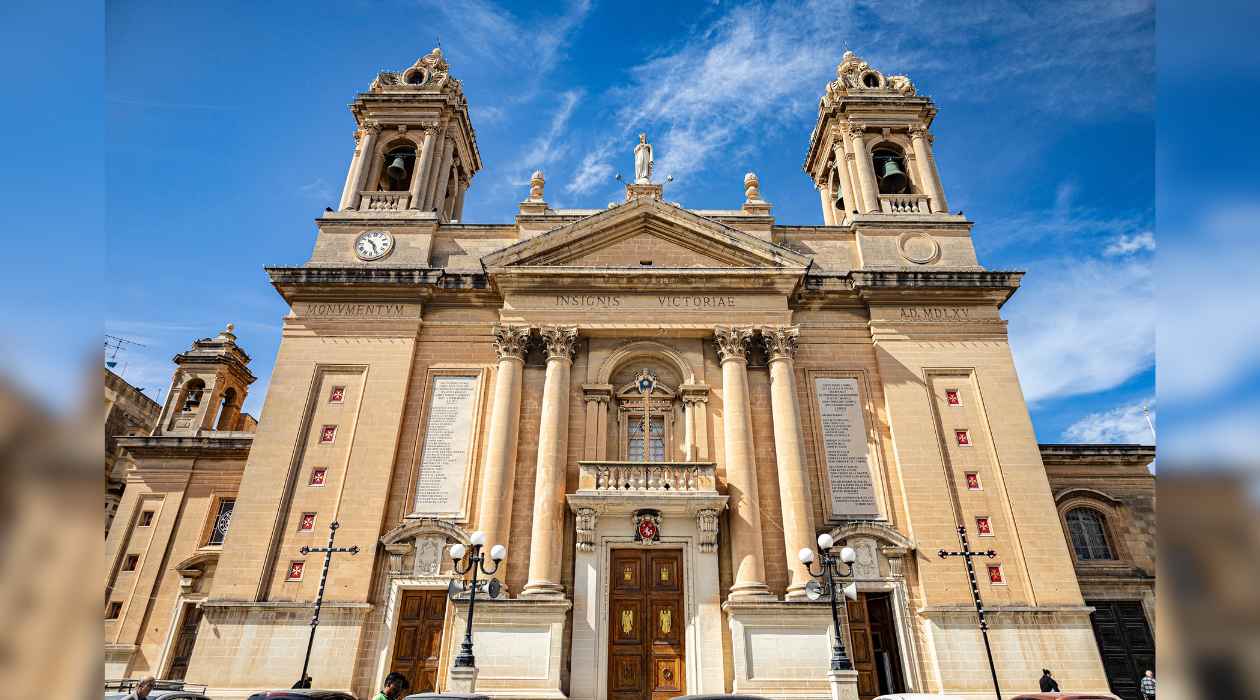
The parish church of Senglea was rebuilt between 1946 and 1956, as it was almost completely destroyed during World War II. Its architecture was designed by the Maltese architect Victor Anastasi (1913–1992). The church stands on the site of the original church, built in 1580 to commemorate the victory of the Great Siege of 1565.
Monument to Victory and Resilience
Located in the historic city of Senglea, this basilica is much more than a religious building; it is a monument to the victory of the Great Siege of 1565. Although the original structure dated back to 1580, the current church is a masterful reconstruction carried out between 1946 and 1956 by Victor Anastasi, after it was almost completely destroyed by World War II bombings. Its imposing neoclassical façade, crowned with the inscription Monumentum Insignis Victoriaefeatures a temple-style pediment with Corinthian columns and a three-meter marble statue of the Virgin Mary, designed by Emvin Cremona. Its two bell towers house seven historic bells that, miraculously, survived the war.
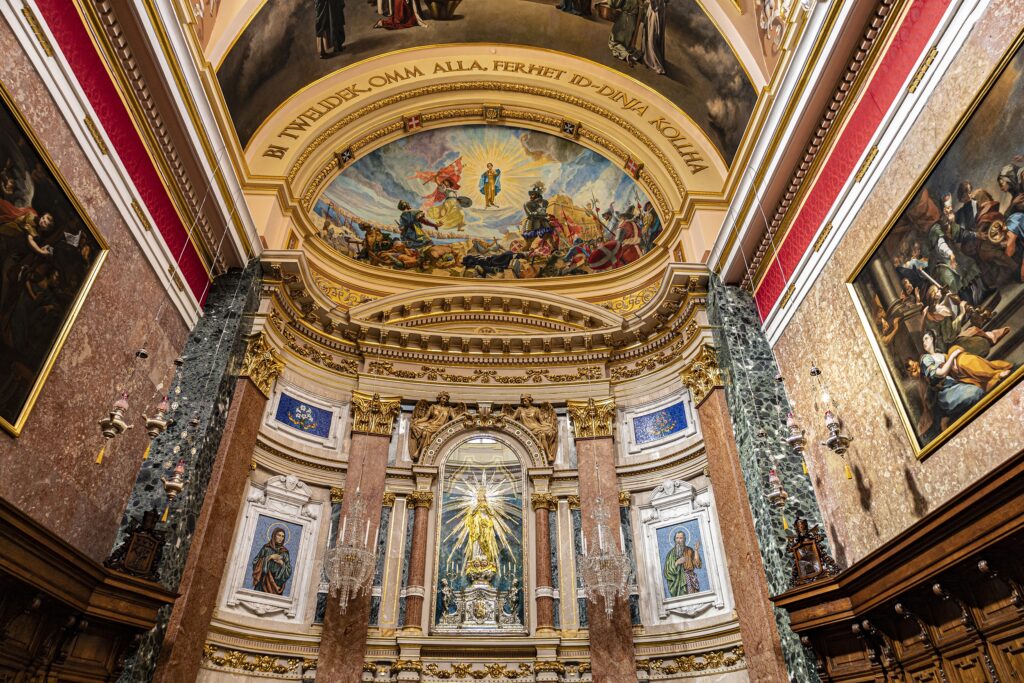
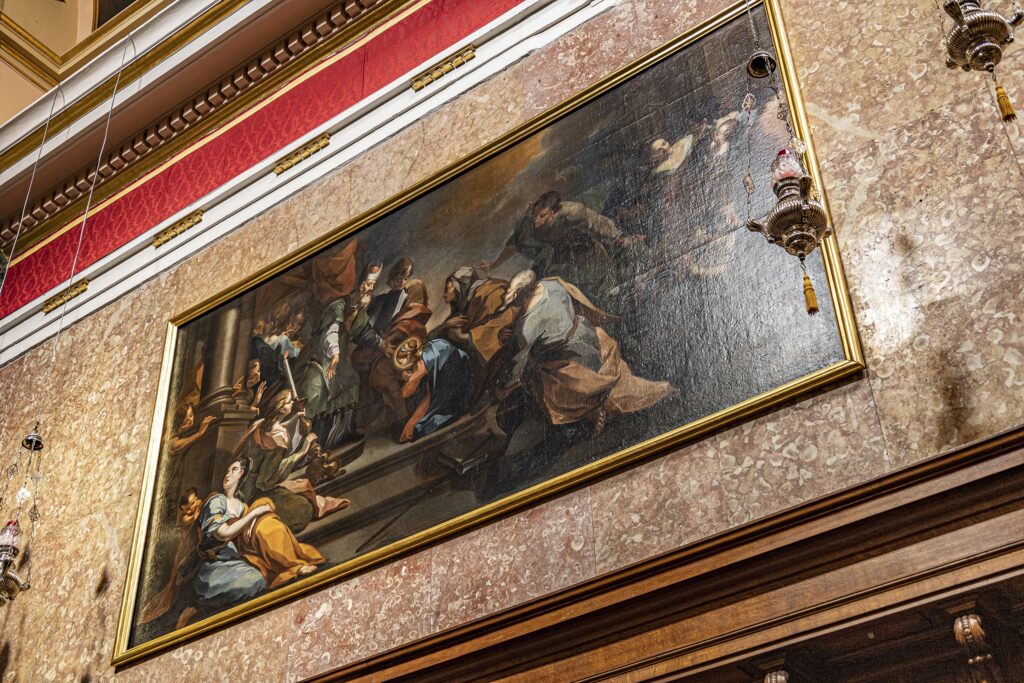
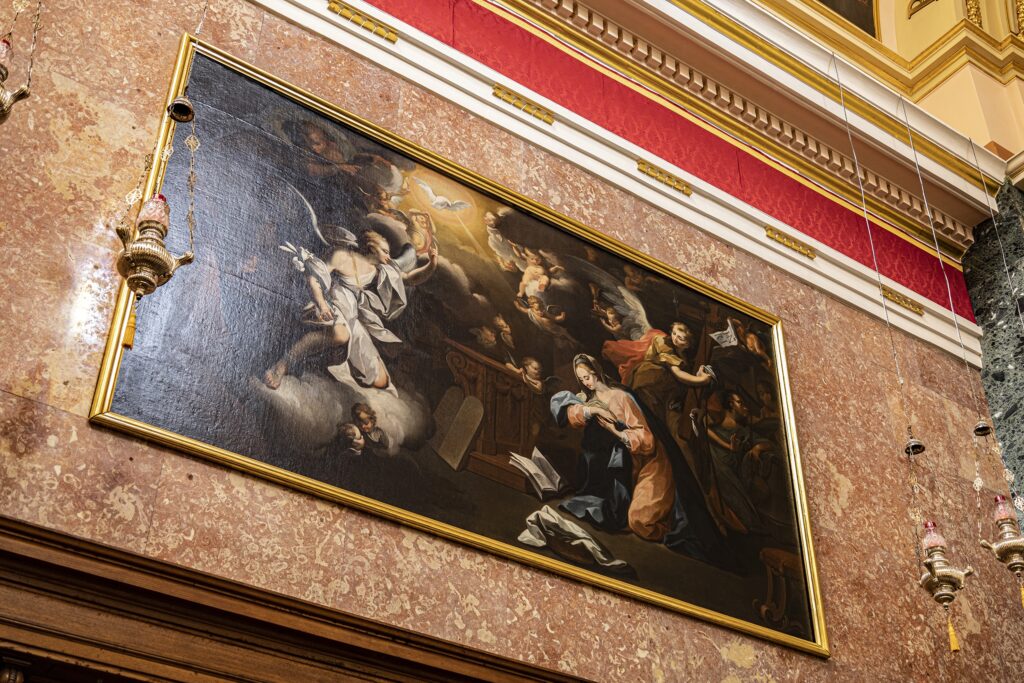
The interior combines rescued Baroque art with 20th-century modernity. In the choir, two masterpieces from 1741 by Francesco Zahra are preserved: The Presentation of Mary in the Temple and The Annunciationworks that survived the conflict and showcase the mastery of Maltese Baroque art. Meanwhile, the dome adds a contemporary touch with paintings by Frank Portelli, completed in 1995, depicting the Virgin as Queen of Angels and other celestial orders, along with pendentives portraying biblical heroines such as Judith and Deborah. The apse pays tribute to the island’s history with a painting of the triumph of the Knights of St. John in 1565.
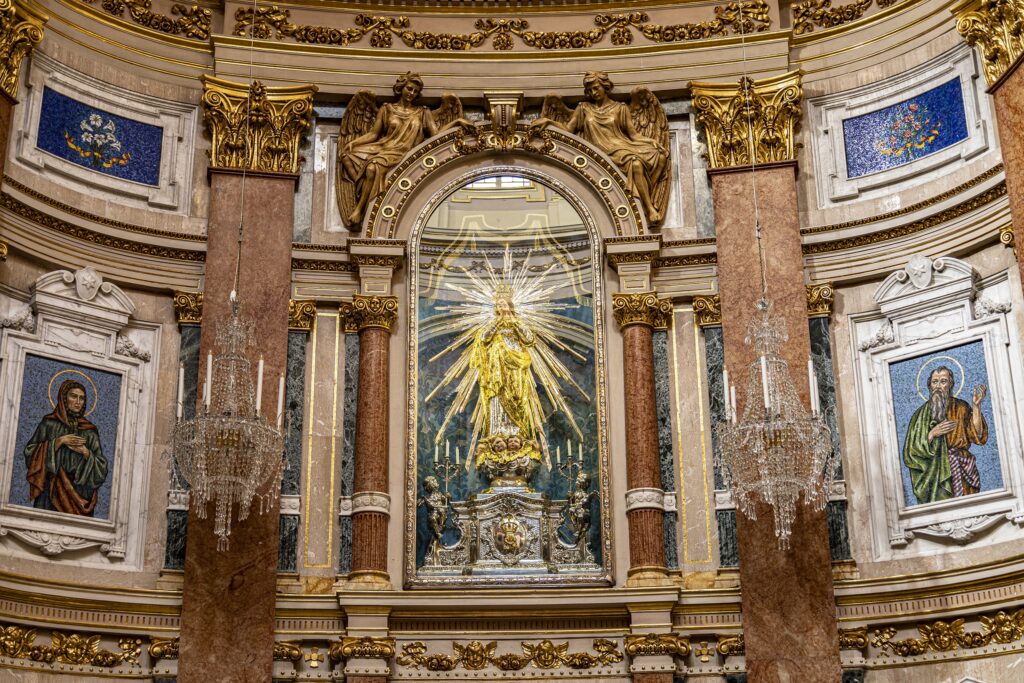
The most venerated piece of the basilica is its titular statue of the Virgin Mary (affectionately known as Il-BambinaThis wooden image, adorned with fine gold and silver drapery, is at the center of deep devotion that grew after the plague of 1813. The statue wears a “glory” of gilded silver rays crafted by Mariano Gerada and a gold and diamond crown, made possible by donations from the people of Senglea in 1921. A project co-financed by the European Union has enabled the restoration and cleaning of the church’s painted layers and canvases, ensuring that this bastion of Maltese identity continues to shine for future generations.