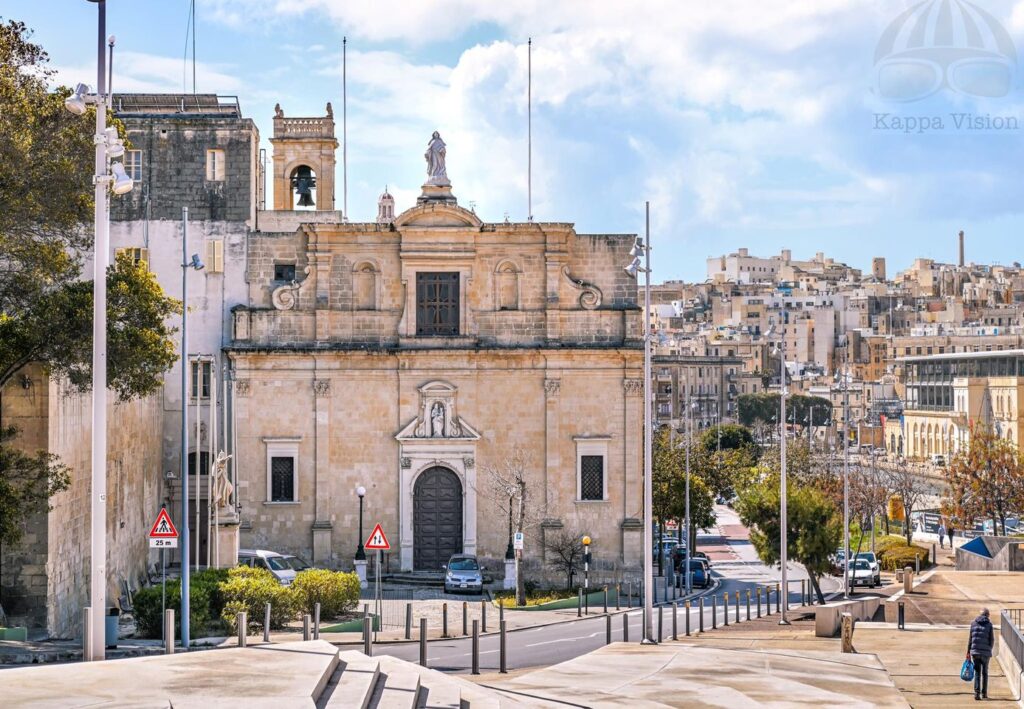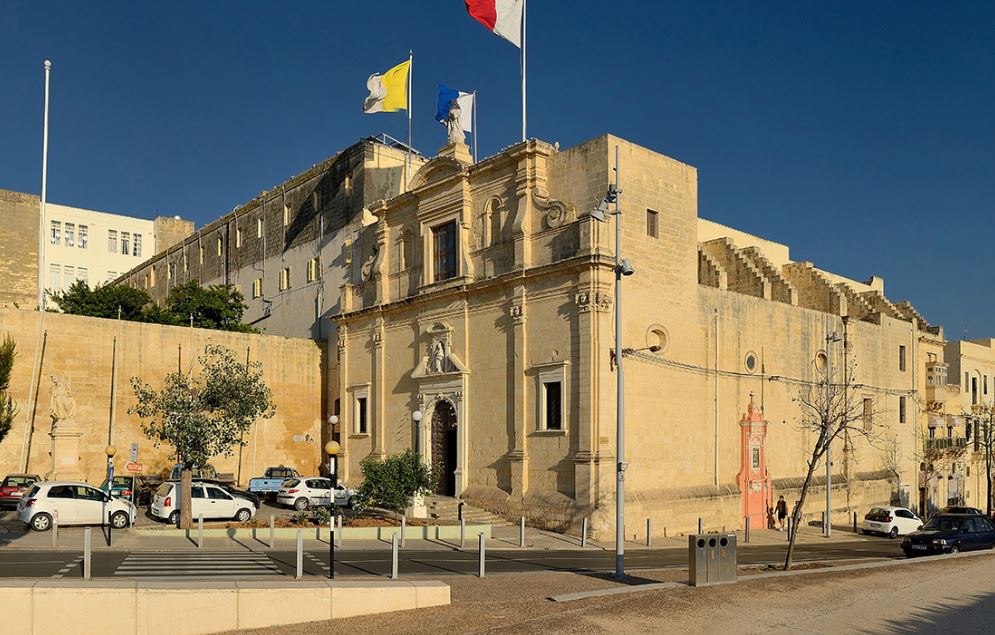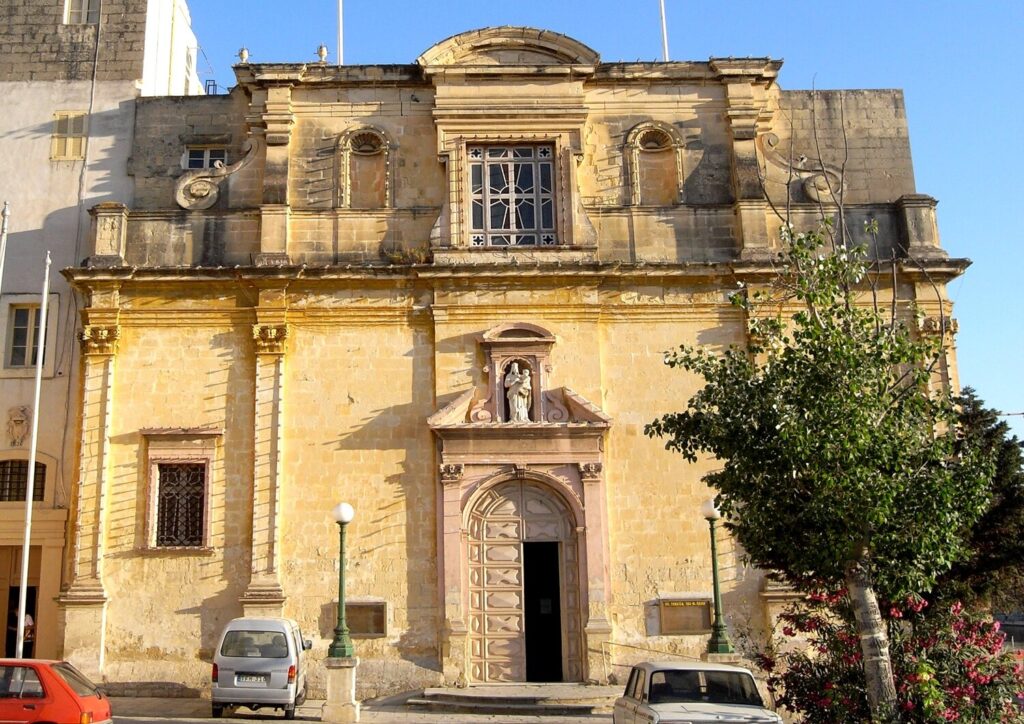
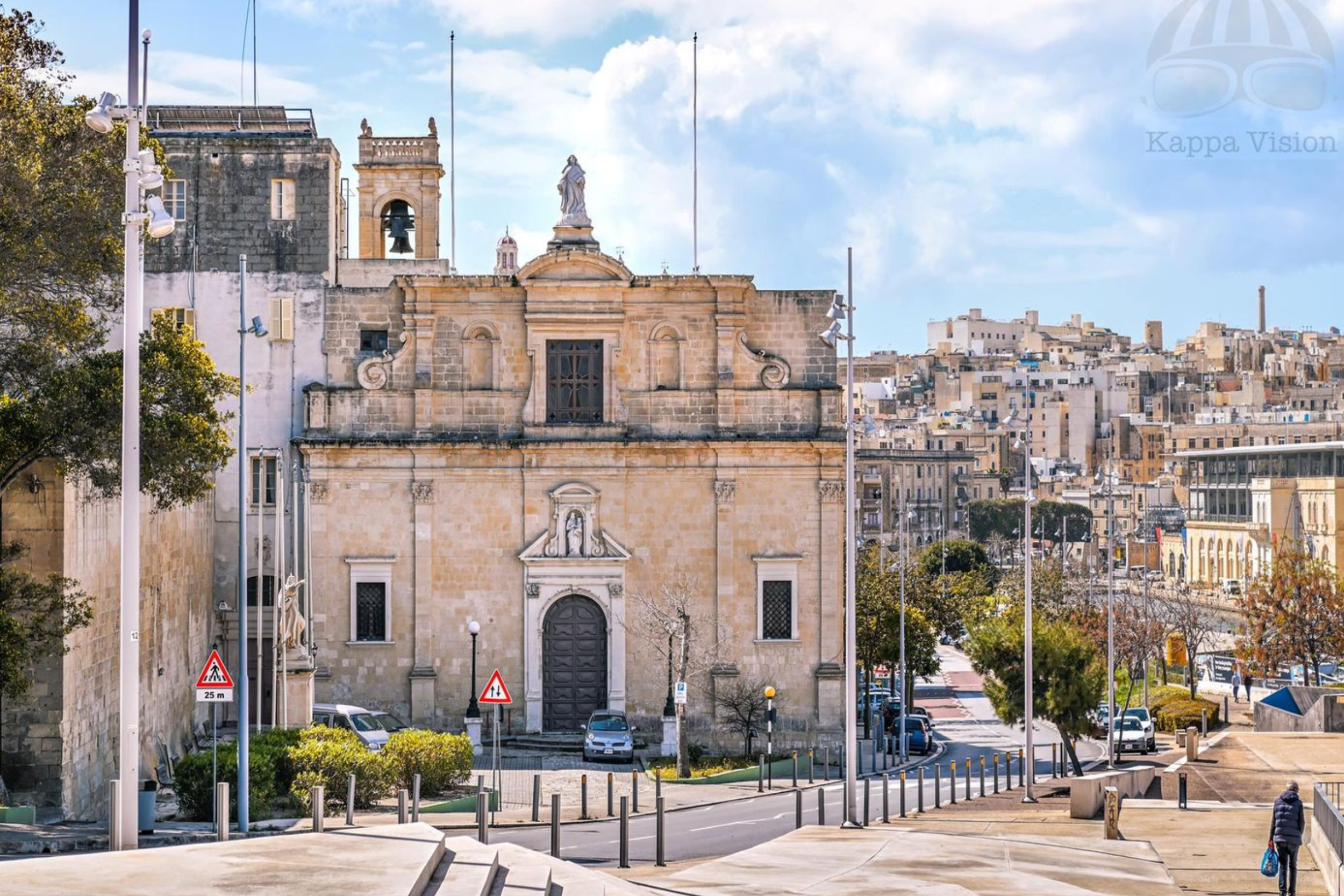
The design of Church of St. Teresa of Ávila (St. Teresa of Ávila Churchis a masterpiece of the late Baroque style, having been originally constructed between 1626 and 1655with significant renovations in the 18th century. Situated in an elevated position in Cospicua , this church and its annexed convent belong to the Order of Discalced Carmelites. Unlike the parish churches, this temple stands out for its distinctive dome and monumental facade, designed to be a visual landmark welcoming those entering the city from the Santa Margherita Lines.
Spirituality and Strength: St. Teresa in Bormla
The Church of St. Teresa represents Carmelite mysticism integrated into the heart of a fortress city. Located right against the fortifications, the church has historically served as a spiritual refuge for Bormla’s residents and the friars who dedicated their lives to prayer and study. During the 17th and 18th centuries, the convent was a center of intellectual and spiritual influence in the Three Cities. Its limestone architecture, featuring a facade rich in sculptural details and niches, is an exceptional example of how Maltese Baroque reached maturity, combining defensive solidity with religious elegance.
The interior of the church is noted for its Latin cross floor plan and its atmosphere of deep contemplation. The centerpiece is the high altar dedicated to St. Teresa of Ávilawhich houses an artistically significant painting depicting the saint in ecstasy, surrounded by stone carvings and marbles that reflect the generosity of the order’s benefactors. The temple is known for its excellent acoustics and the peace found within its central nave, decorated with frescoes depicting the lives of Carmelite saints. Beneath the church floor lie historic crypts where members of the religious community and distinguished citizens of Cospicua rest.
Beyond its artistic value, the church is a testament to Bormla’s survival. Having suffered damage during the heavy aerial bombings of World War II, the complex was carefully restored to preserve its original identity. Today, it remains an active place of worship where the Carmelite tradition is kept alive, attracting both the faithful and visitors interested in the history of the fortifications. Visiting this church is to discover a space where Baroque beauty and convent silence meet in perfect harmony. Consecrated as a sanctuary of mysticism and peace, it is a fundamental piece for understanding the urban and spiritual landscape of Cospicua.