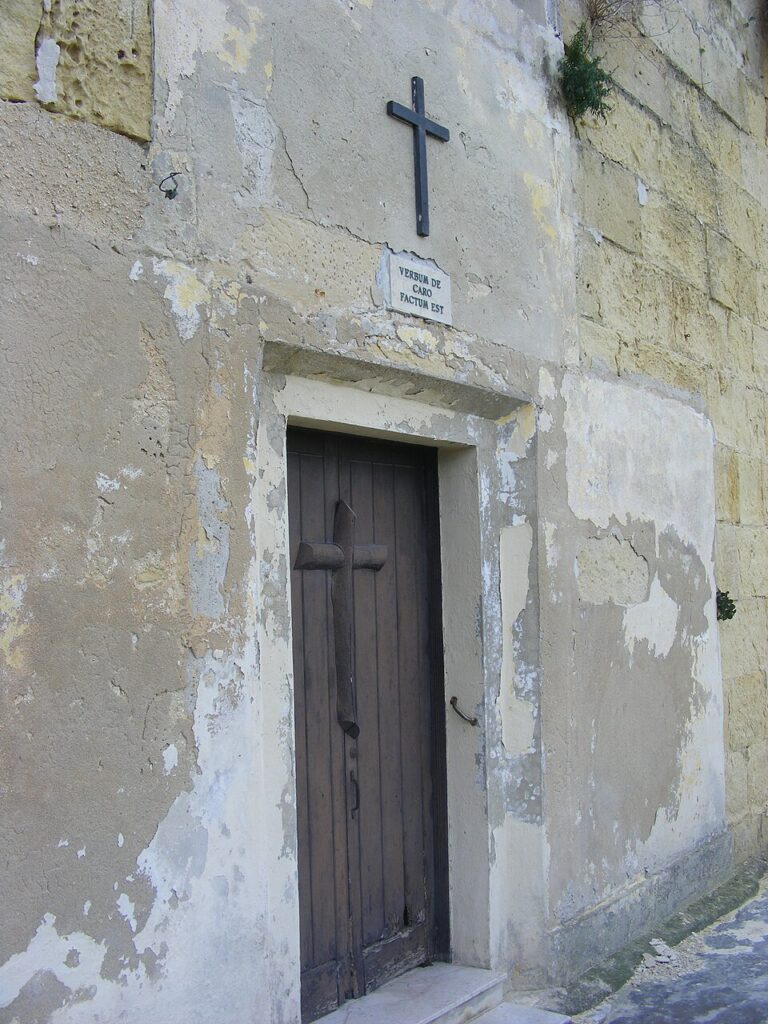
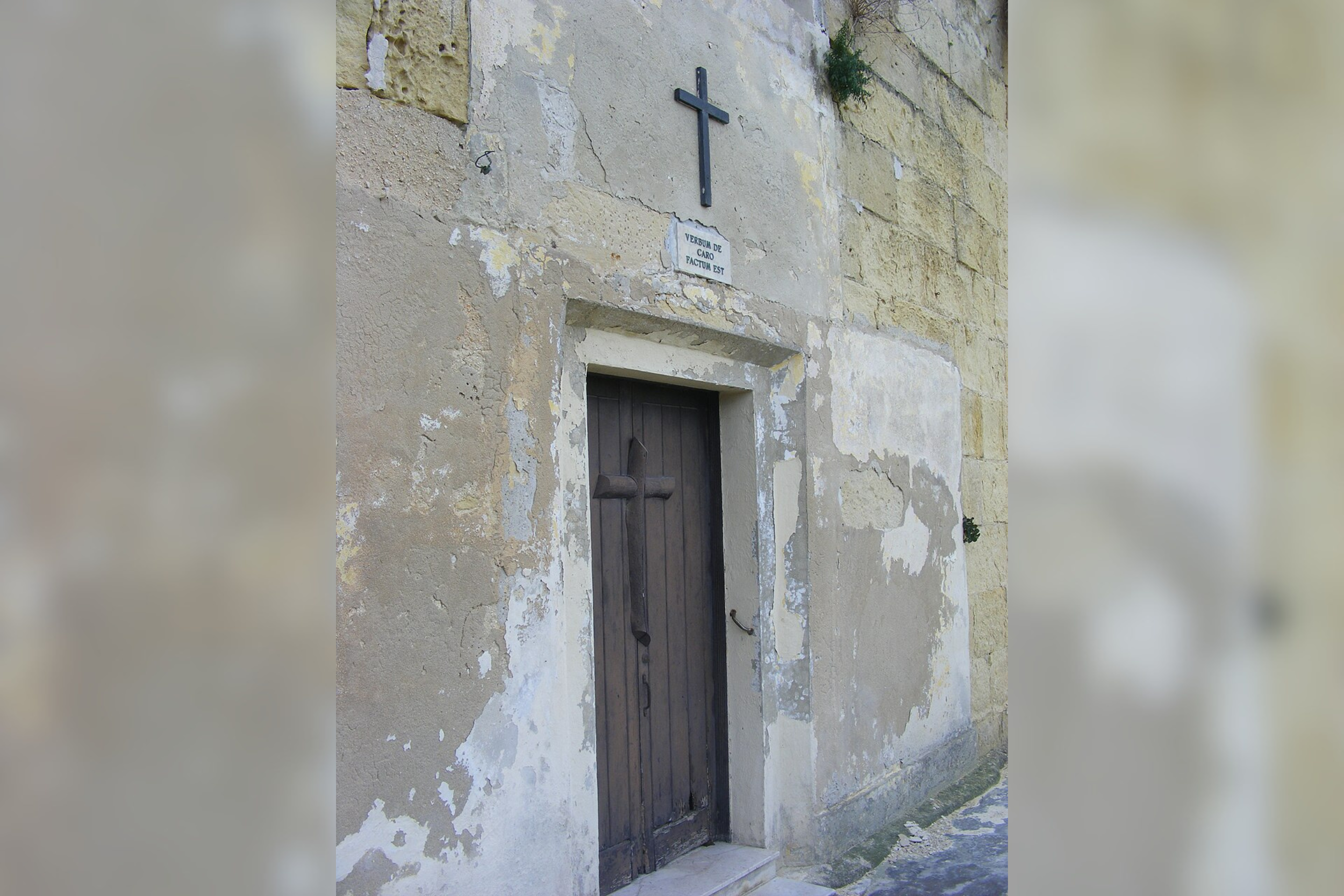
The design of St. Thomas Chapel (St. Thomas Chapelis a work of early Baroque religious architecture, having been originally constructed around 1610Situated in the heart of Cospicua this small chapel is one of the few buildings that preserves the essence of architecture prior to the major structural redesigns of the 18th and 19th centuries. Unlike the city’s monumental churches, this temple stands out for its austere facade and rectangular floor plan, designed to serve the local community of neighbors and port workers in a more intimate and everyday setting of faith.
History and Survival in Bormla
St. Thomas Chapel is a testament to the urban resilience of the Three Cities. Integrated into the dense network of Bormla’s streets, the chapel miraculously survived the heavy aerial bombings of World War II that transformed much of the surrounding landscape. Its limestone architecture, featuring a simple cornice and a small niche above the main door, reflects the devotion of local residents who, for centuries, have maintained this space as a haven of peace. It is a perfect example of Maltese "neighborhood chapels," which acted as the social and spiritual hub for each small community within the walls.
The interior of the chapel, though compact, is noted for its atmosphere of contemplation and its altar dedicated to St. Thomas. Over the years, the building has served various purposes, including as a teaching space or storage during times of need, yet it has always retained its sacred character for the inhabitants of Cospicua. The light entering through its small openings highlights the texture of the Globigerina limestone, creating a serene environment that invites a pause amidst the historical hustle and bustle of the area.
Beyond its artistic value, the chapel is a key piece for understanding the evolution of Bormla. Having been restored in recent times to secure its structure, St. Thomas Chapel remains a landmark for historians and visitors seeking the authentic soul of the Three Cities, away from the mass tourist routes. Consecrated as a small sanctuary of community faith, it is a fundamental stop to complete the historical and spiritual map of the Cottonera fortifications.