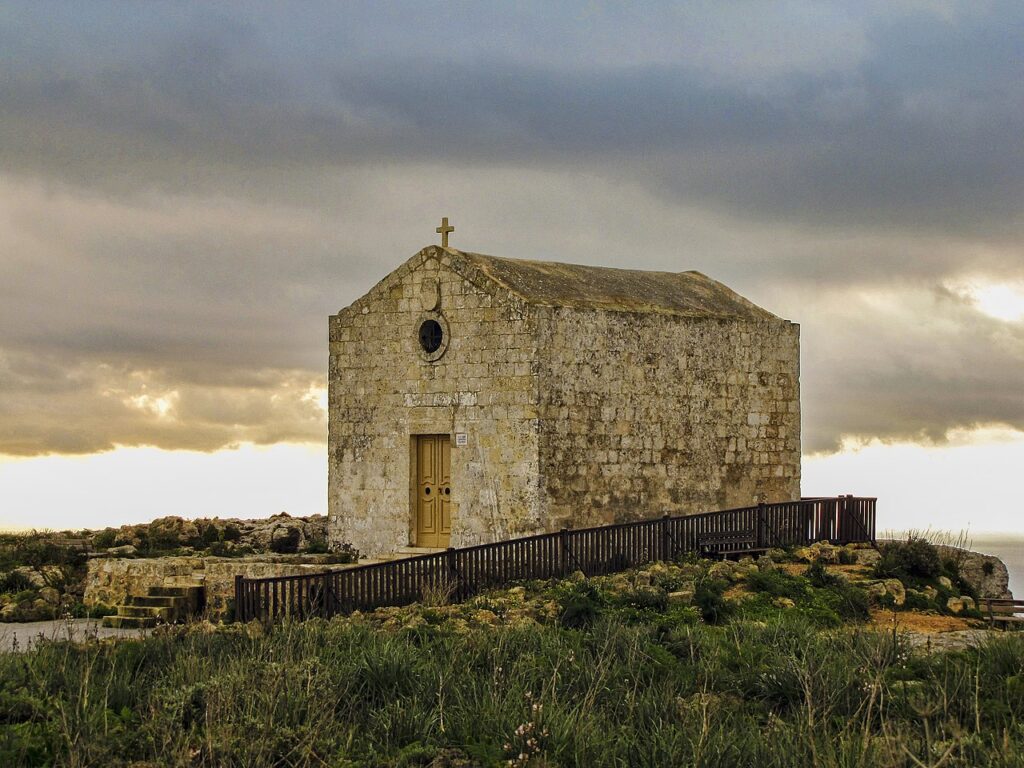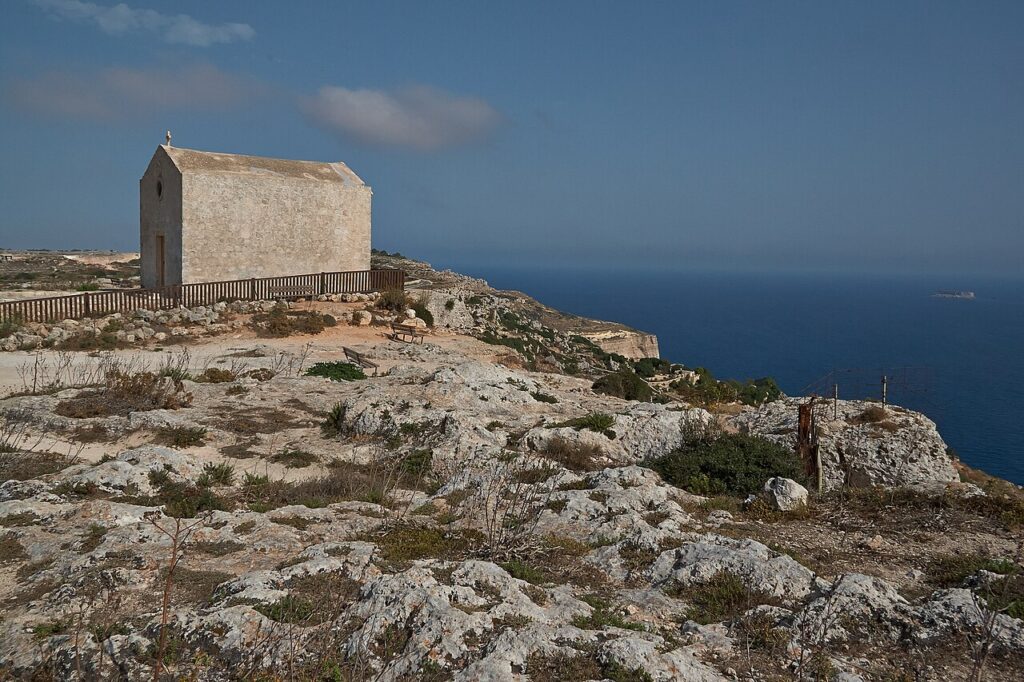
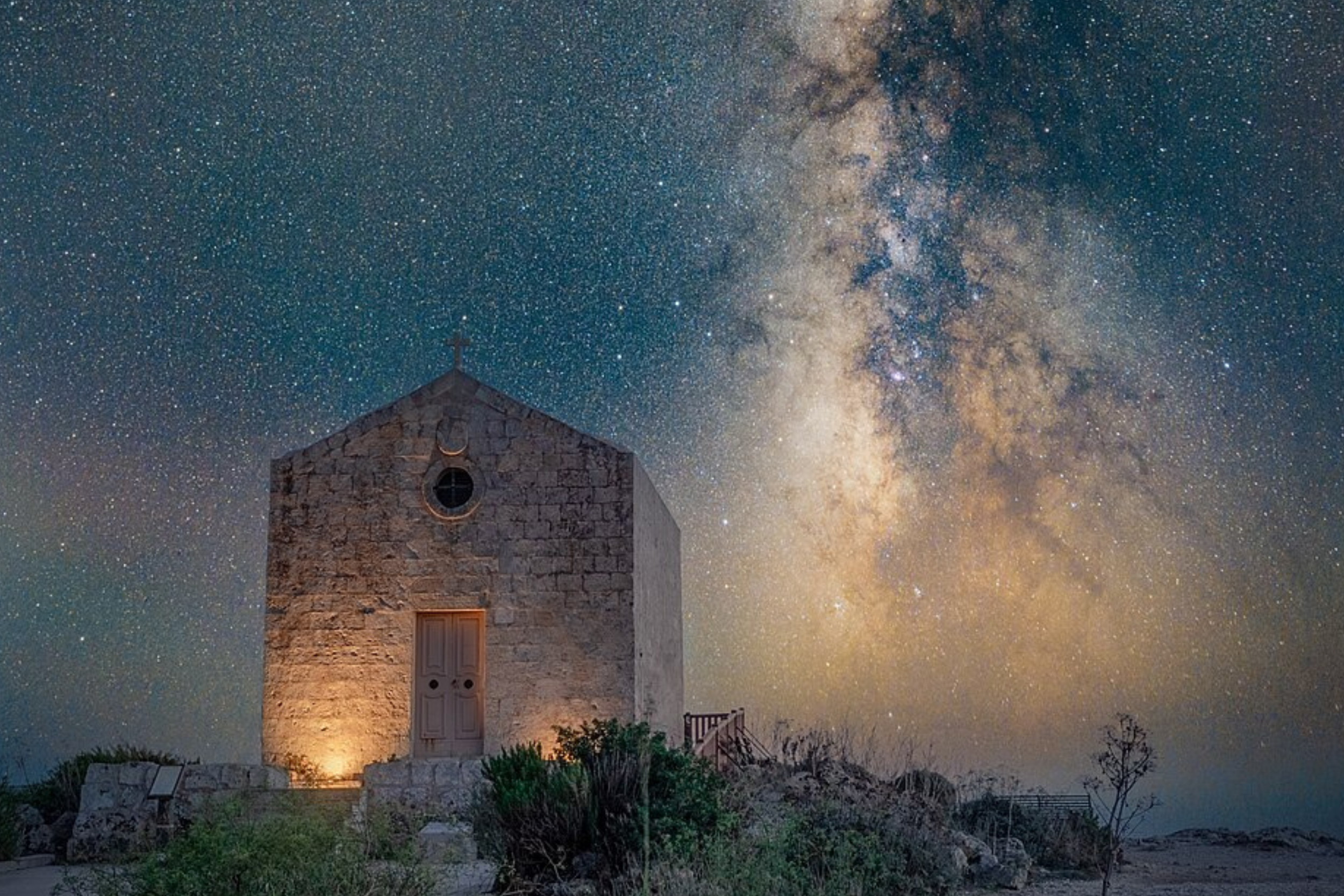
The design of the Chapel of St. Mary Magdalene is a work of the rural Baroque style, built in its current form in 1646. Situated on the edge of the Dingli Cliffs, the highest point of the Maltese islands, this small chapel stands over one of the most spectacular views of the Mediterranean. Unlike the grand parish churches, this structure stands out for its human scale and its historical function as a place of refuge and prayer for the farmers and sailors who traveled along the western coast of the island.
A Beacon of Faith on the Cliffs
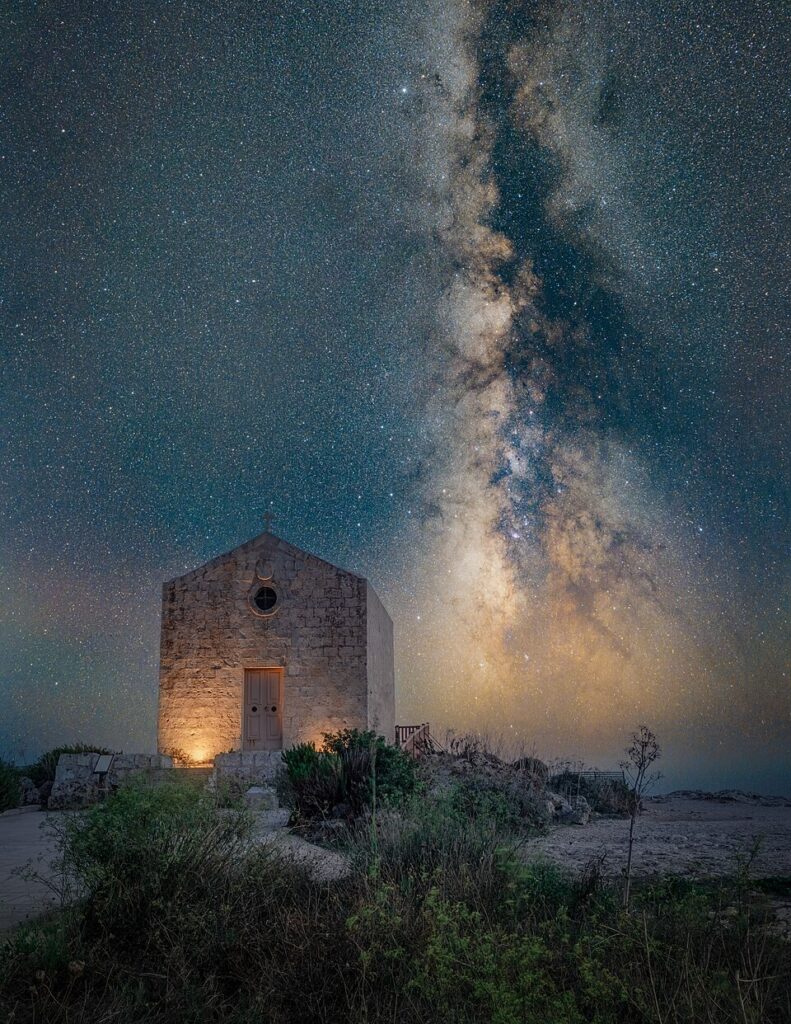
The Chapel of St. Mary Magdalene represents the simplicity and resilience of Maltese faith against the elements of nature. Its limestone facade is austere, with a simple rectangular door and a small circular window above that allows natural light to enter. The temple was rebuilt over a much older 15th-century structure, establishing itself as a geographical landmark that served as a guide for ships bypassing the island. Its solitary position on the Dingli plateau makes it a symbol of absolute peace and contemplation.
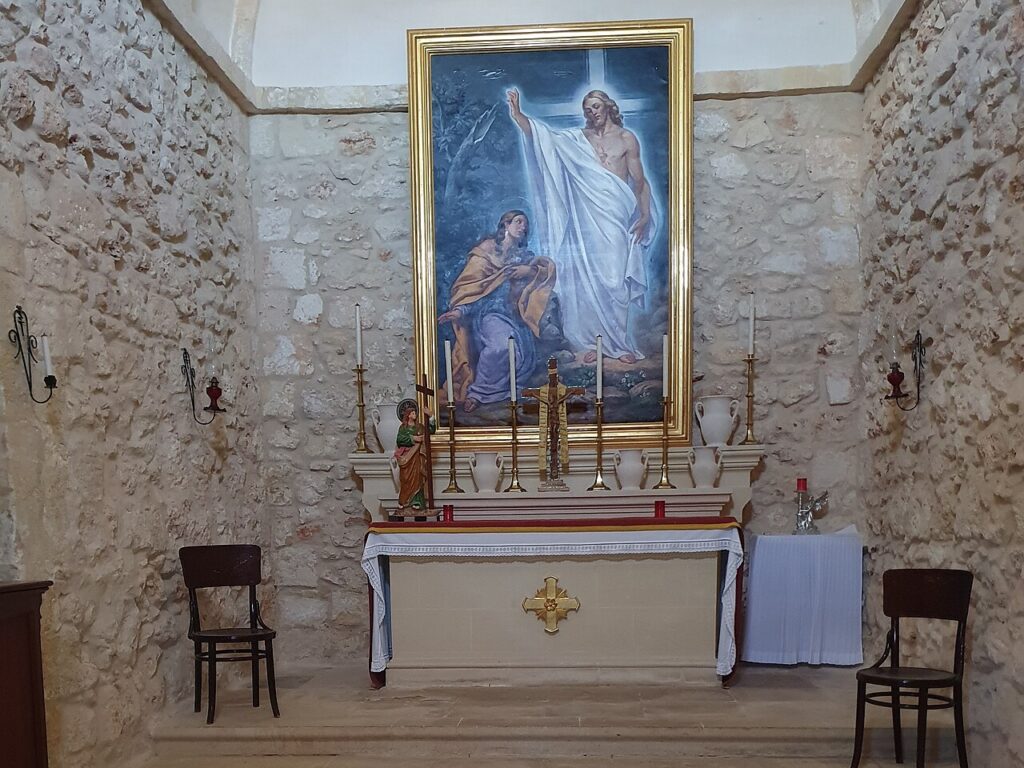
The interior of the chapel is a space of minimalist and sacred beauty. The central element is a small stone altar where mass is celebrated once a year, coinciding with the saint's feast day in July. Despite having been damaged by lightning and storms over the centuries, the structure has been carefully restored to preserve its interior arches and original flagstone flooring. The atmosphere inside, with the sound of the wind and the sea in the background, offers a unique meditation experience in the archipelago.
Beyond its religious value, the chapel is the main reference point for the thousands of visitors who explore the Dingli Cliffs. Having been restored by the Maltese government to ensure its stability on the cliff edge, it remains today one of the most beloved monuments for hikers and photography enthusiasts. Visiting this temple allows one to connect with the history of rural Malta while admiring the vastness of the ocean from its adjacent viewpoint. Consecrated as a sanctuary of hope facing the horizon, it is an essential piece to complete the 300 points of historical interest in Malta.