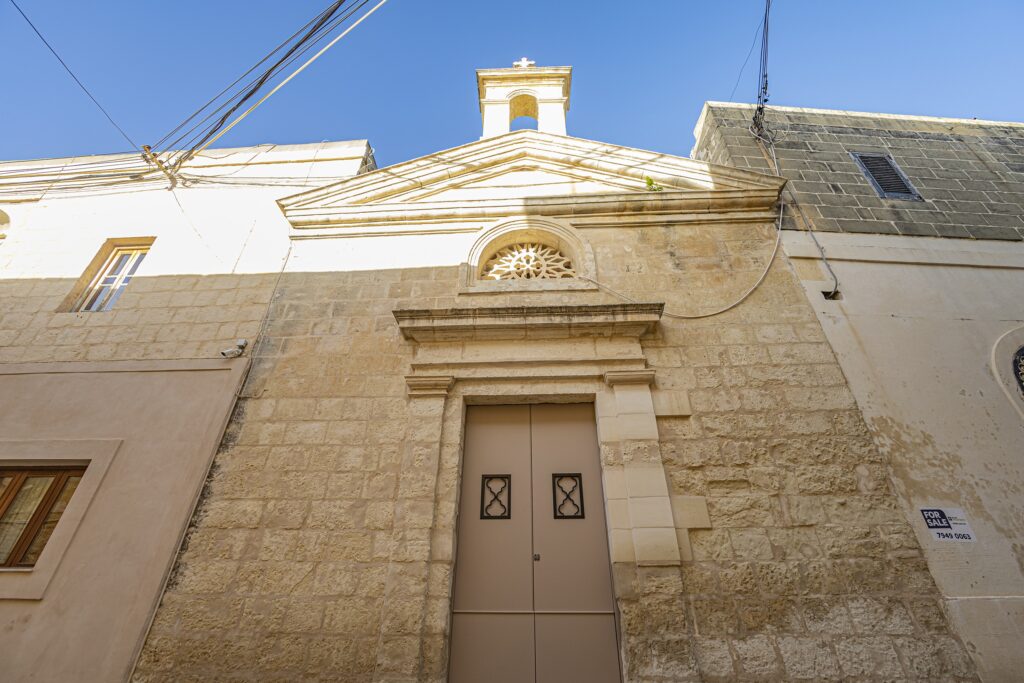
The Church of St. Mary in Għargħur is commonly known as Ta' Bernarda. The name comes from the legacy left by Bernarda Cauchi in 1571.
Origin, Art, and Conservation
The first church was built in the 15th century, and although it maintained the original medieval layout, it was rebuilt twice during the 16th century. In 1571, it was reconstructed by the patroness Bernarda, with the collaboration of her husband Damjan Cauchi, who also took charge of its upkeep and organized the feast of the Assumption, during which food was offered to the poor.
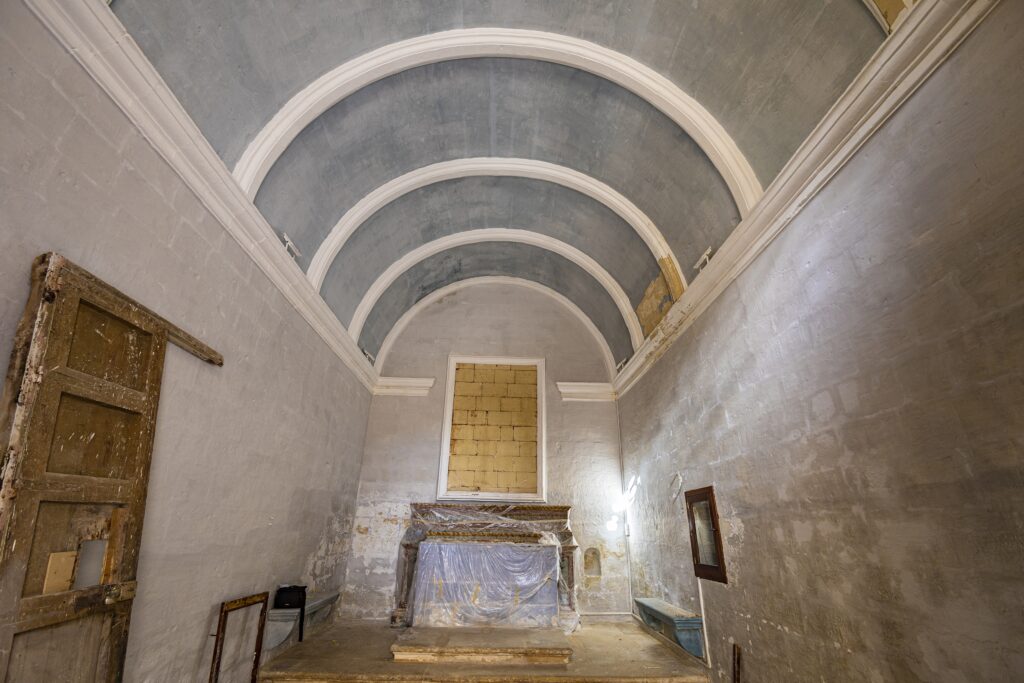
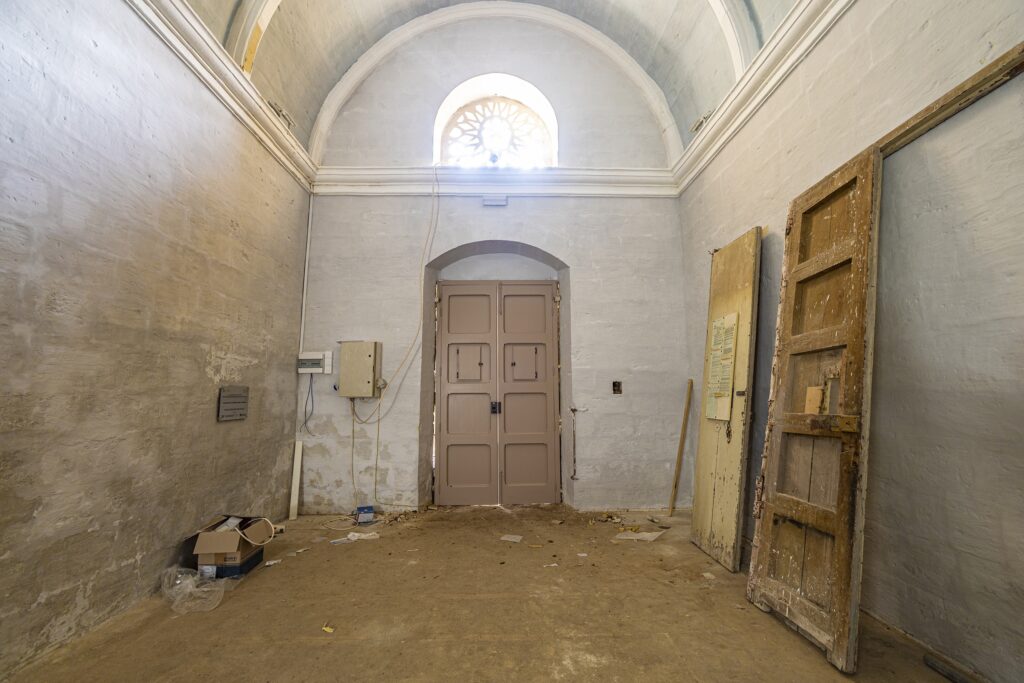
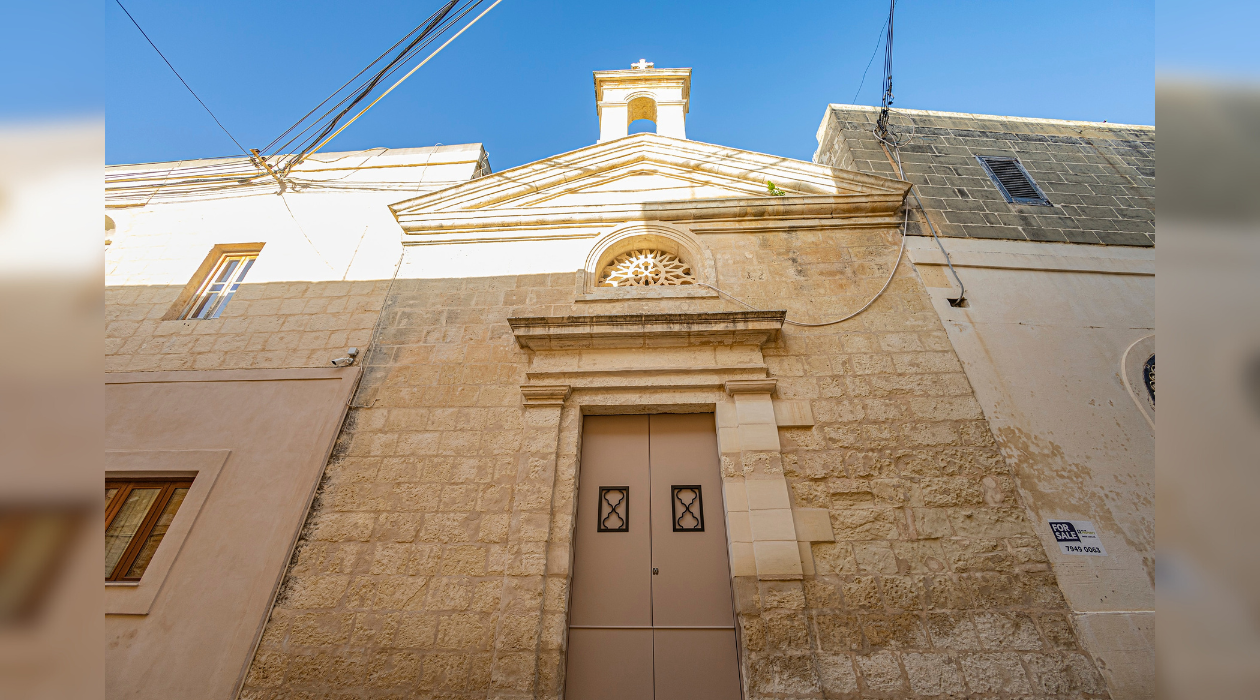
The façade is characterized by its simplicity and the almost complete absence of architectural ornamentation. The most prominent element is the main door, framed by two pilasters that support a structure with simple lines, topped by a triangular pediment. In the center, a small bell tower rises, featuring a bell and a cross. Above the door is a semicircular oculus, an unusual shape since traditionally these windows were round. This element is decorated with delicate sculptural stonework. The interior features a tiled floor, and according to the records of the 1634 pastoral visit by Bishop Pietro Pontremoli, the church once included a cemetery.
The titular painting of the Assumption was created in the second half of the 17th century by an unknown Maltese artist, following the reconstruction of the church in 1655. The painting depicts the soul and body of the Virgin Mary being carried to heaven three days after her death. The Virgin is shown suspended in the air, with her arms outstretched and her gaze raised in ecstasy, surrounded by angels. On either side of her are St. Cosmas and St. Damian, saints linked to an ancient devotional painting in the temple. At the bottom, the apostles contemplate the empty tomb, while one of them holds the shroud with roses, a Marian symbol. Above the Virgin's head is a silver crown, anticipating her coronation as Queen of Heaven. The presence of St. Damian commemorates Damjan Cauchi, a historic benefactor of the church.
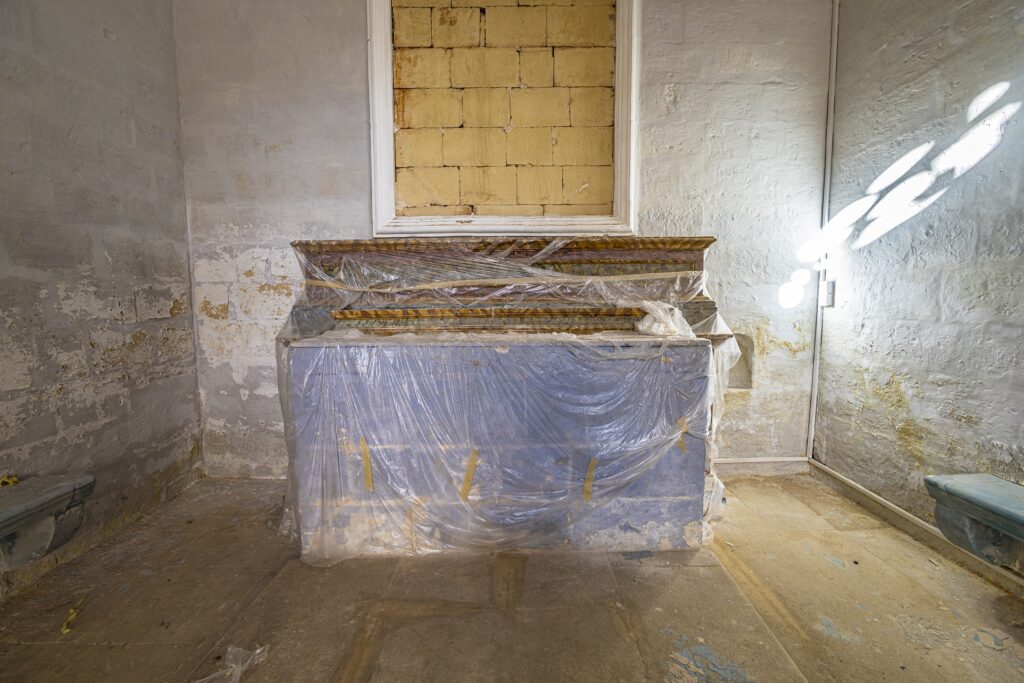
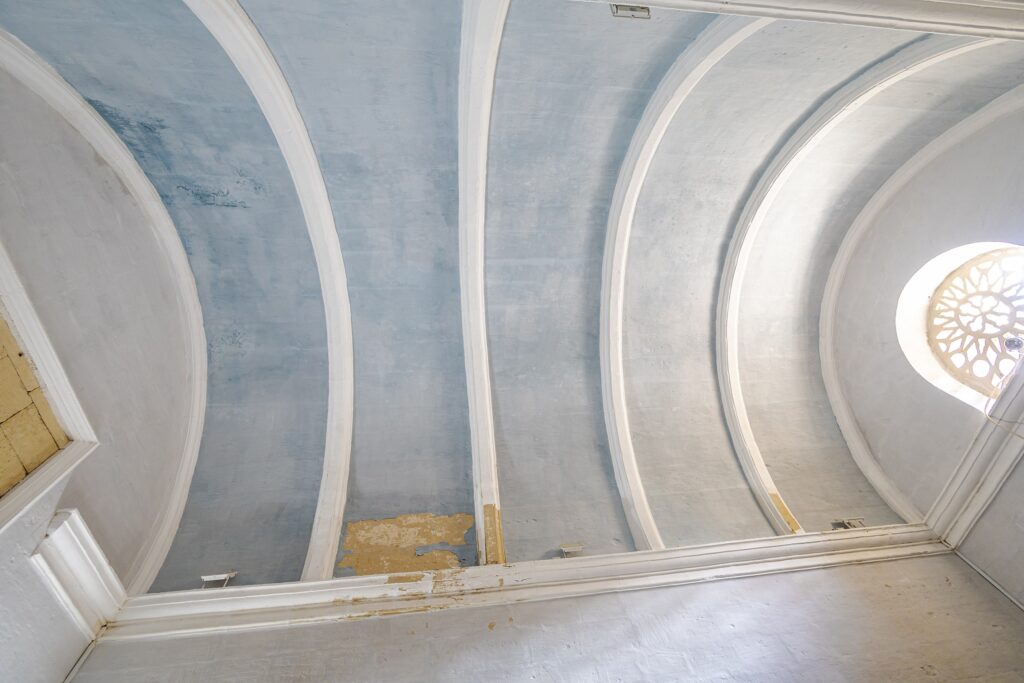
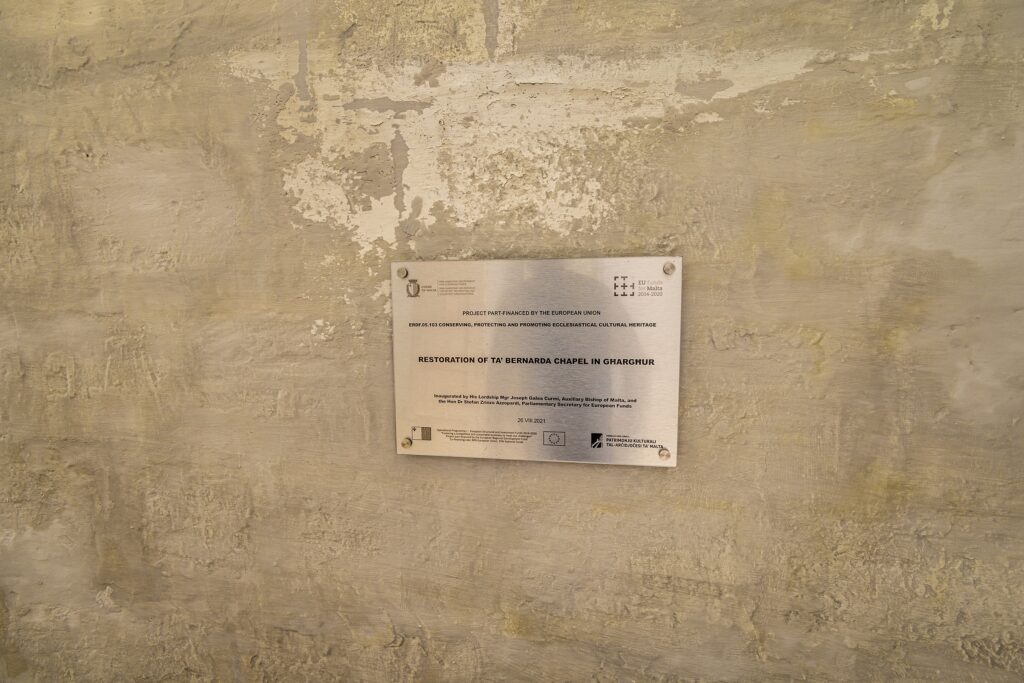
A project co-financed by the European Union focused on the comprehensive conservation of the building, including the interior and exterior masonry walls, which had suffered deterioration due to weathering and environmental pollution. The interventions helped stabilize the structure and restore its aesthetic qualities, as well as incorporating a modern lighting and sound system to enhance its liturgical and community use.
The same project included the conservation of the painting of the Holy Trinity and the painting of the Assumption, along with their gilded wooden frames. The tasks carried out addressed issues arising from humidity, water leaks, and insect damage through cleaning, consolidation, and restoration of the paint layers, canvases, and frames. These actions ensure the preservation and lasting enjoyment of this valuable religious and artistic heritage at the heart of the community.