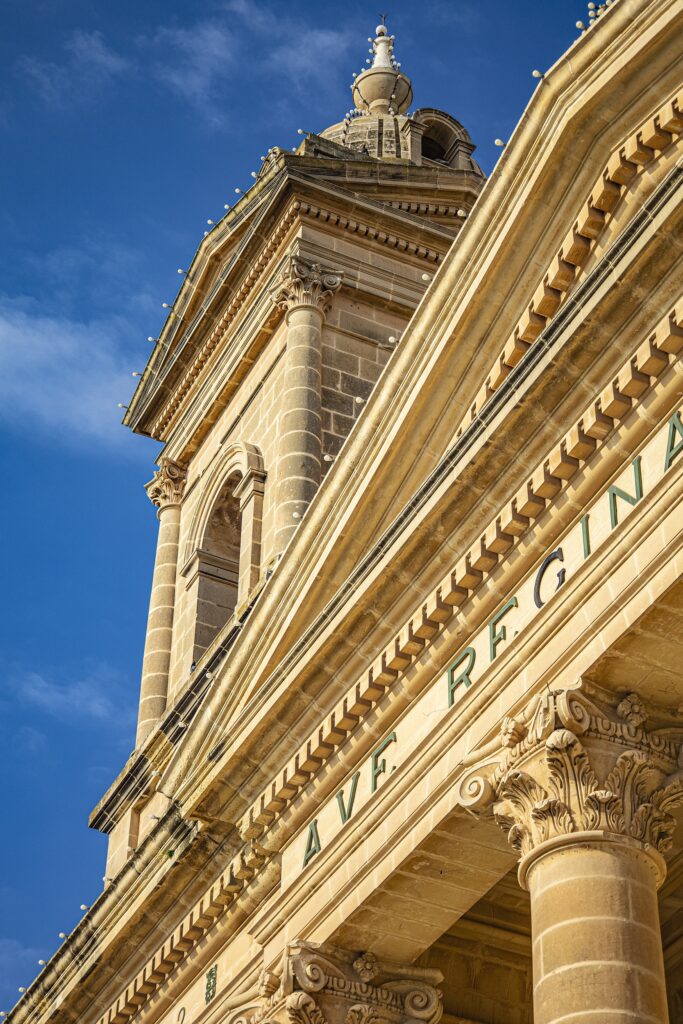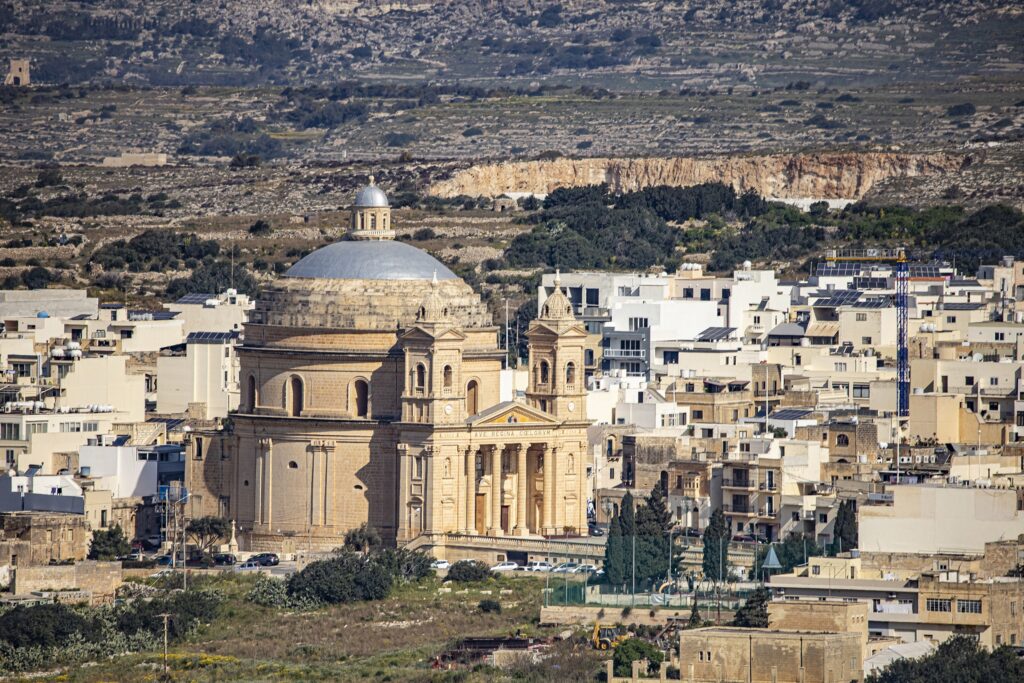
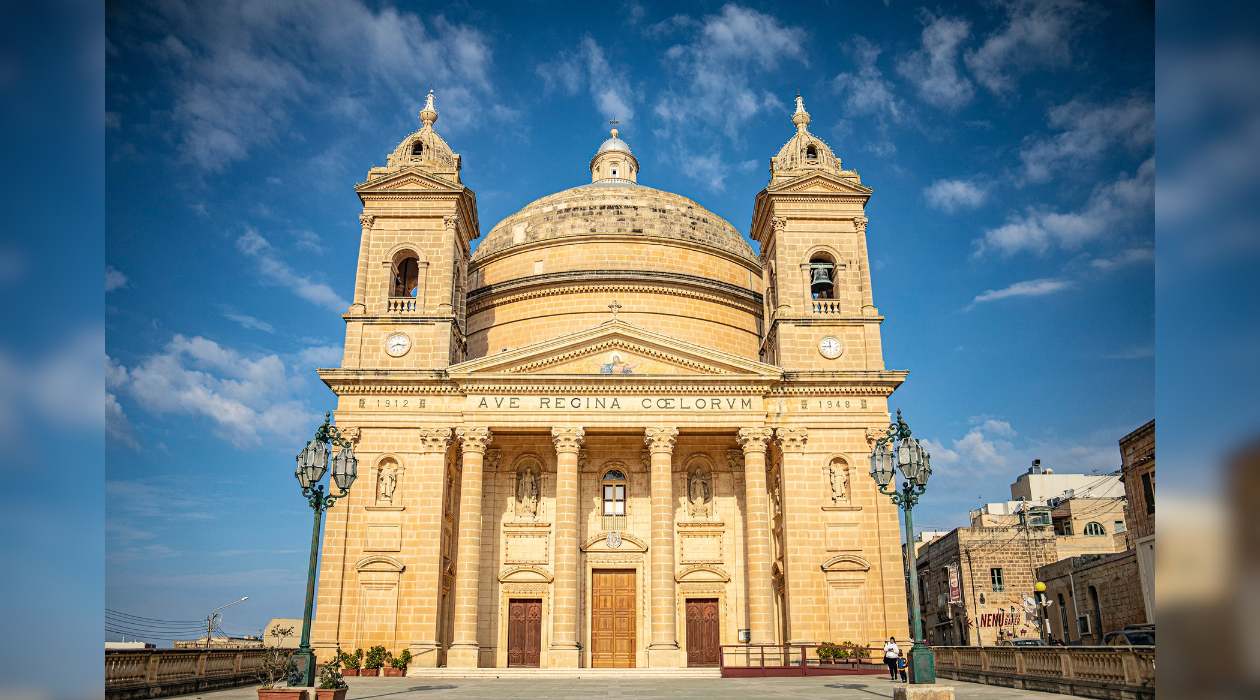
The Parish Church of the Assumption in Mġarr was built in several stages over an earlier 15th-century church and was completed with the construction of its large dome. The construction dates of the church, "1912," and its completion, "1948," are inscribed in bronze at the base of the bell tower.
Architecture, Art and Conservation
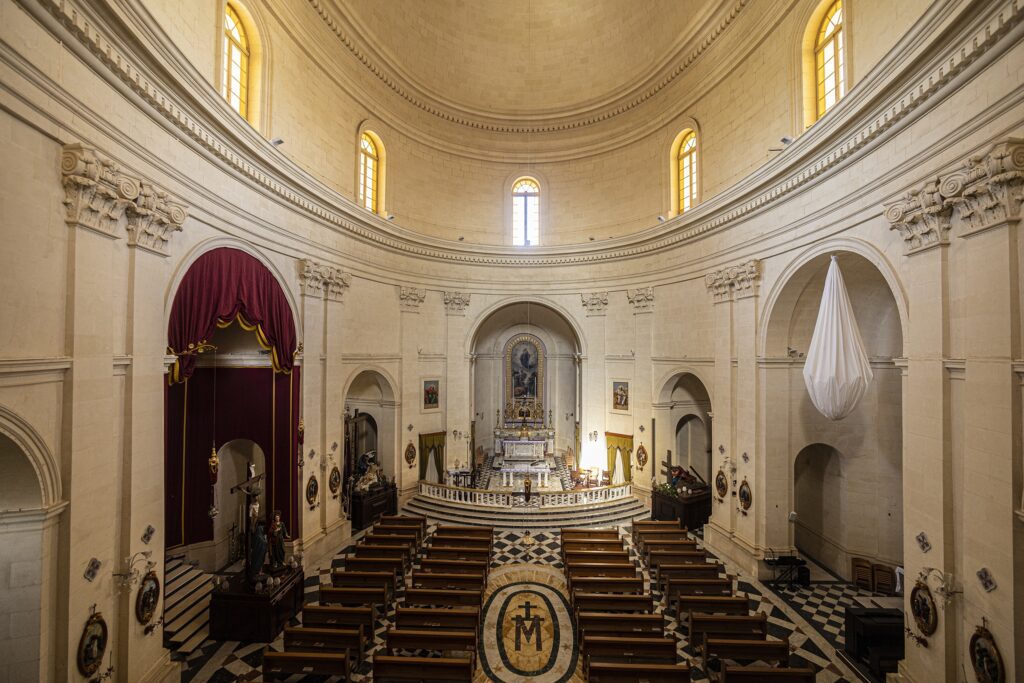
The parish church of Mġarr was built in neoclassical style with an oval plan, responding to the desire of the parish priest Dun Gerolamo Chetcuti to have a temple inspired by the Carmelite church of Mdina, but on a larger scale. Its distribution of chapels and side altars follows that model, while its imposing dome and bell towers evoke those of the Rotunda of Mosta, one of the island’s most iconic buildings.
In 1957, the main altar was created in Pietrasanta, Italy, by Romeo Ceccotti, following a design by Chev. Vincenzo Bonello, who also designed the flooring of the presbytery, the stairs, and the choir. In 2002, the altar was moved to the choir to allow for the installation of a new Carrara marble altar, designed by Renzo Gauci.
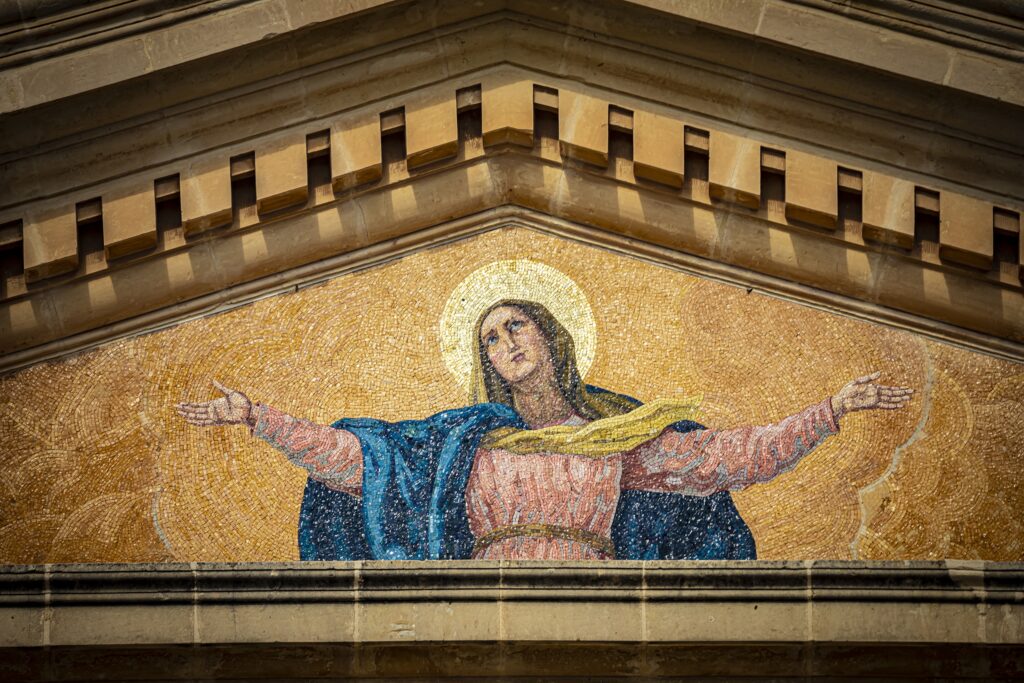
On the façade, the polychrome mosaic panel depicting the Assumption of the Virgin Mary stands out. The composition, divided into five panels, is based on a 1627 work by Guido Reni, preserved in the Church of the Assumption. The mosaic was created in 1940 by the Vatican Mosaic School and installed in 1945 in the tympanum above the portico. It depicts the Virgin ascending to heaven three days after her death, with her arms extended and her gaze directed upwards in a divine ecstasy. It was commissioned by the parish priest Dun Edgar Salomone in gratitude for the protection of the village during World War II.
Among the most notable elements is the main door, which originally belonged to the parish church of Naxxar and was designed by the architect Tommaso Dingli. The door was acquired when the church of Naxxar was being reconstructed, becoming a historical piece of great artistic value.
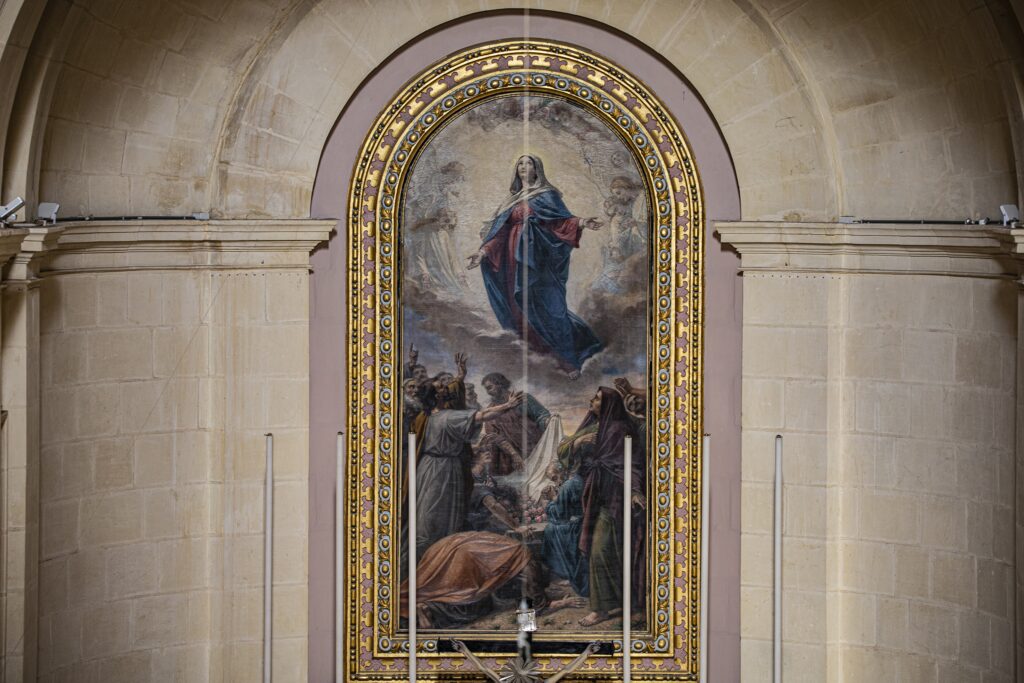
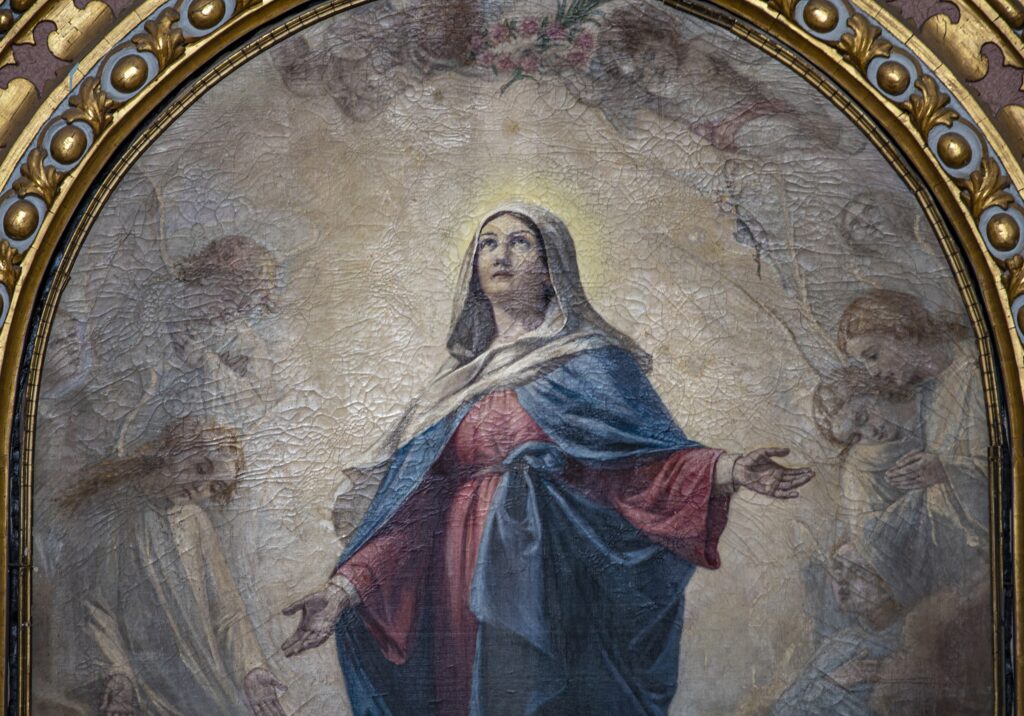
The titular painting of the Assumption of Our Lady was created in 1920 by the Maltese artist Lazzaro Pisani in oil on canvas. The work depicts the Virgin Mary being lifted to heaven by angels, with her arms open and her face in a state of ecstasy. Surrounding her are angels holding a crown of roses, a Marian symbol. At the bottom, the apostles gather around the empty tomb, observing in awe, while one of them holds the shroud adorned with roses. To the right, a female figure appears, representing either Martha or Mary of Bethany.
A project co-financed by the European Union focused on the conservation of the church, particularly its tympanum mosaic, which had suffered deterioration due to weathering and environmental pollution. The interventions helped halt these processes and restore both the structural integrity and aesthetic qualities of the mosaic, ensuring the preservation and enjoyment of this artistic and religious heritage for future generations.