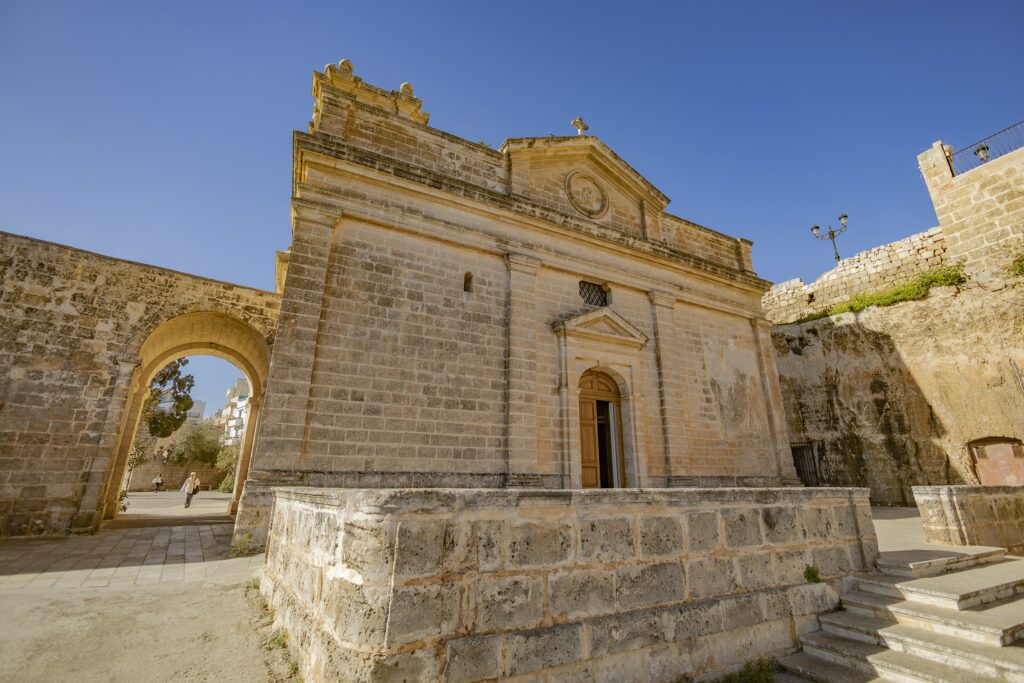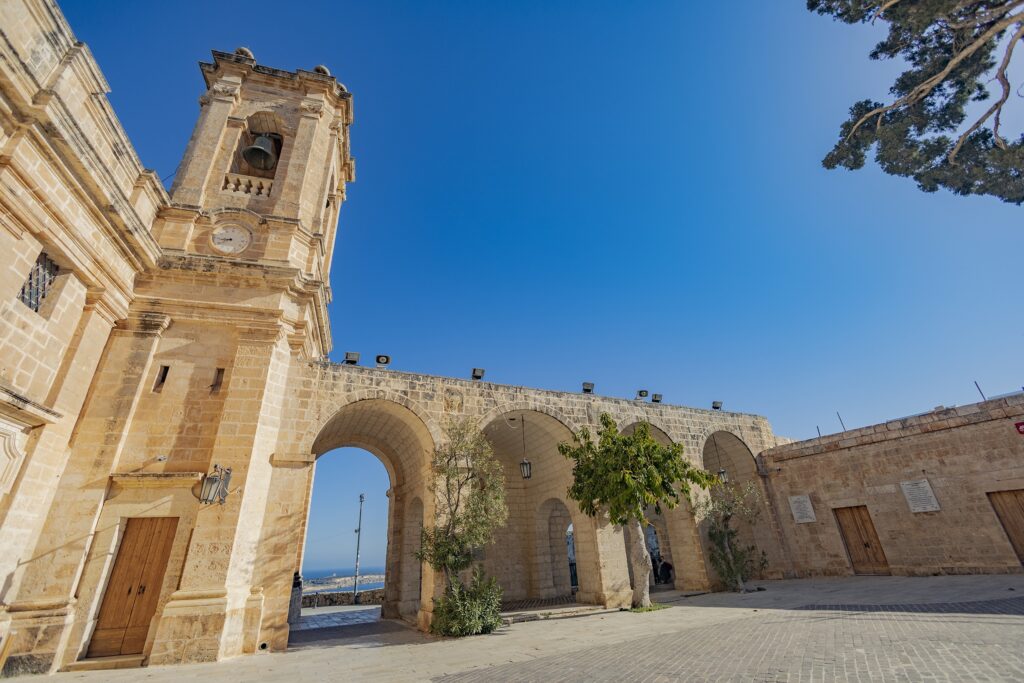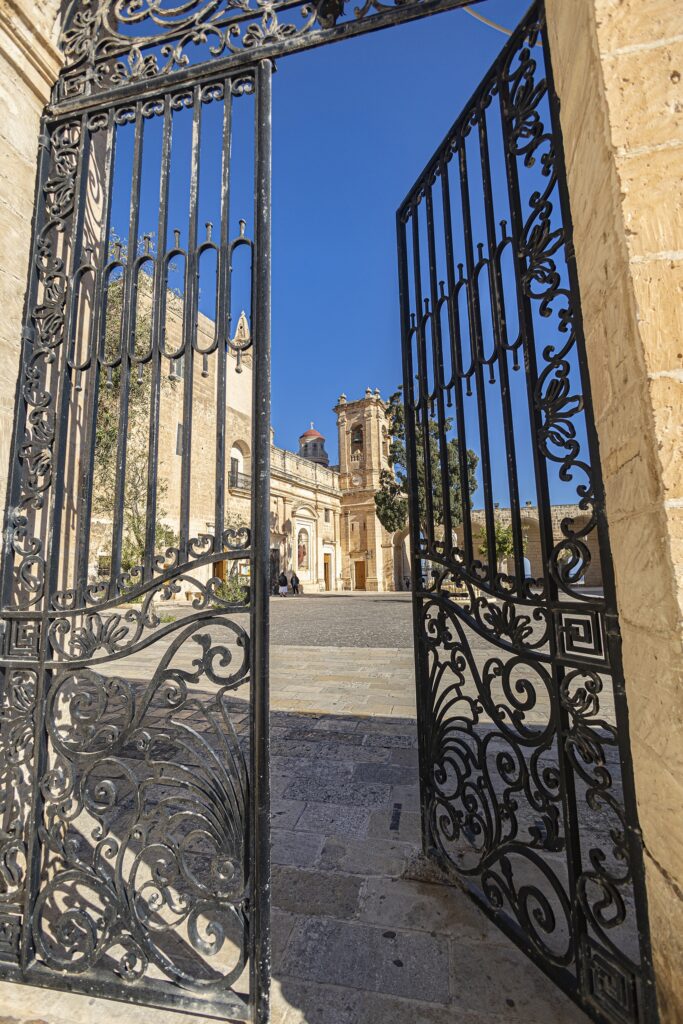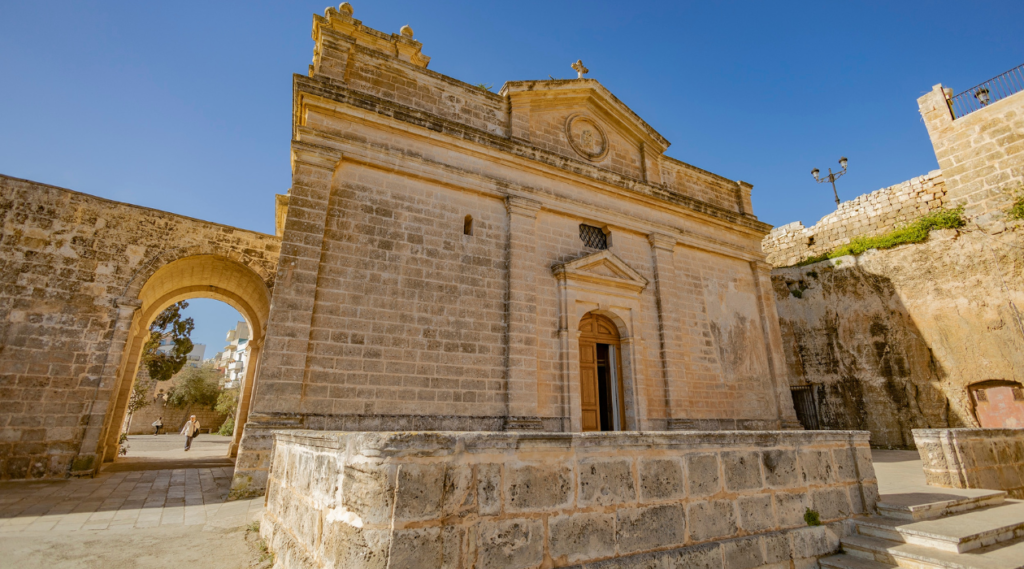
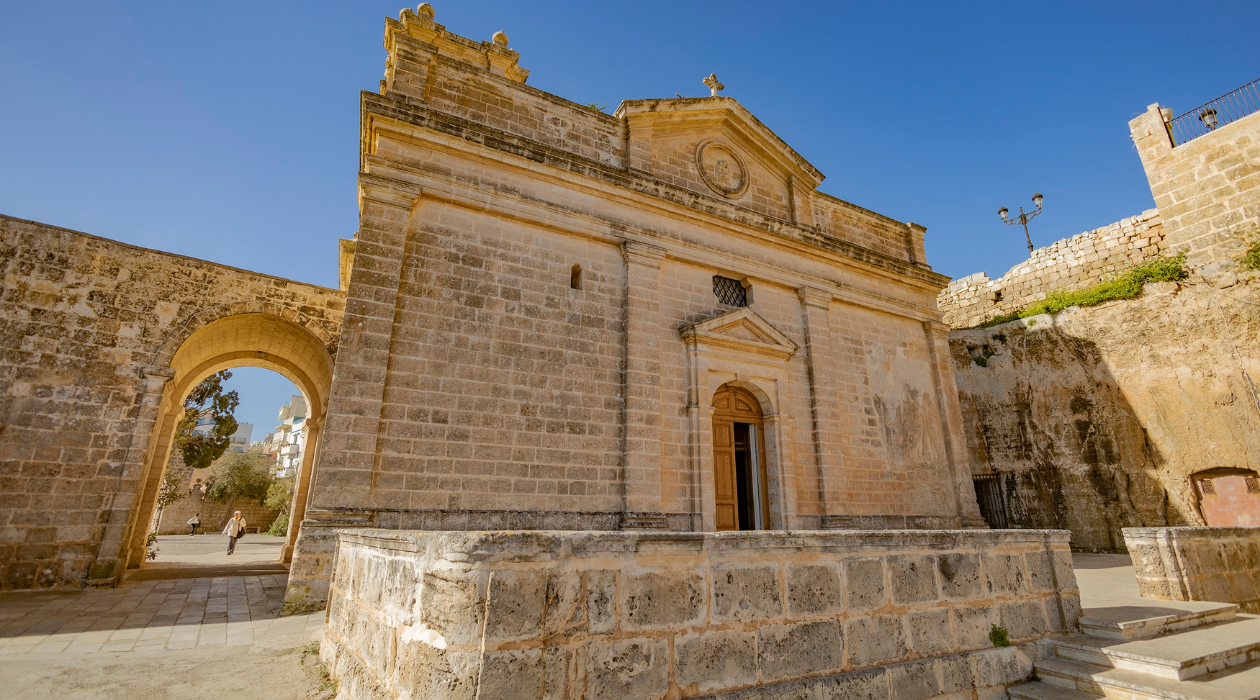
The Sanctuary of Our Lady of Mellieħa has been a place of pilgrimage for centuries. The cave-church sanctuary was adapted in the mid-17th century to accommodate pilgrims, while other changes were made to the surrounding area in the mid-18th century.
History, Devotion, and Conservation
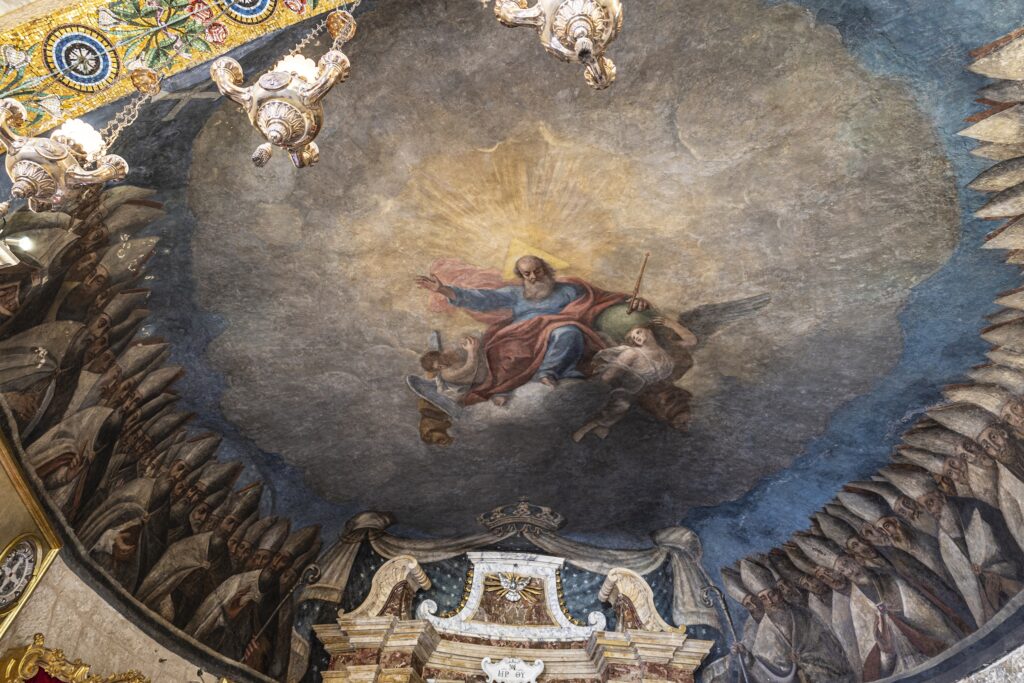
The Sanctuary of Our Lady of Mellieħa is one of the oldest pilgrimage centers in Malta. Its origin lies in a simple cave-church carved into the rock, with an elliptical ceiling and decorated with a Byzantine mural of the Virgin and Child. This site, venerated since the early days of Christianity on the island, likely began as a natural grotto that was later expanded and structured. Over time, it transformed into a religious complex organized around a large central courtyard with a fountain installed in 1644 to supply water for the pilgrims. Adjacent to the grotto-church were a loggia and various rooms for accommodation.
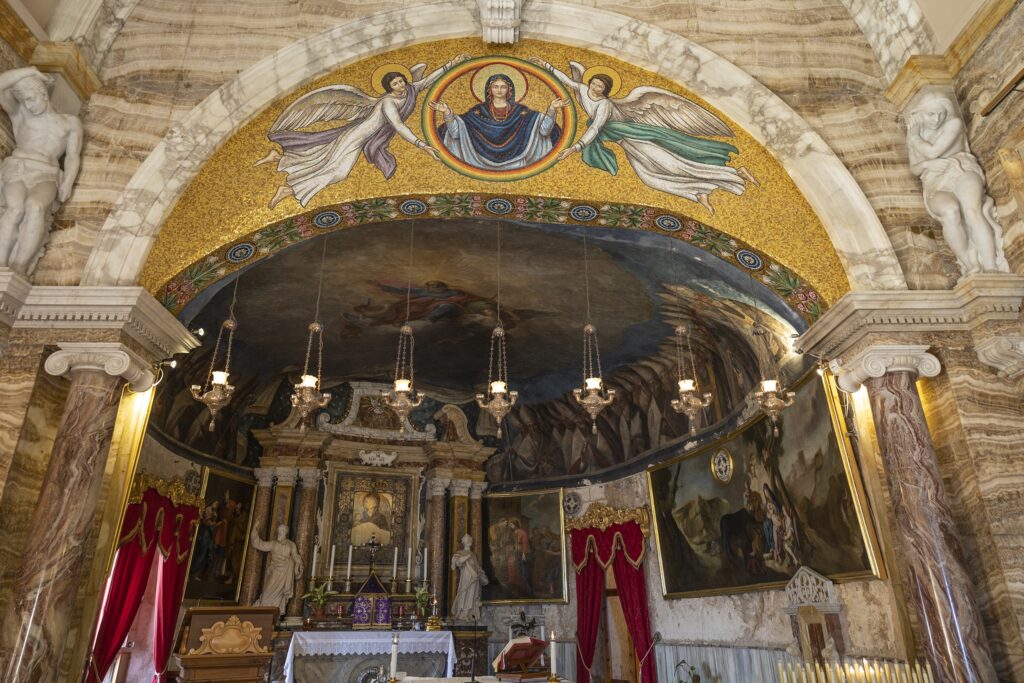
Between 1717 and 1718, a severe drought affected the Maltese islands, leading to numerous pilgrimages seeking the intercession of the Virgin Mary. After the drought ended, a commemorative arch was built in 1719 as a gesture of gratitude. Throughout the 18th century, the sanctuary continued to expand. Between 1740 and 1744, the bell tower with three bells was erected, and new spaces were created to accommodate the faithful. In 1753, the main altar was enriched with marble, replacing the old stone decoration, and statues of St. Peter and St. Paul were added.
The Pilgrims' Hostel, built between 1713 and 1714 in traditional Maltese vernacular style, provided accommodation for those arriving from distant places, including bishops and Grand Masters of Malta. Many of them left donations as a token of gratitude, including Grand Master Perellos, who offered a lamp after recovering from an illness.
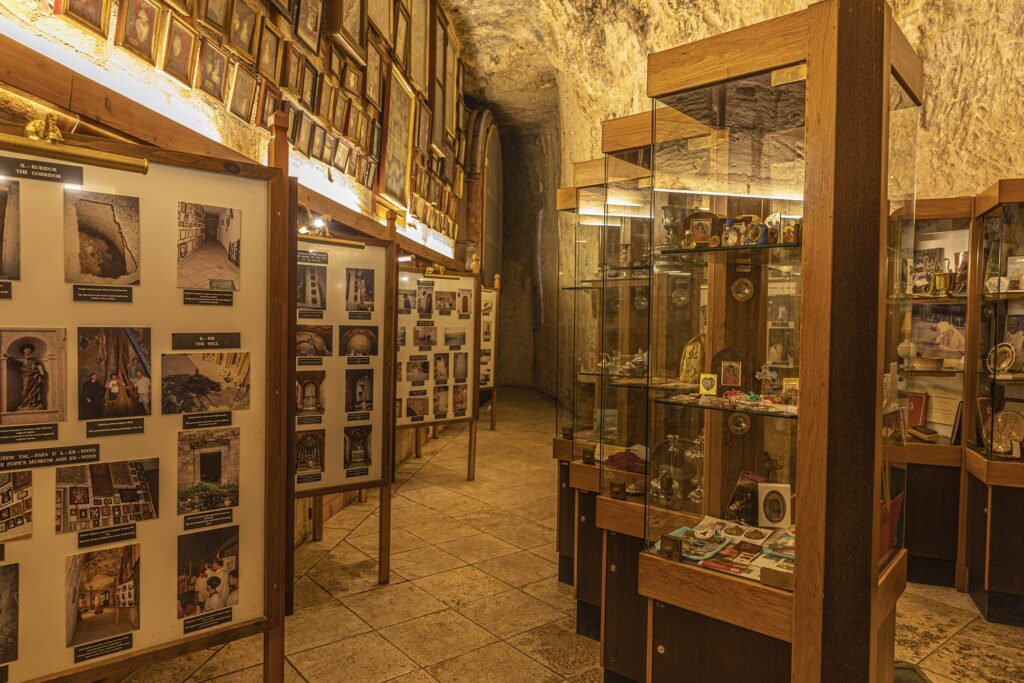
The sanctuary preserves an important collection of ex-votos documented as early as the late 17th century, including agricultural tools, hunting weapons, sculptures, and over sixty paintings. Notably, a work donated by the German knight Fra Wolfgang Philip Guttenburg, created in 1678 by Stefano Erardi, stands out. This painting was given in fulfillment of a vow after he survived a storm near the Gulf of Taranto.
The titular painting, directly executed on the rock in Sicilian Byzantine style and dated between the late 12th and early 13th centuries, depicts the Virgin with the Child Jesus and bears the inscriptions MAT and DEI, meaning Mother of God. According to tradition, it is said to have been painted by St. Luke during St. Paul's journey to Rome in the year 60 AD. In 1644, Mario De Vasi from Syracuse promoted the ornamentation of the main altar with a frontal and sculptural elements in stone.
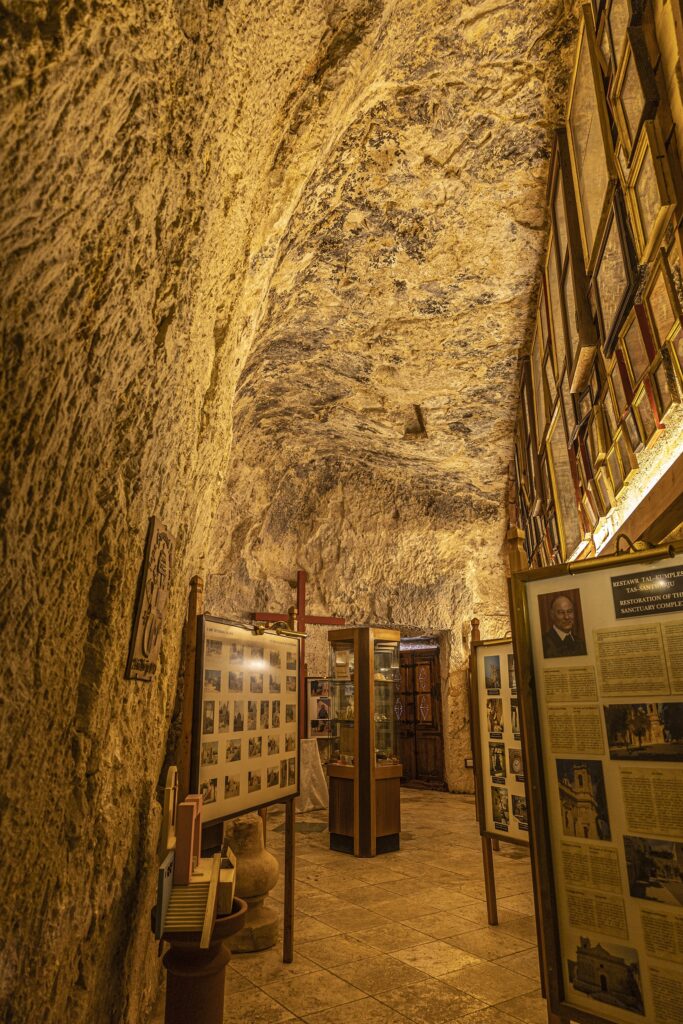
Currently, a project co-financed by the European Union has enabled the conservation and rehabilitation of the old Pilgrims' Hostel, transforming it into a Marian devotion museum. This space gathers and displays objects donated over the centuries in gratitude to Our Lady of Mellieħa, including donations from prominent figures such as Blessed Pope John Paul II, thus ensuring the preservation and transmission of this important religious and cultural heritage.