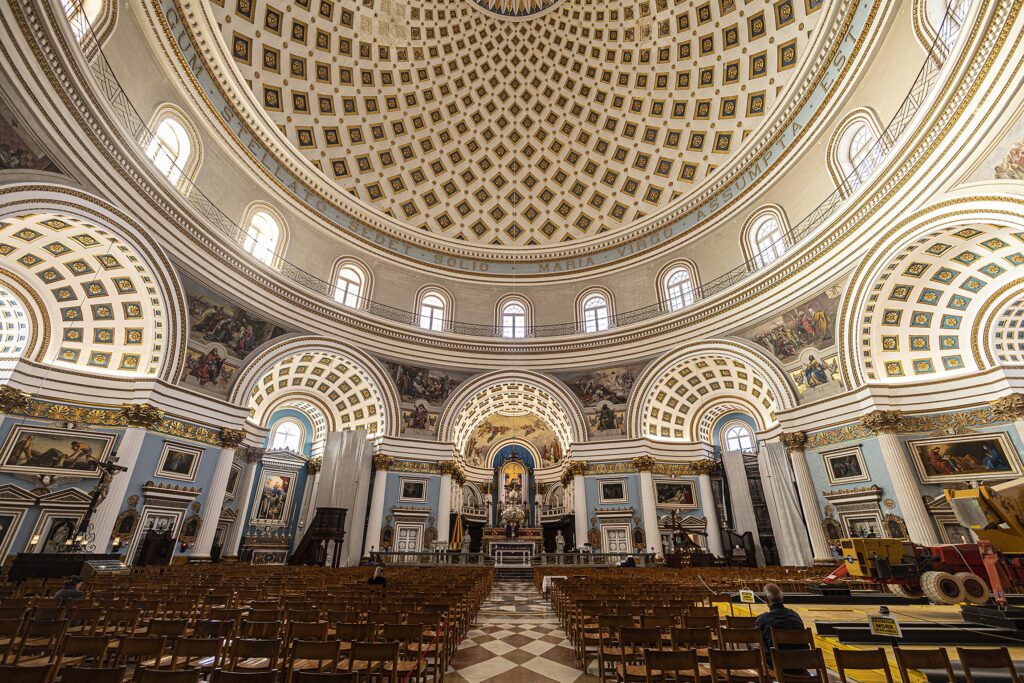
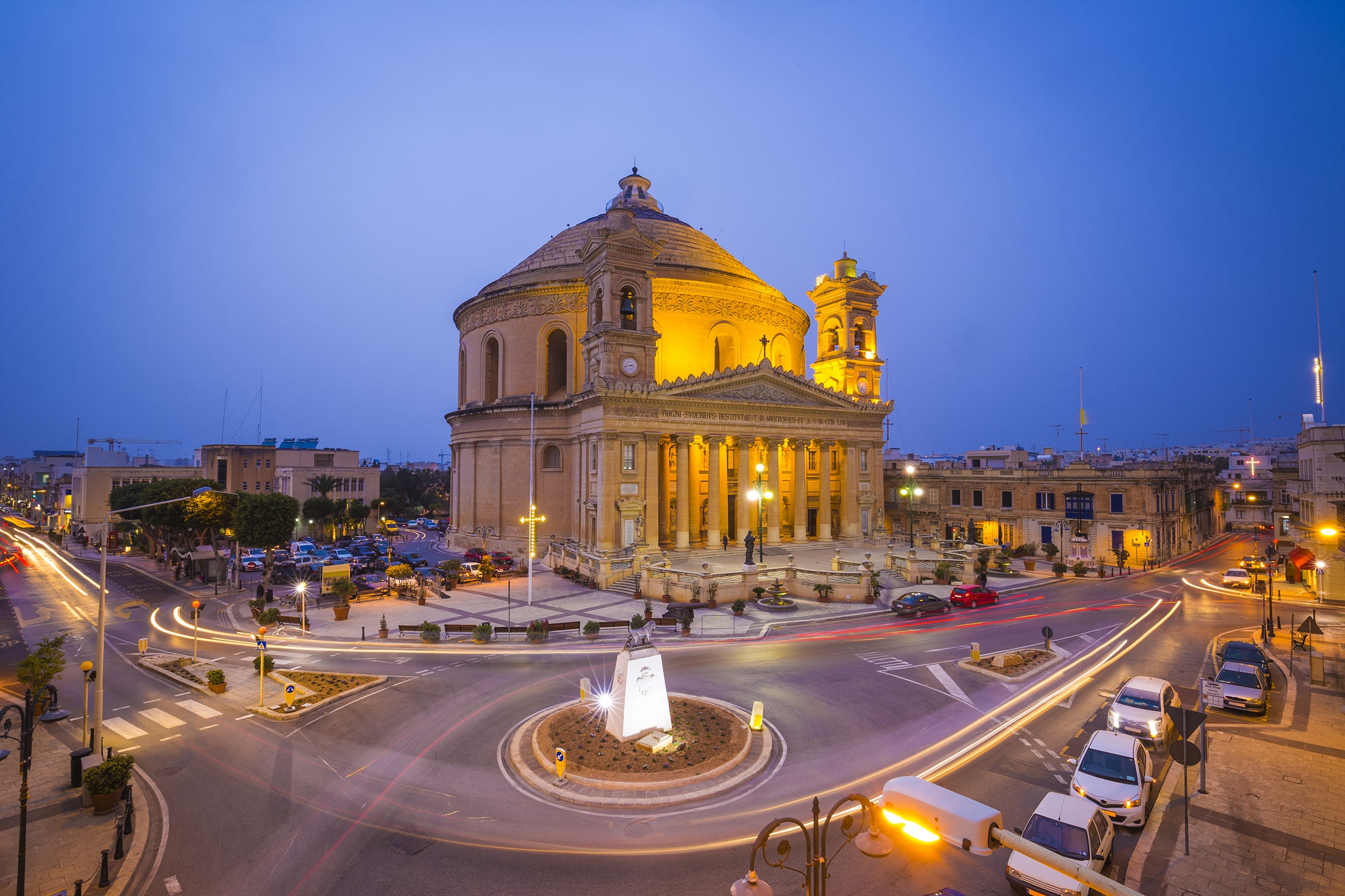
The parish church of Mosta was built around an earlier church constructed in 1619. The old church was dismantled after the completion of the new one. Its architect, Giorgio Grognet de Vassé (1774–1862), was inspired by the Pantheon in Rome, while the Temple of Diana in Ephesus served as the inspiration for the façade.
The Mosta Rotunda: Monumental Architecture and Pictorial Treasure of Malta
The Parish Church of Mosta, known as the Rotunda, stands out for its imposing circular plan and colossal dome, whose exterior surface was protected with copper sheets in 1960. Its architectural design is defined by a large portico with Ionic columns and a drum with sixteen windows that elevate the structure toward the upper lantern. The façade is adorned with sculptures of the apostles created by Marco Montebello between 1966 and 1974, while the exterior parvis features statues of St. Joseph and the Virgin Mary sculpted by Vincenzo Apap in the mid-20th century. Inside, the floor displays an elaborate geometric marble design by Raffaele Caruana Dingli from the early 20th century, which was restored in the 1960s following damage sustained during the Second World War.
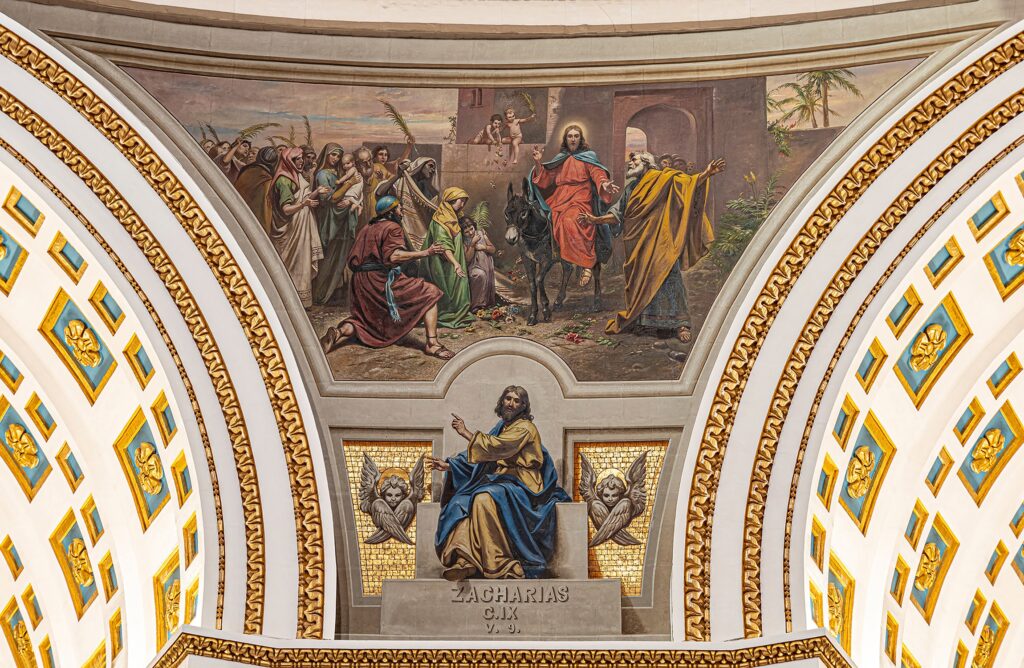
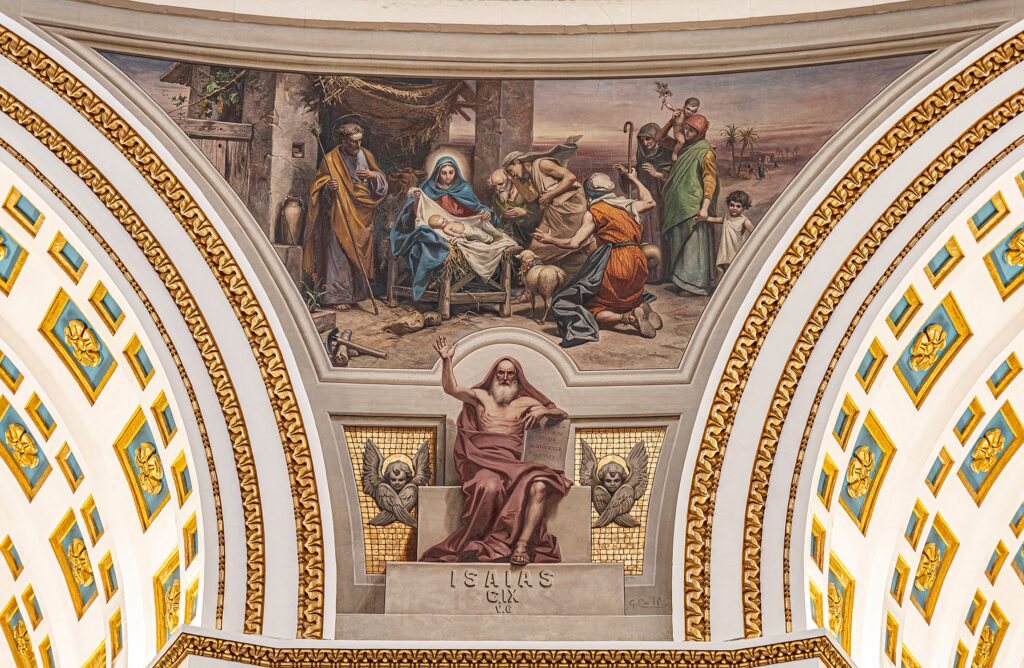
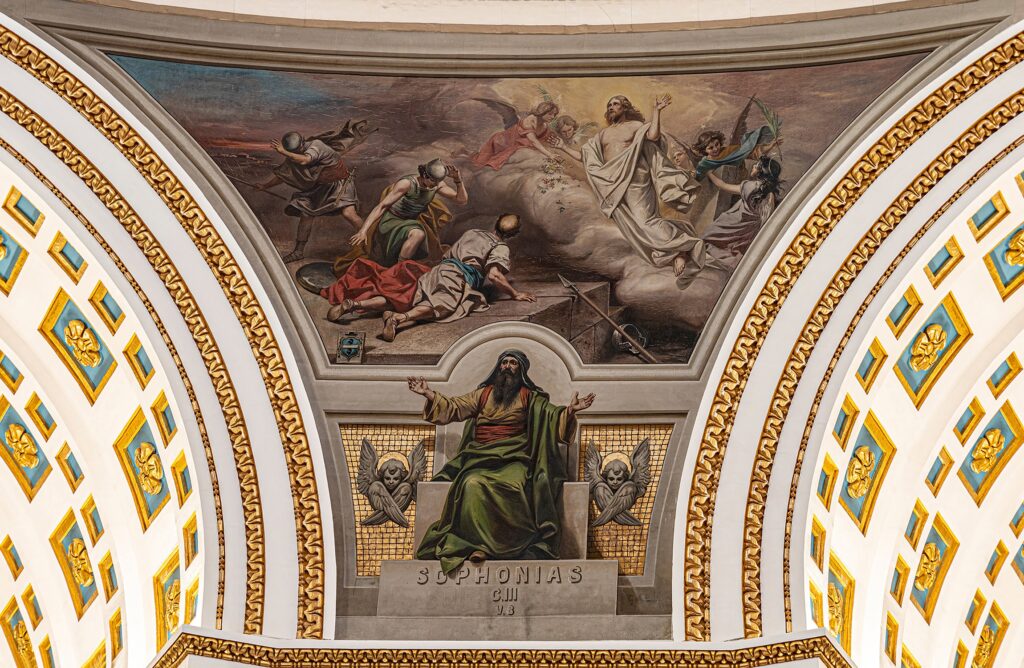
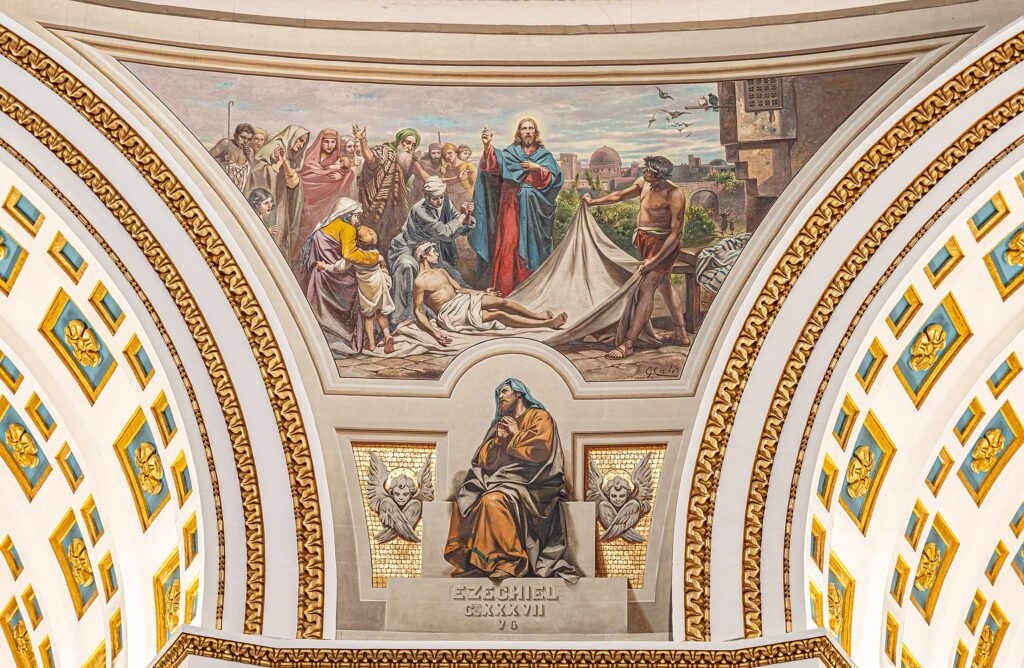
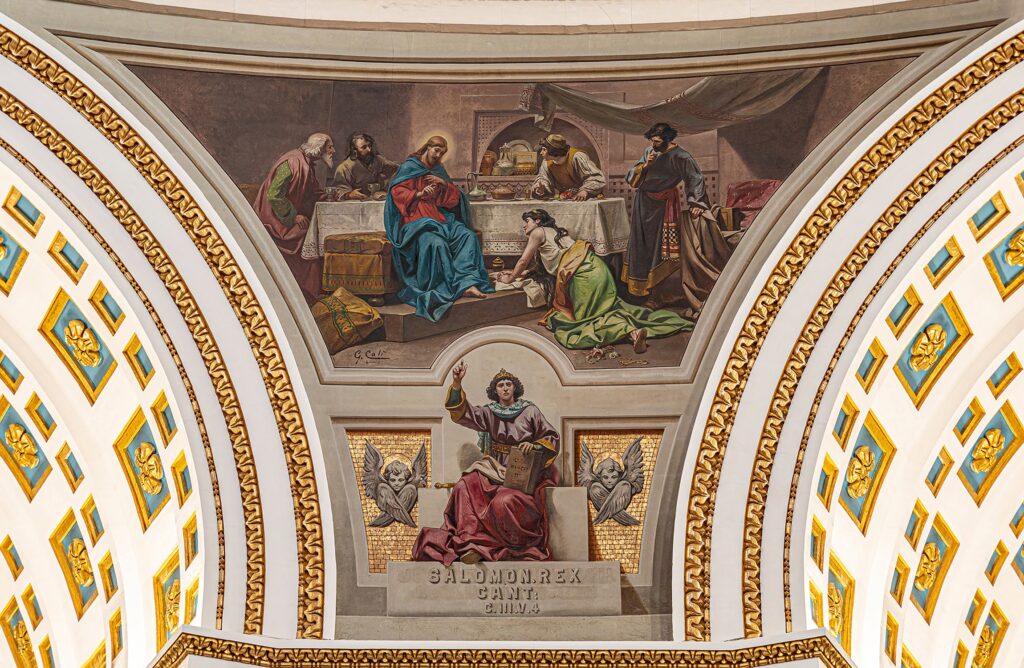
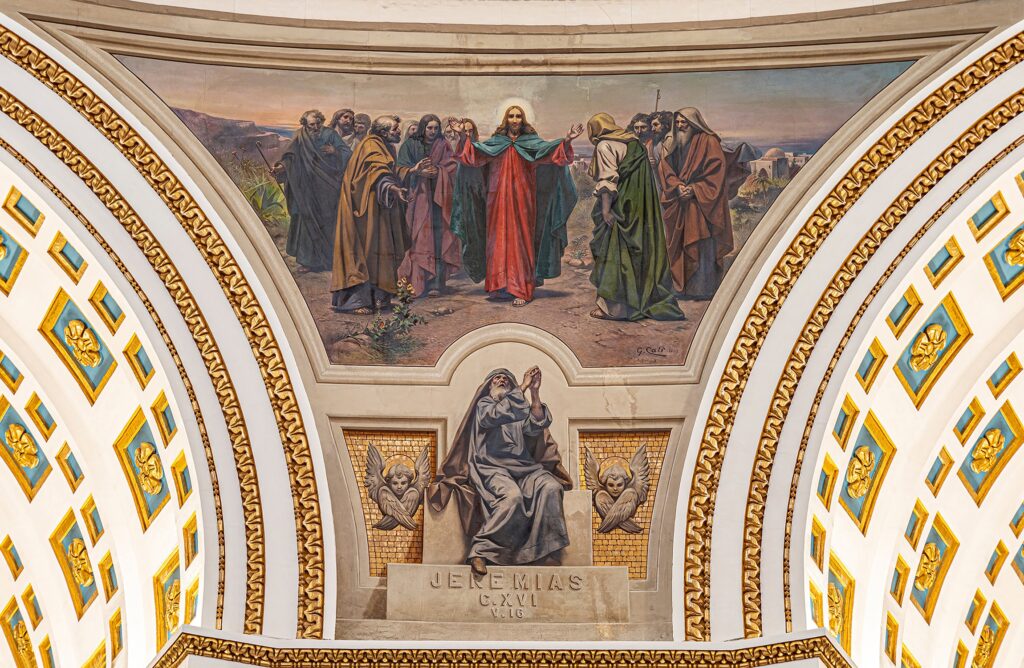
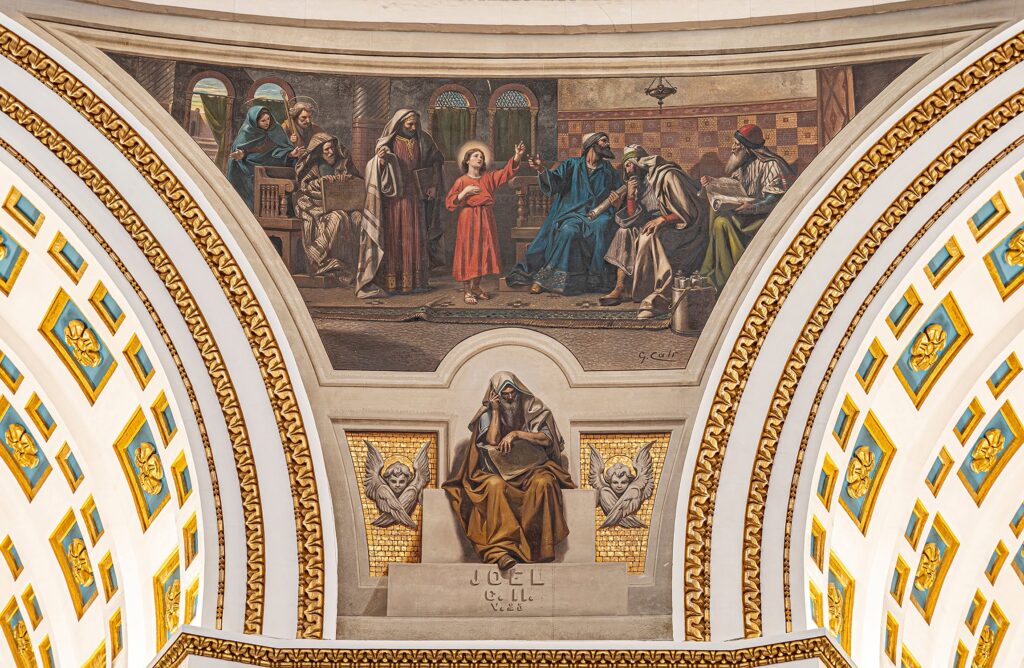
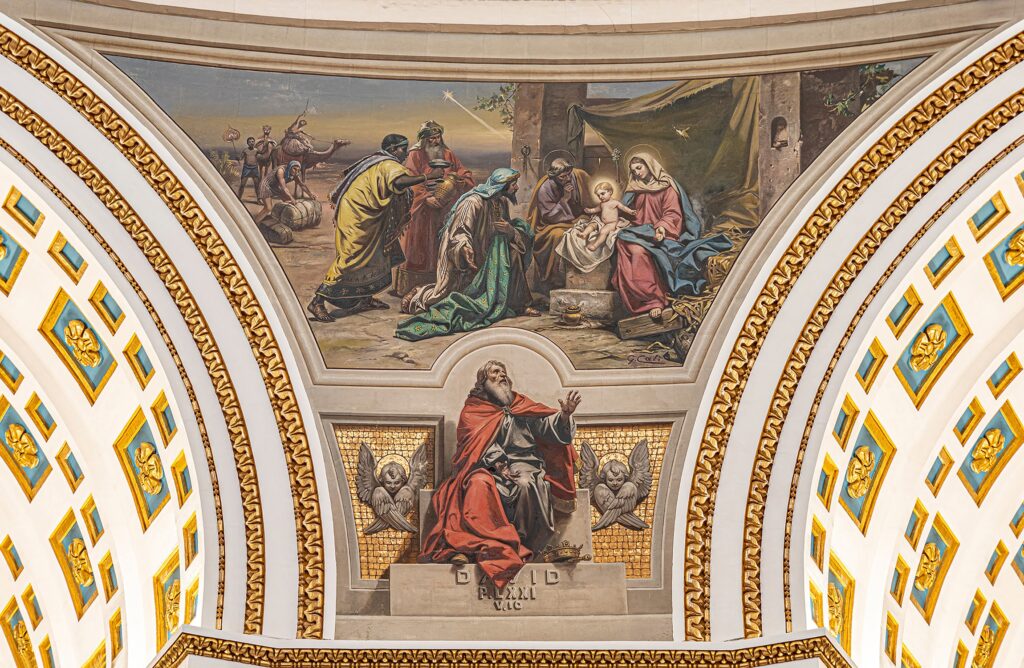
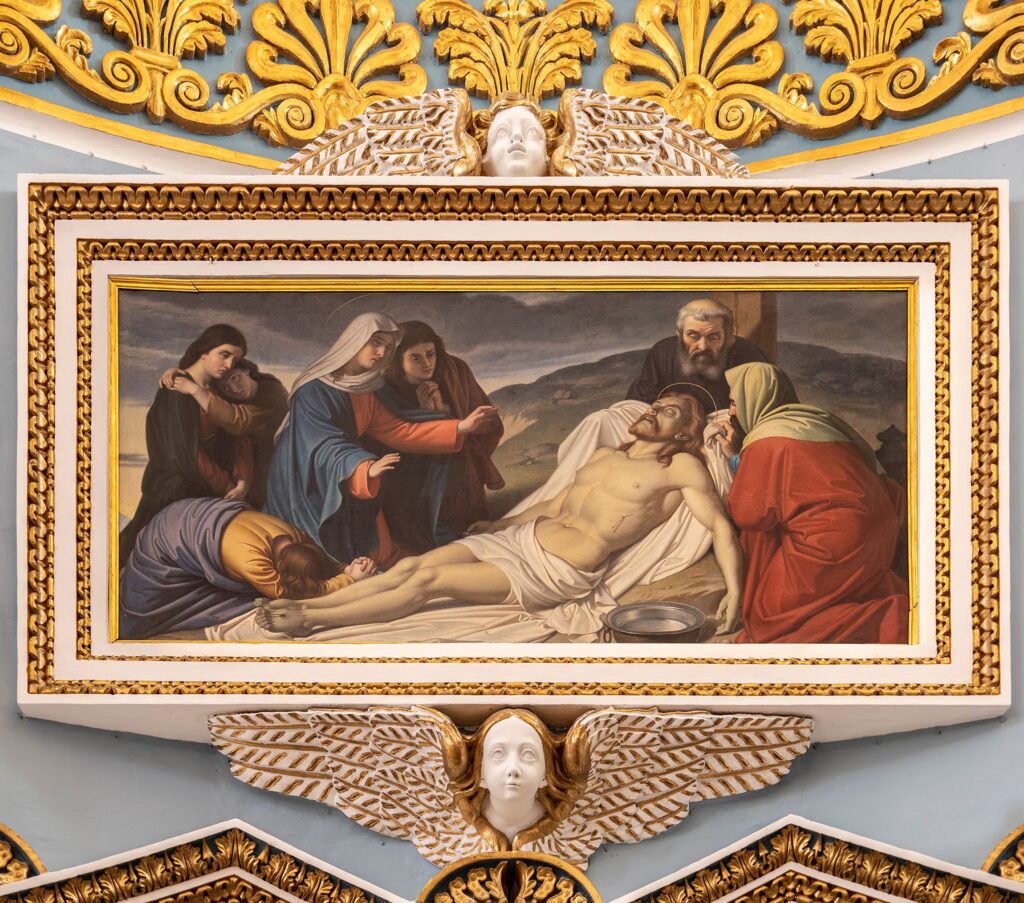
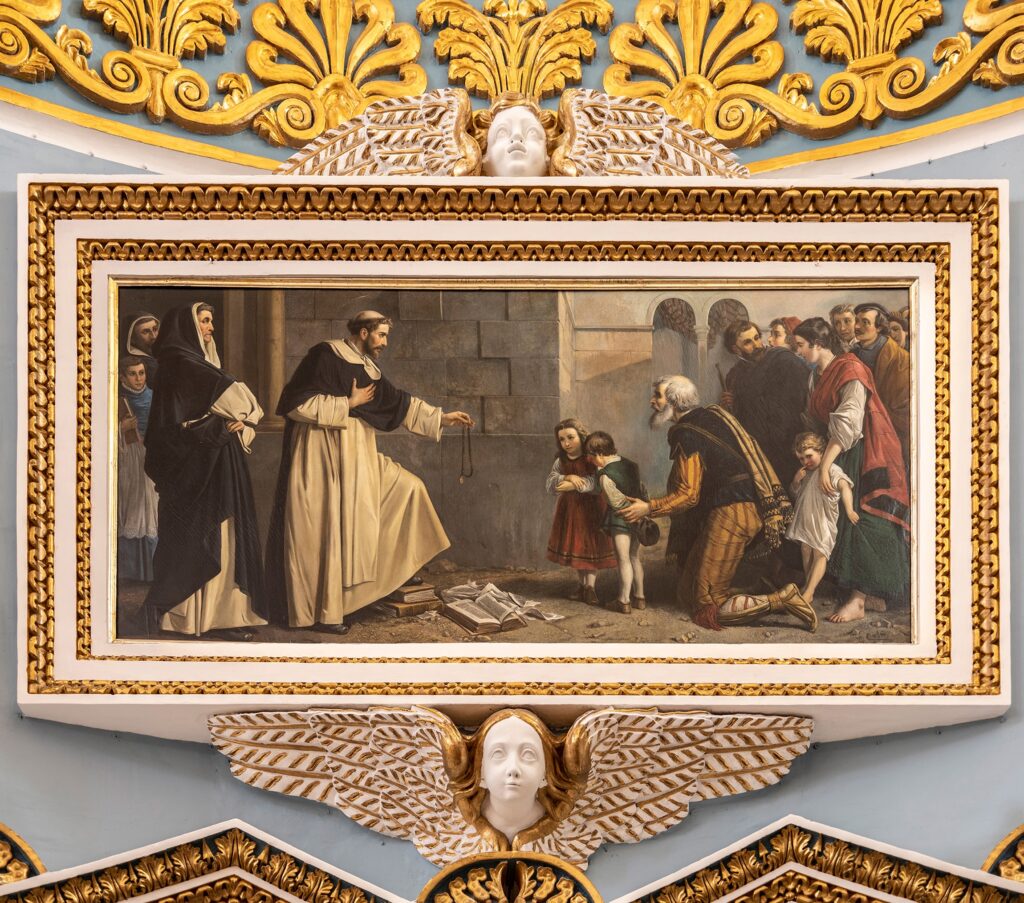
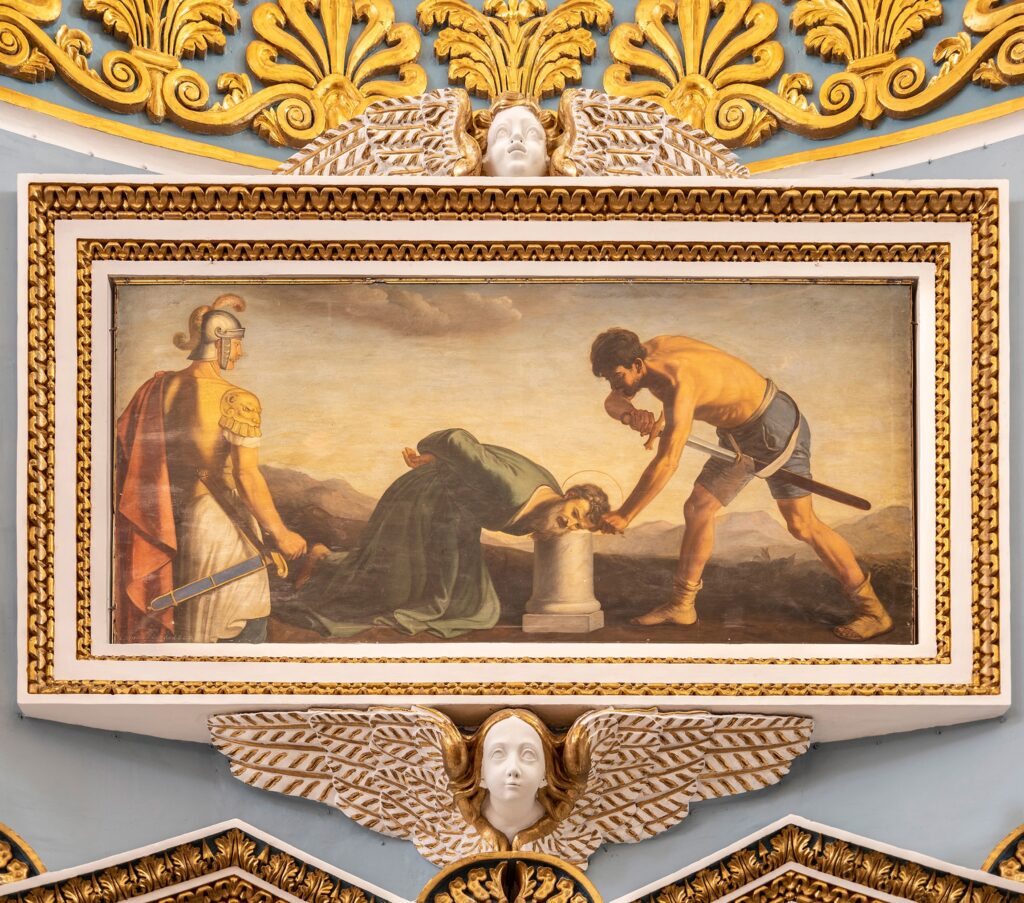
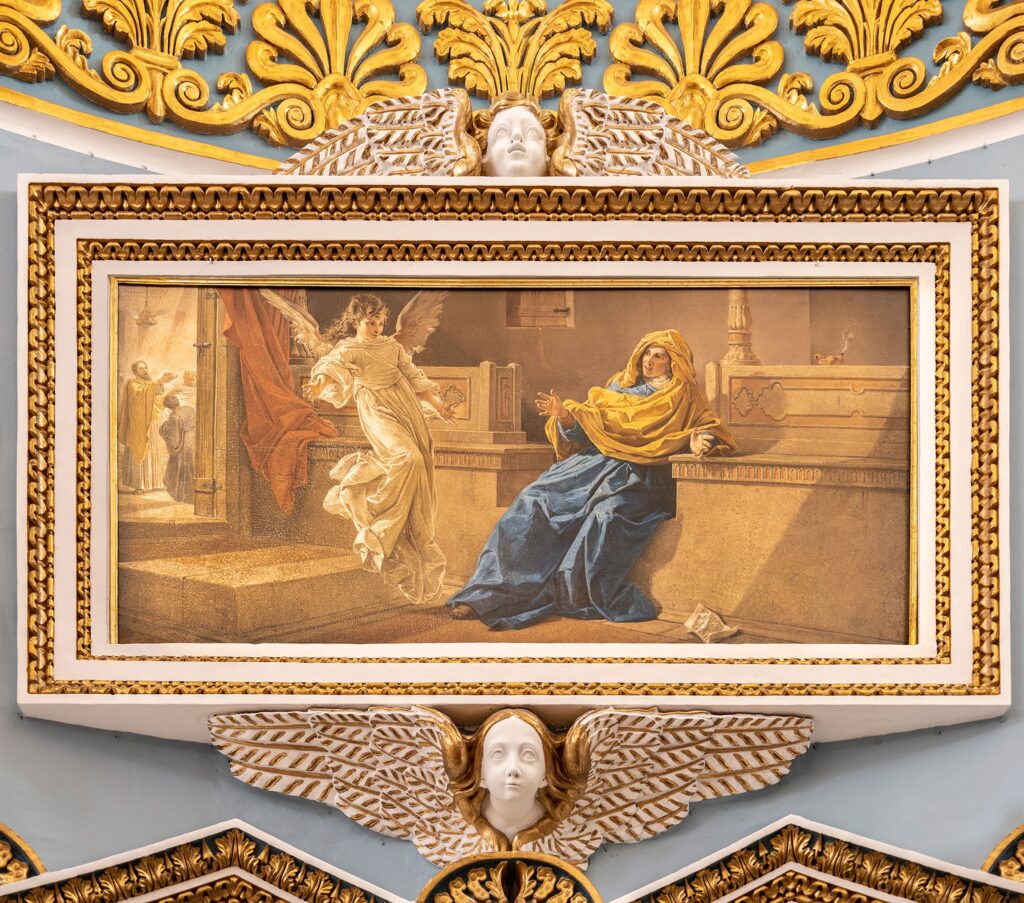
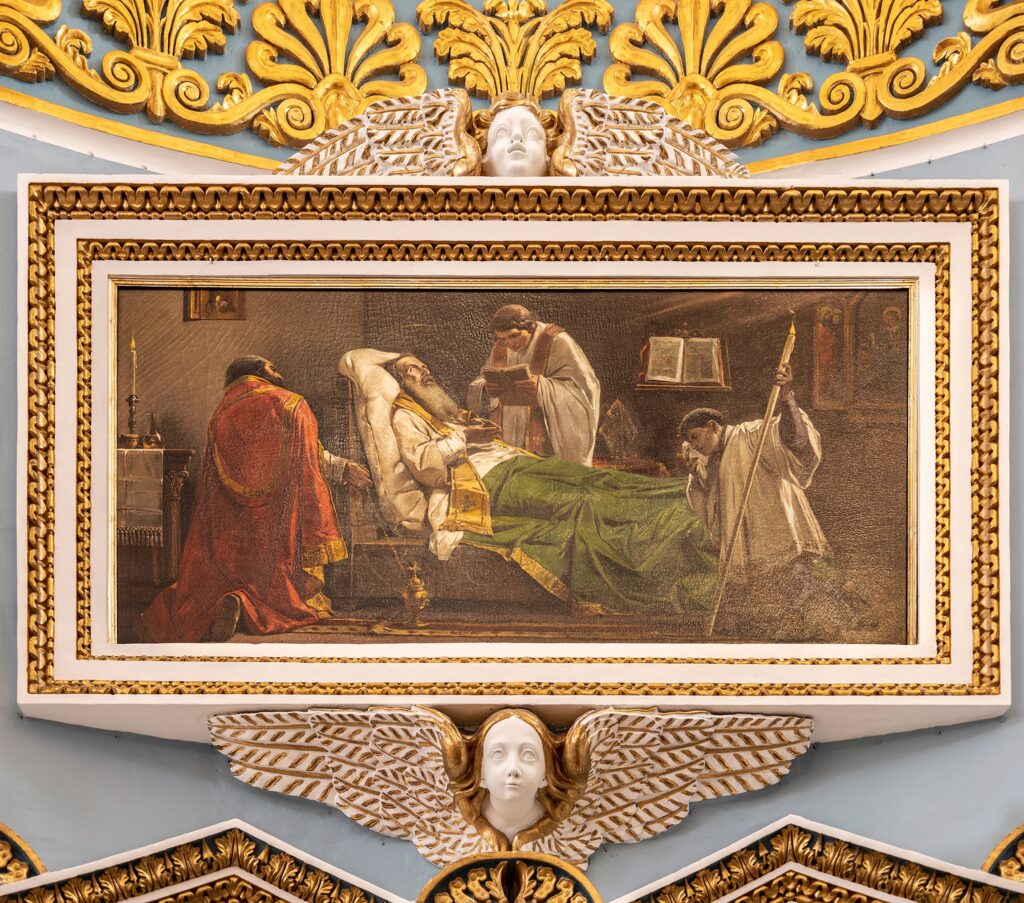
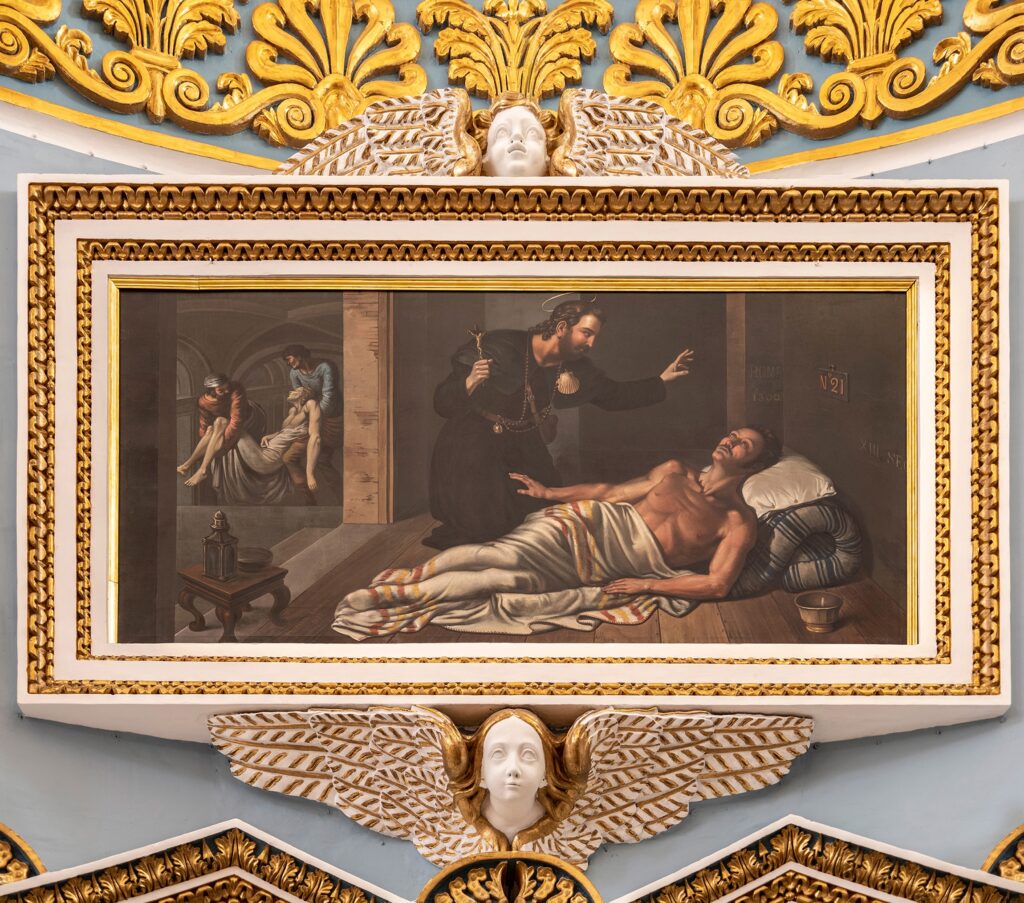
The artistic heritage of the church houses important pictorial cycles, among which stands a set of seven works by Giuseppe Calì executed in the 19th century. These pieces, known for their luminosity and historical realism, primarily address Marian themes such as the Annunciation and the Visitation, as well as passages from the life of St. Augustine and Dominican figures. Additionally, the Rotunda preserves seven Baroque paintings predating the current building; four of them are by Stefano Erardi, including depictions of patron saints against the plague and mystical visions. The collection is completed by works from Filippo Dingli, followers of Mattia Preti, and a Caravaggist-style piece depicting the biblical story of Cain and Abel.
The central piece of the temple is the titular painting of the Assumption of Our Lady, created by Stefano Erardi in 1678. The canvas depicts the Virgin being elevated by angels before the gaze of the apostles gathered around an empty tomb. In 1975, following a decree by Pope Paul VI, the image was solemnly crowned with a gold crown made by Giuseppe Galea. Recently, a project co-financed by the European Union allowed for the comprehensive restoration of both the fabric of the building and its layers of paintings and frames, combating deterioration caused by moisture and pollution. This intervention also included the modernization of the lighting and accessibility systems, ensuring the preservation of this historical monument for the community.