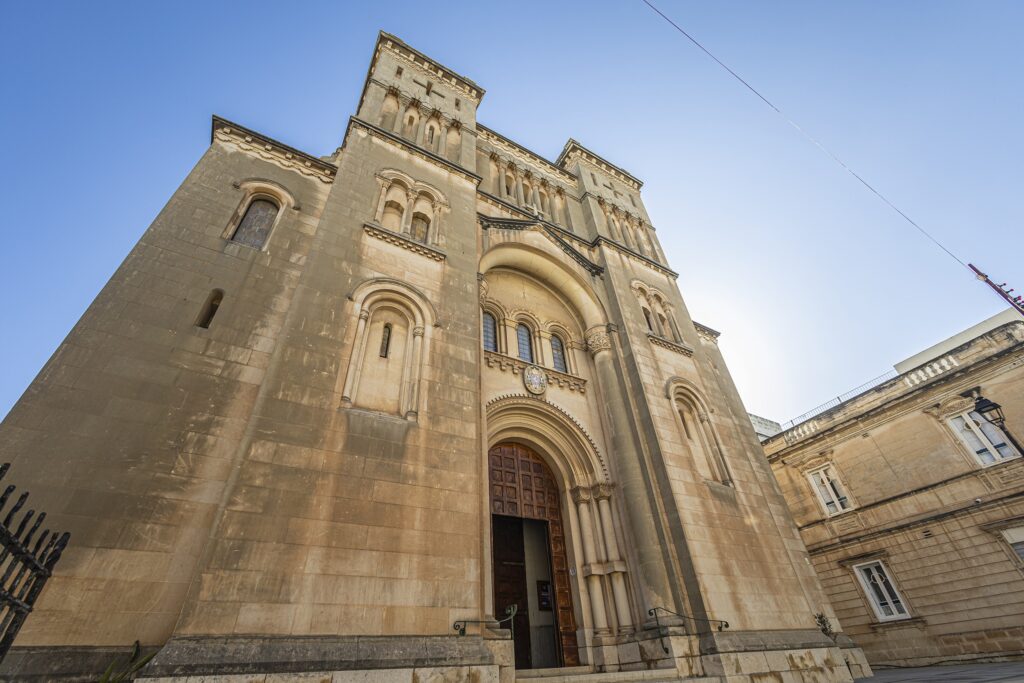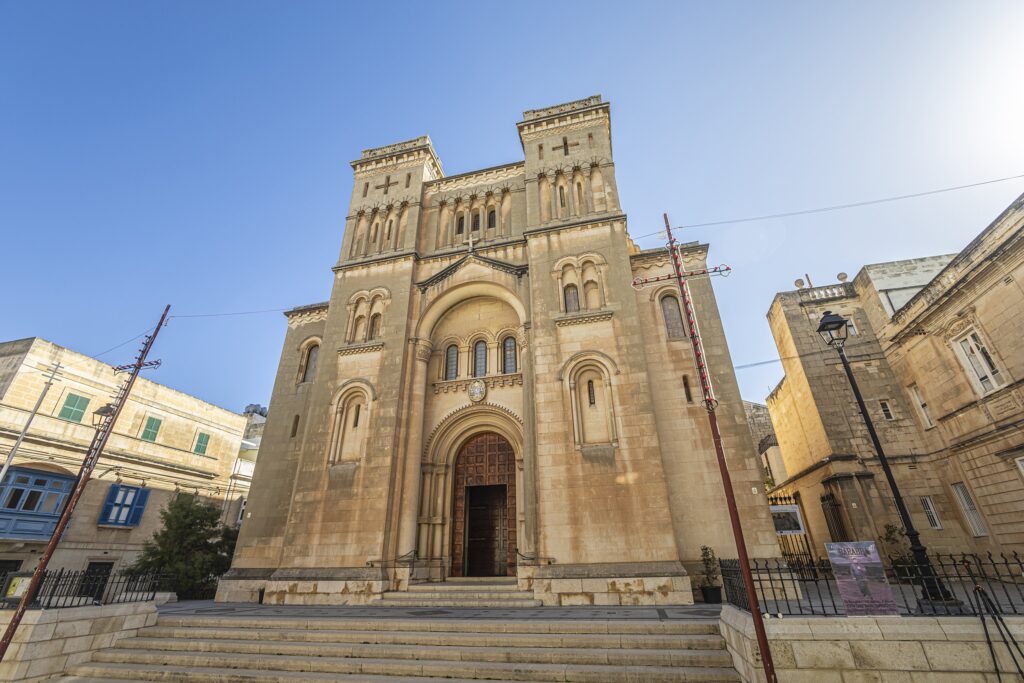
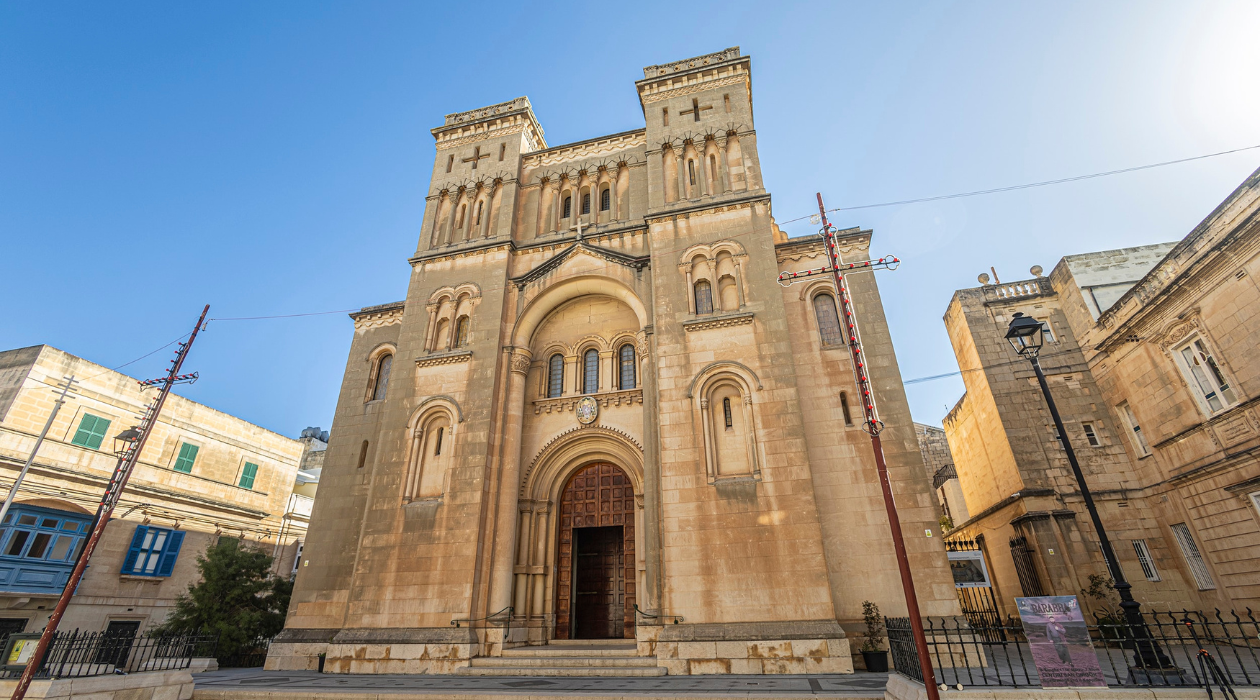
The parish church of St. Gregory the Great in Sliema is a modern church, built between 1923 and 1940, according to the design of the Maltese architect Godwin Galizia (1880-1944).
A Romanesque and Missionary Legacy in Sliema
The construction of this church was driven by Archbishop Mauro Caruana during World War I, as a spiritual commitment to the British soldiers wounded and recovering in Sliema. Caruana, a Benedictine monk whose remains rest beneath the church's transept, financed both the land and the building, dedicating it to the saint who Christianized England. Architecturally, the temple stands out for its medieval Romanesque style, visible in its double columns, its two lateral bell towers equipped with 14 bells from 1948, and a simple ornamentation highlighted in the cornices and polymorphic windows.
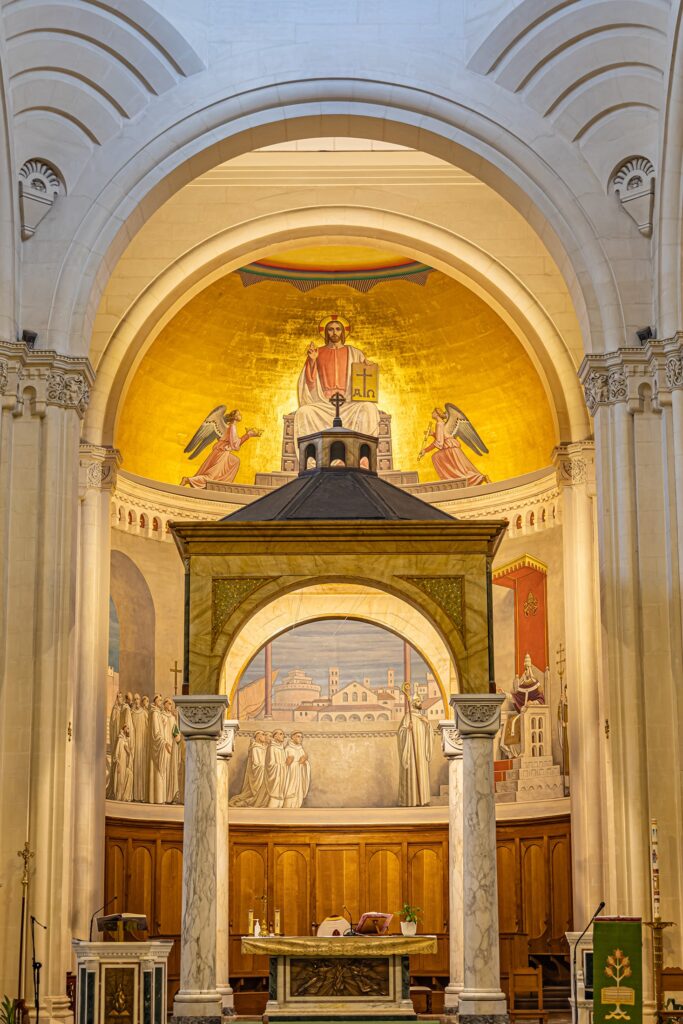
The interior features a minimalist design with a white marble floor and a central nave supported by Romanesque-style columns brought from Syracuse. Beneath an eight-sided dome completed in 1938, stands the main altar, adorned with a white marble baldachin designed in 1939 by architect Giuseppe Bailuzzi and crafted in Lucca, Italy. This baldachin, installed in 1940, has a square structure with arches that culminate in a small octagonal dome.
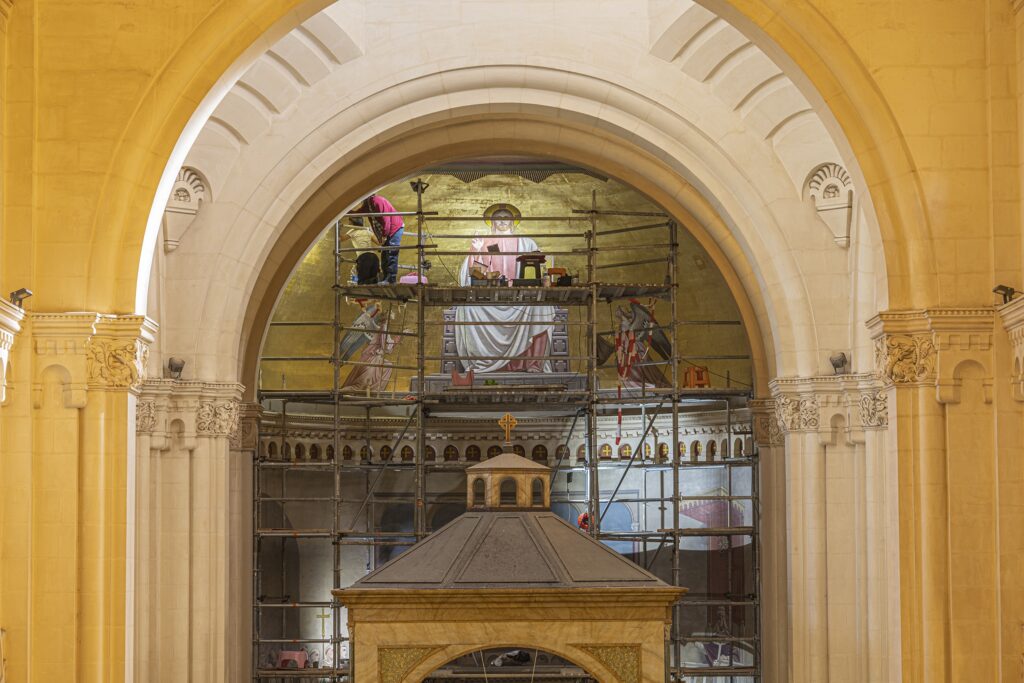
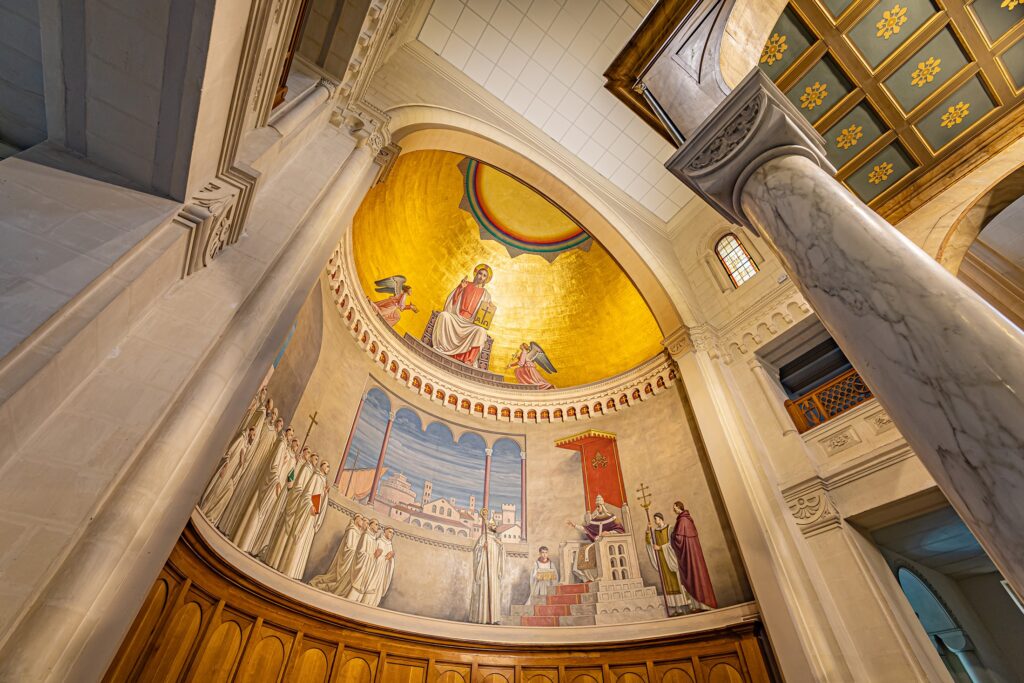
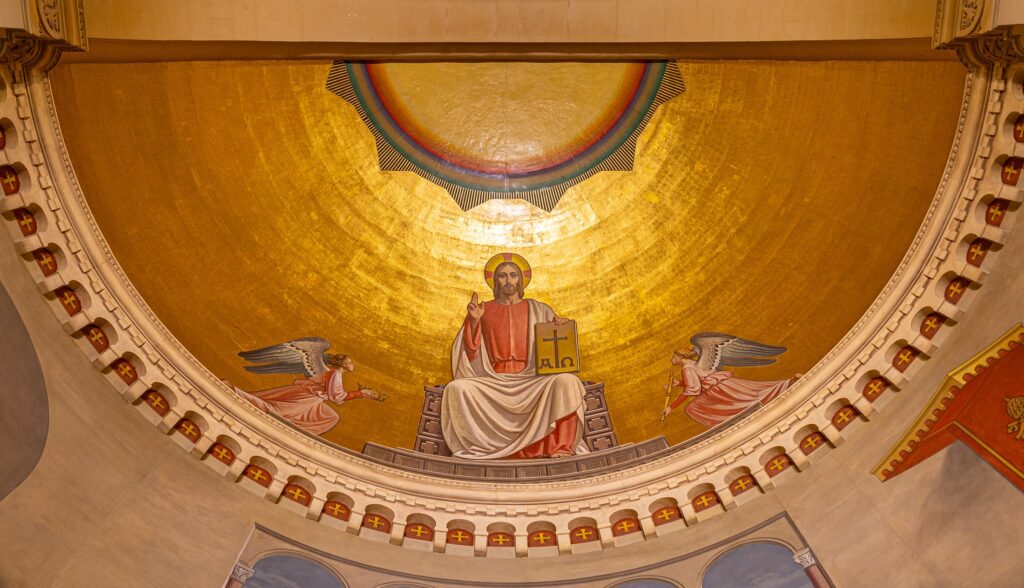
The central artistic piece is the large mural in the apse, created in 1940 by the Italian Eliodoro Coccoli in a style that evokes the medieval era. The work depicts Pope Saint Gregory the Great on his throne giving instructions to Saint Augustine of Canterbury for the conversion of the Anglo-Saxons, surrounded by Benedictine monks, with a background showing the port from which the mission to England would depart. To ensure the preservation of this artwork, a project co-financed by the European Union has carried out cleaning and consolidation work on the painted layers, ensuring the safeguarding of this artistic heritage for the community.