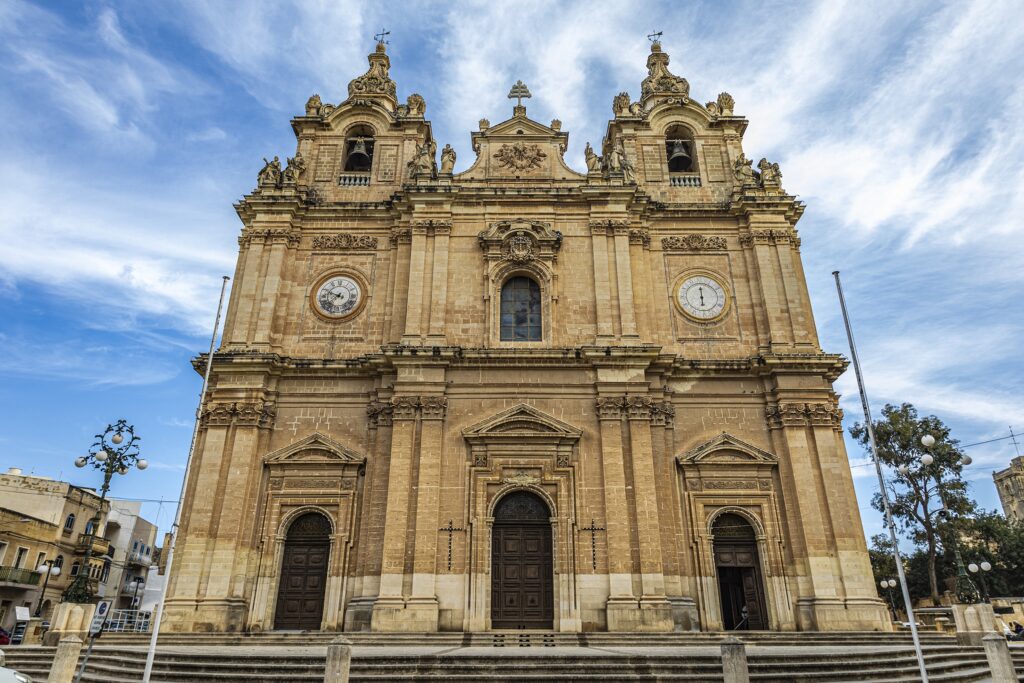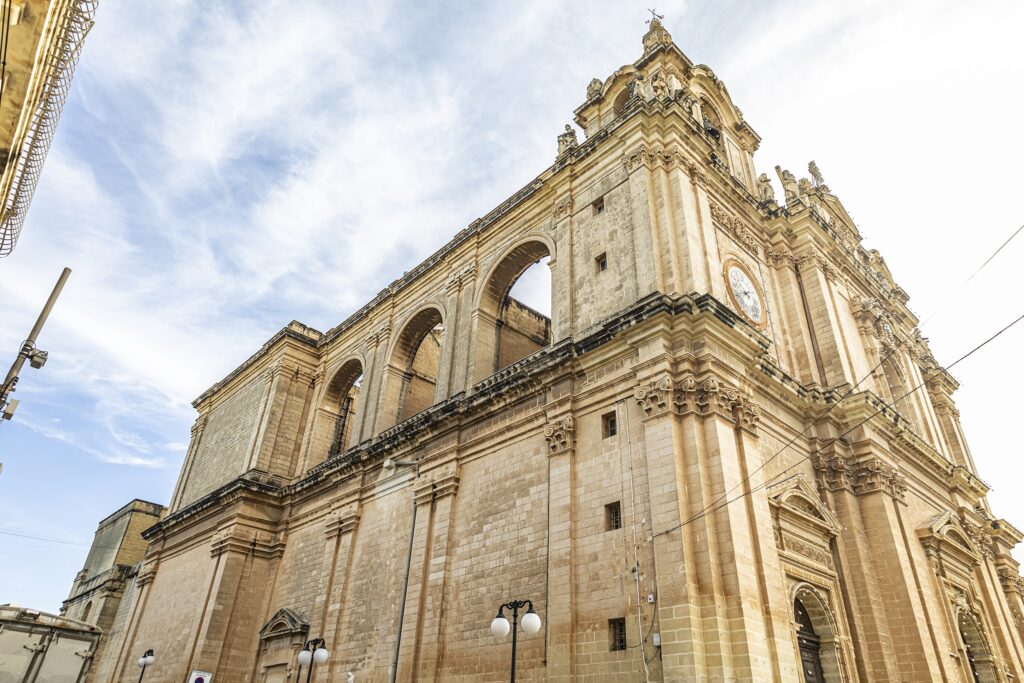
The parish church of Santa Elena in Birkirkara is built on a site where an earlier church dedicated to the Annunciation once stood; parts of the walls of this ancient church can still be seen near the niche of Santa Elena in the Chapel of Our Lady of Sorrows. Finding a new location was difficult, as by the 18th century, Birkirkara was already occupied by several houses. Since the new church required a large plot of land, it was also necessary to purchase and demolish several houses and gardens.
Baroque Majesty and the Triumph of the Cross
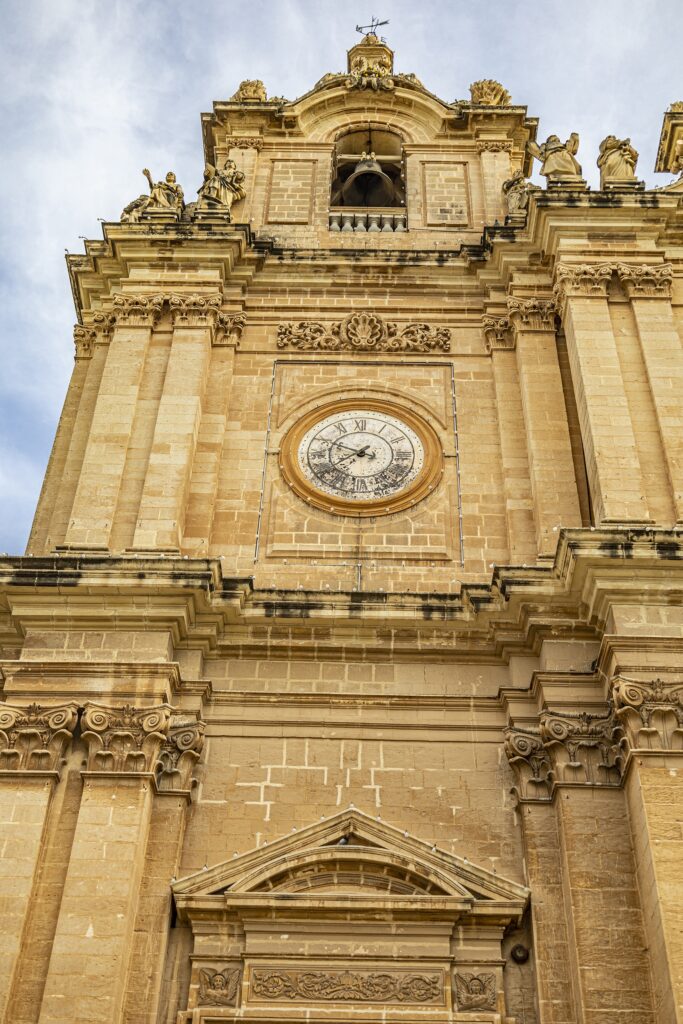
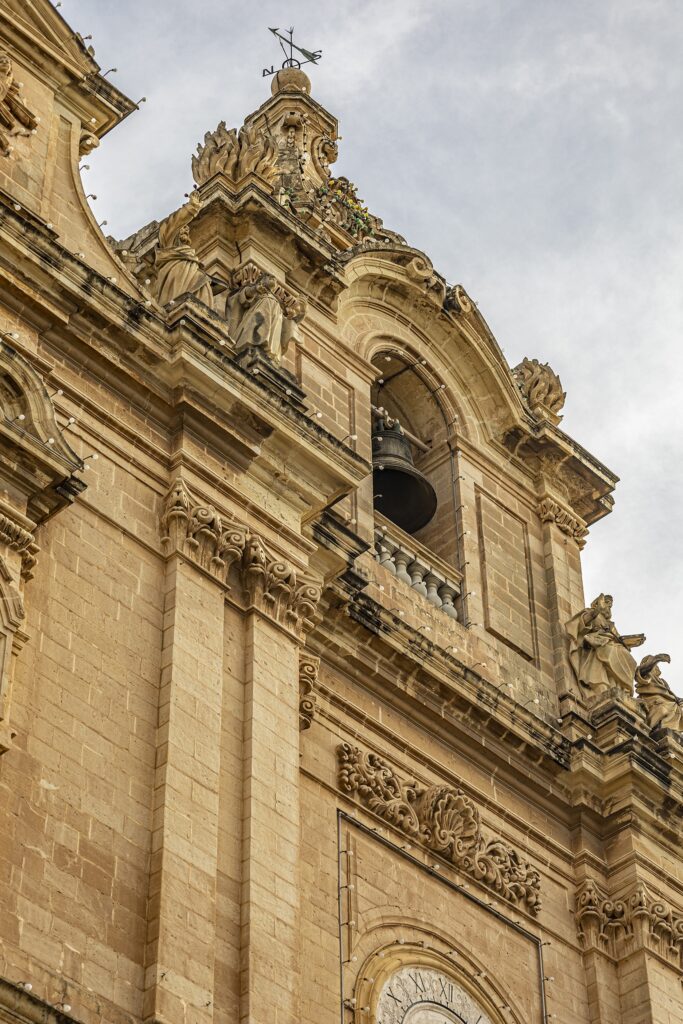
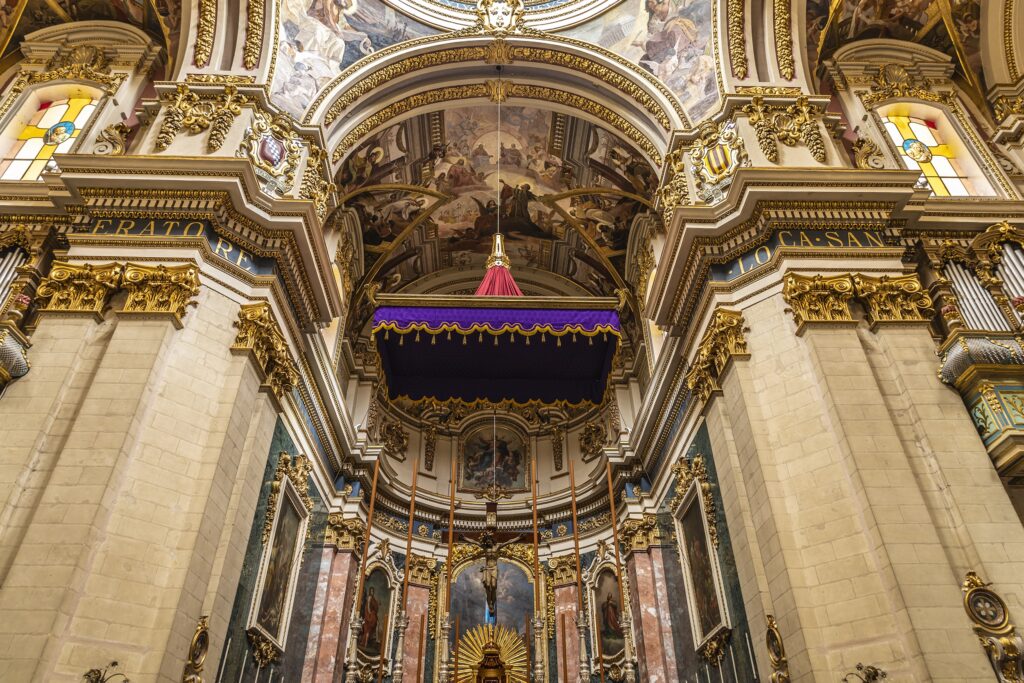
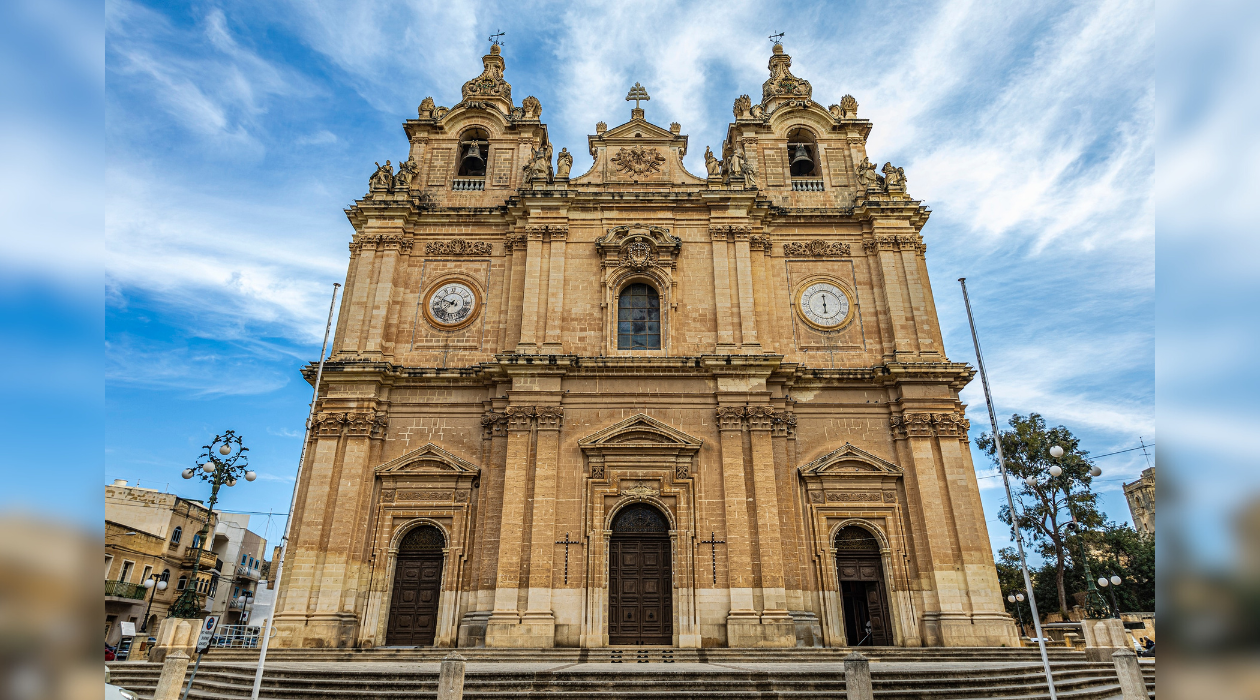
The Church of Santa Elena is a Baroque gem, whose authorship is attributed to a combined effort of architects Salvu Borg, Giovanni Domenico Cachia, and Don Nicola Borg. Its architectural design, in the shape of a Latin cross, is directly inspired by the Cathedral of Mdina by Lorenzo Gafà, featuring an imposing facade with a bold central axis. The building boasts a magnificent dome rising above a hexagonal drum with elongated windows, as well as two bell towers adorned with spires that house seven bells, including the large "Helena" bell, made in Milan in 1931.
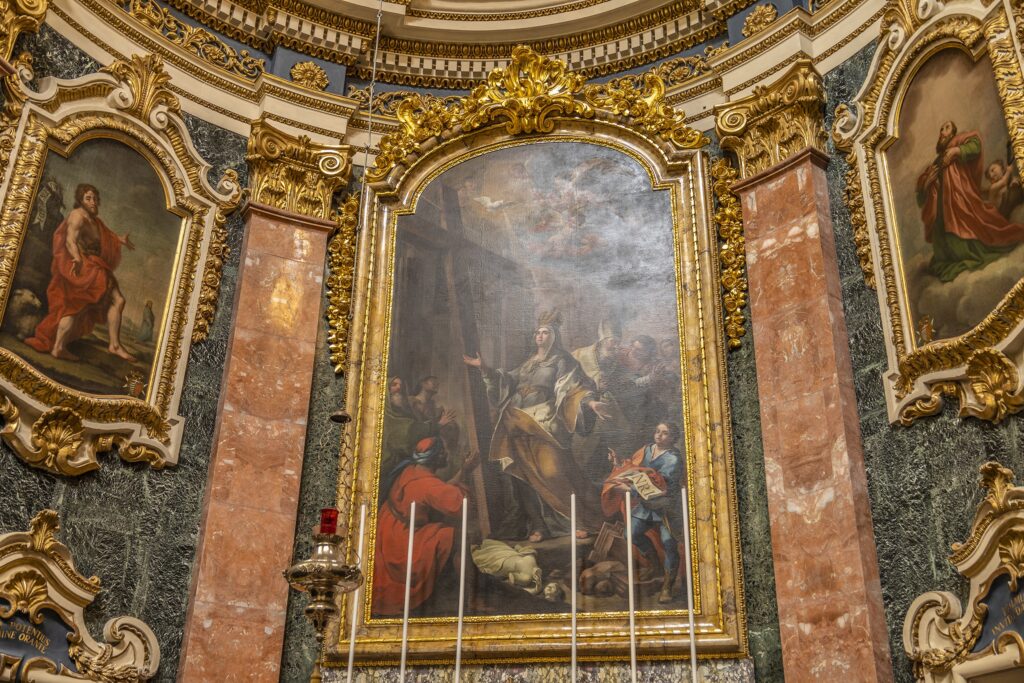
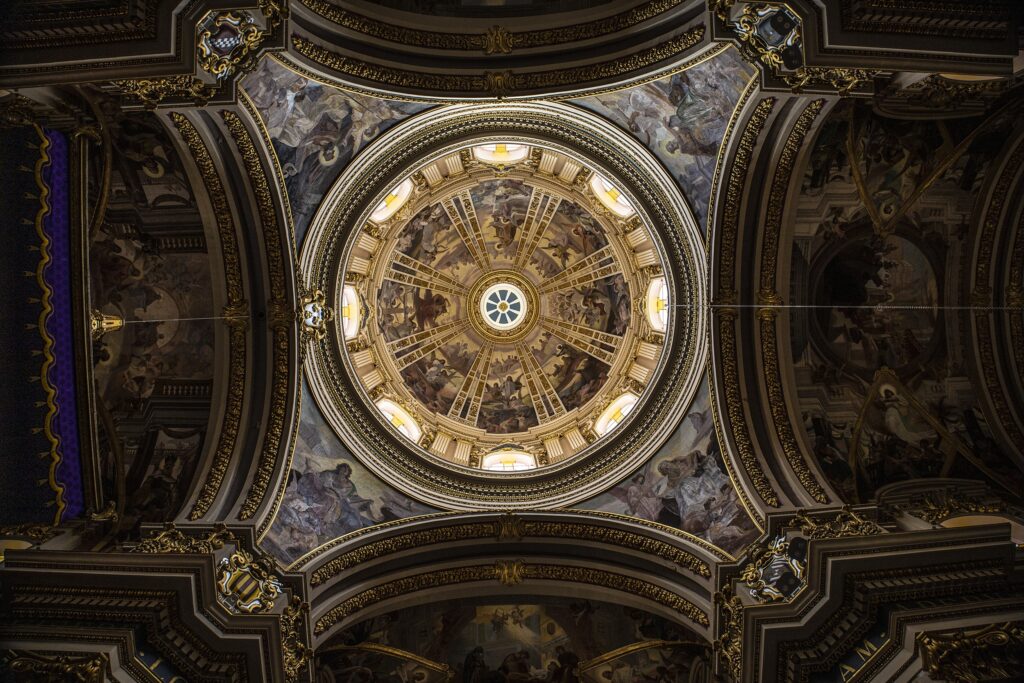
Inside, the dome is decorated with a fresco by Virgilio Monti, created between 1906 and 1907 in the Nazarene style. The work, titled "The Triumph of the Holy Cross," divides the dome into eight sections representing the Last Judgment: from the central figure of Saint Helena beneath Christ, to the despair of souls in hell, and the triumph of the righteous surrounded by angels in a twilight sky. On the other hand, the titular painting, created by Francesco Zahra in 1763, depicts Saint Helena during her pilgrimage to the Holy Land at the moment of the discovery of the True Cross, flanked by symbols marking the end of paganism and the beginning of the spread of Christianity.
To ensure the preservation of this heritage, a project co-financed by the European Union has focused on the conservation of the dome's frescoes. The interventions have helped mitigate the deterioration of the painted layers and address issues of detachment, ensuring that this artistic and spiritual heritage in the heart of the community can be appreciated by future generations.