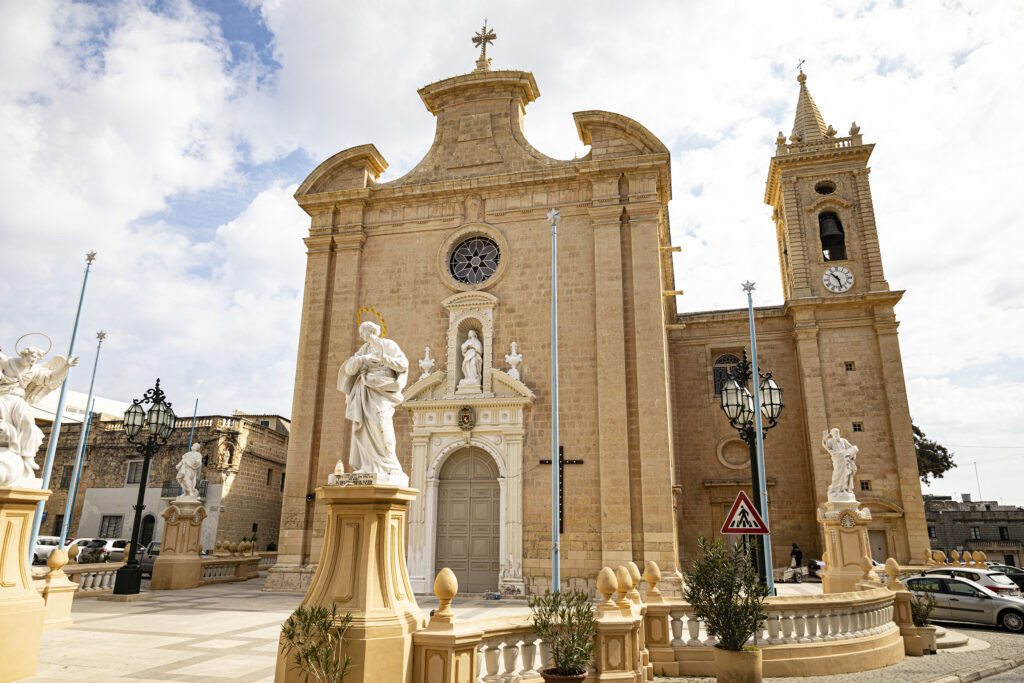
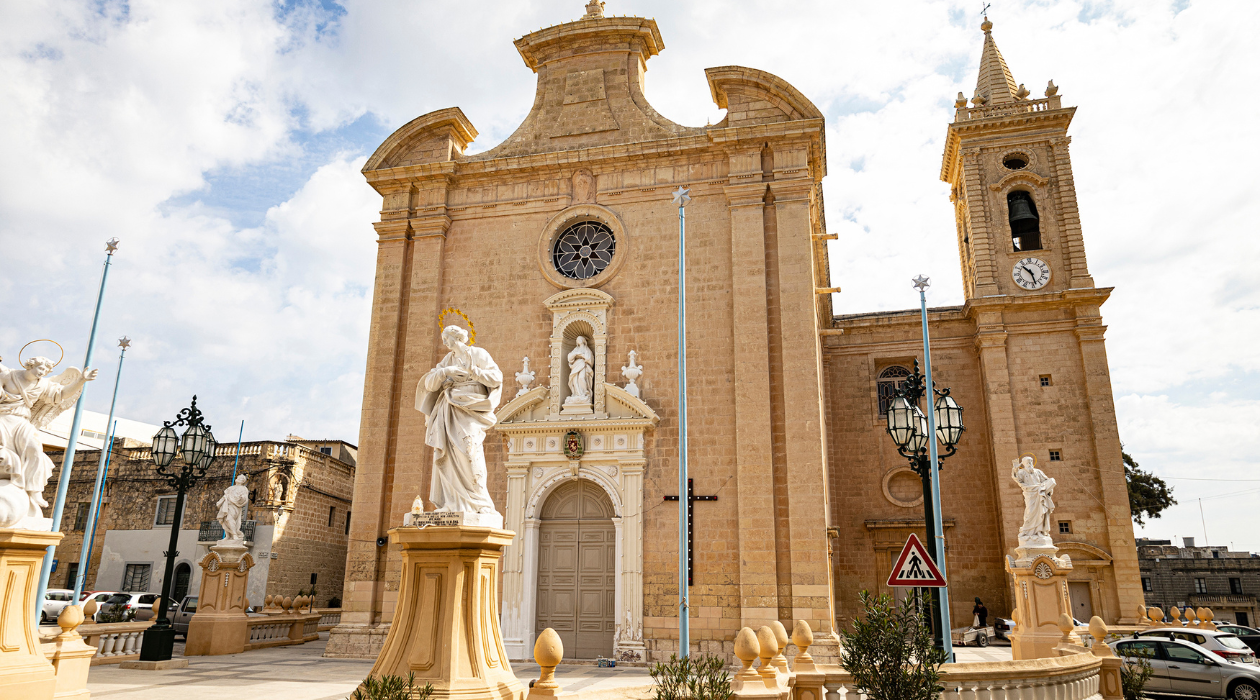
The Parish Church of the Annunciation of the Virgin Mary was built on a different site from the old parish church. The location chosen for the new church occupied the site of previous houses and was situated between two main areas of what today constitutes the village of Hal-Balzan. In 1669, the parish priest Domenico Ellul laid and blessed the first stone of the new church. The church building was completed in 1695. The architect of the Baroque church is unknown, although it is attributed to the Italian architect Francesco Buonamici (1596-1677). In 1686, the Maltese architects Lorenzo Gafà and Giovanni Barbara were appointed to proceed with the construction of the choir and the transepts.
A Treasure of Sculpture and Marian Symbolism
The Church of the Annunciation stands out for its formal and symmetrical façade in Tuscan Doric style, with its central axis featuring the main door, a niche with the image of the Virgin, and a circular window. Its dome, constructed between 1699 and 1707, is an exceptional structure that combines influences from Tommaso Dingli and Lorenzo Gafà, with an elongated octagonal drum adorned with Ionic pilasters. The bell tower, built in 1708, houses a set of historic bells from Sicily, France, and locally sourced, as well as a clock system that has evolved from Pietro Tanti's handcrafted work in 1744 to today's electrical technology.
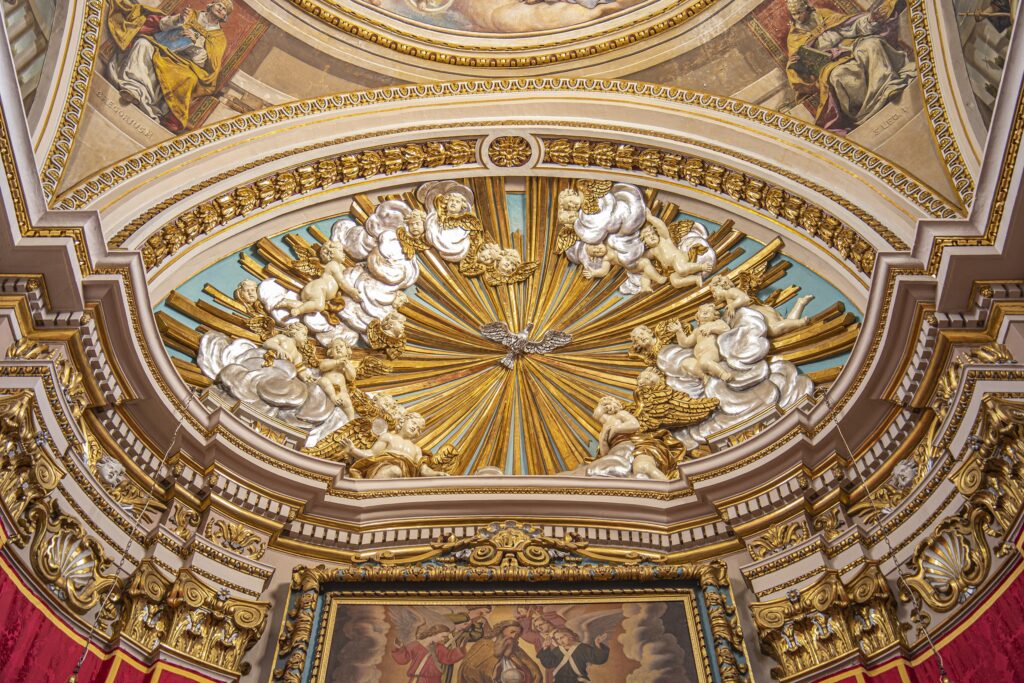
The interior of the temple is an exhibition of sculptural exuberance, especially beneath the dome, where the pilasters transform into caryatids (draped semi-human figures) that support Ionic capitals, surrounded by angels and putti. The vault of the crossing, decorated by the renowned artists Emvin Cremona and Paul Camilleri Cauchi, depicts Mary's role in salvation through scenes of the Annunciation and the Passion. Camilleri Cauchi also embellished the pendentives with female figures from the Old Testament—Rebecca, Ruth, Sarah, and Rachel—and representations of the prophets, creating an iconographic ensemble of great richness.
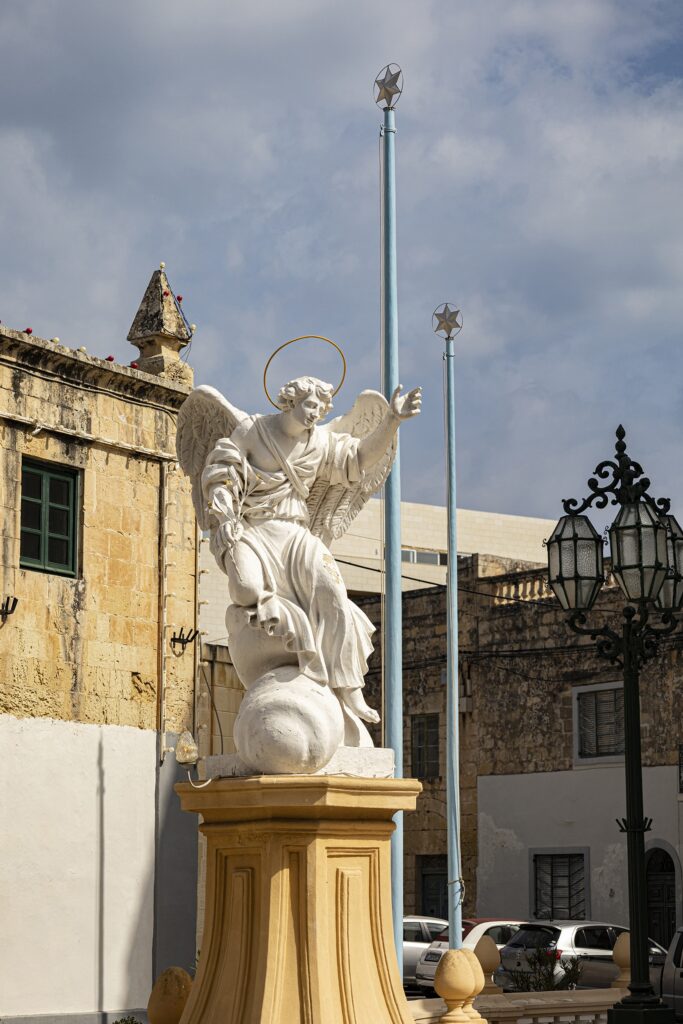
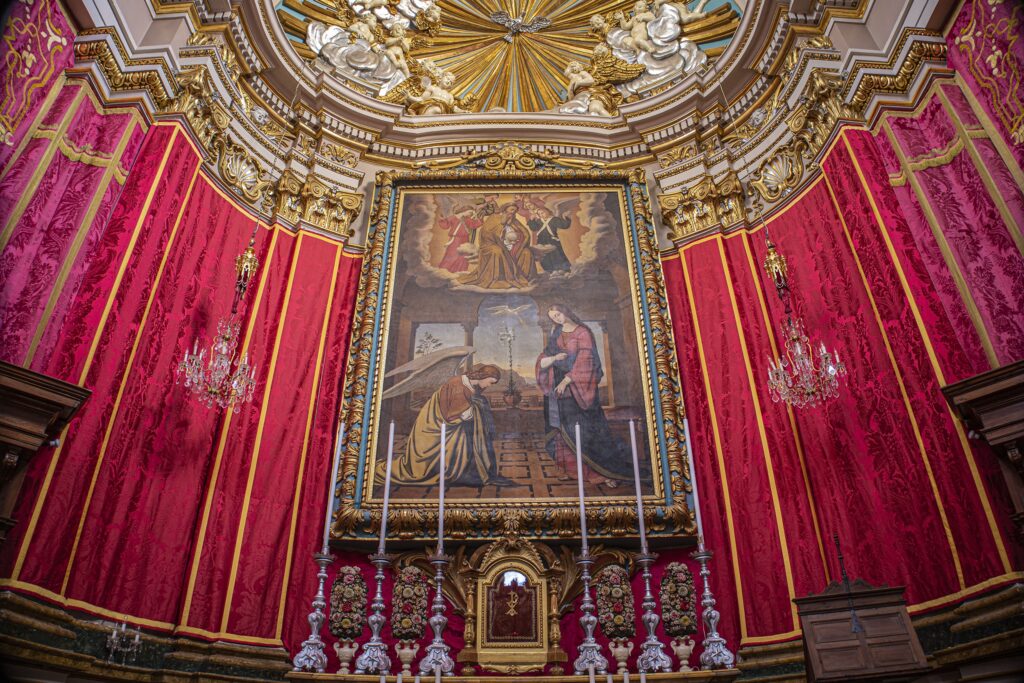
The titular painting, created in 1857 by Giuseppe Calleja, depicts the Annunciation in a Renaissance setting with a mountainous landscape in the background and the symbolic lily of purity. The work captures the mystical moment of the announcement by the Archangel Gabriel under the gaze of God the Father. On the exterior, the balustraded parvis welcomes the faithful with four monumental sculptures of the apostles Peter and Paul, the Archangel Gabriel, and the Virgin. Thanks to co-financing from the European Union, critical conservation work has been carried out to combat rising damp and structural deterioration, ensuring that this architectural complex and its bell tower remain the heart of the community.