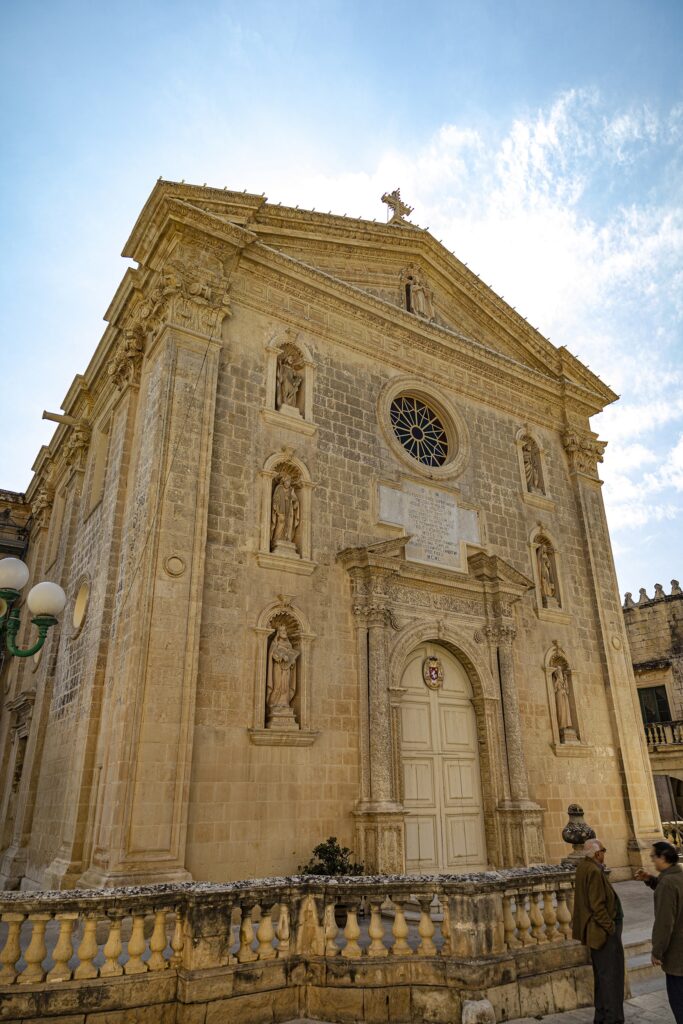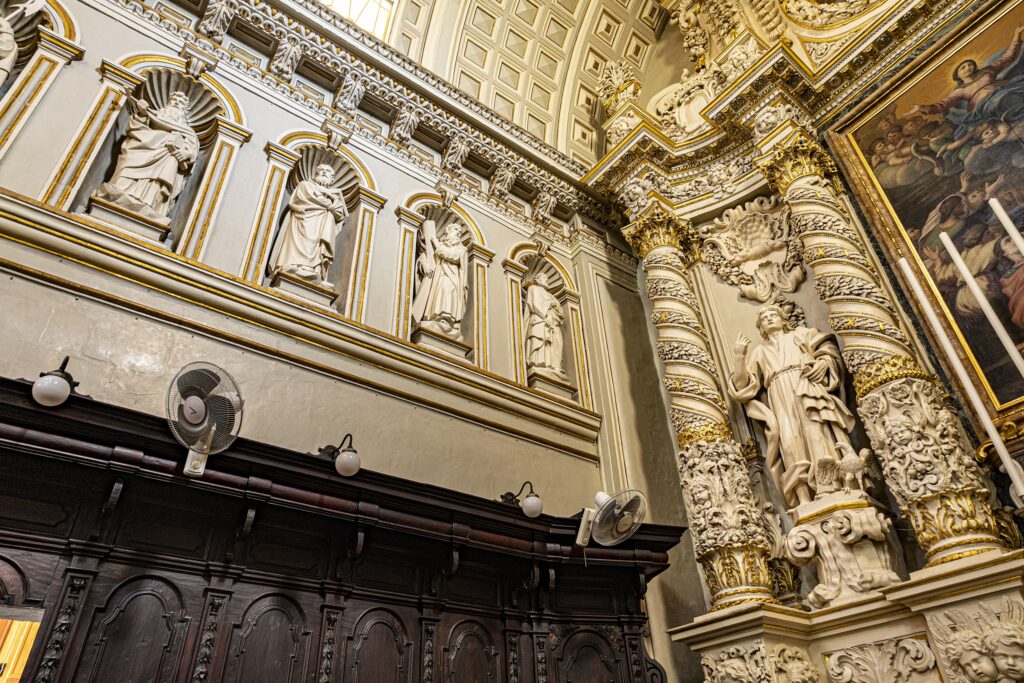
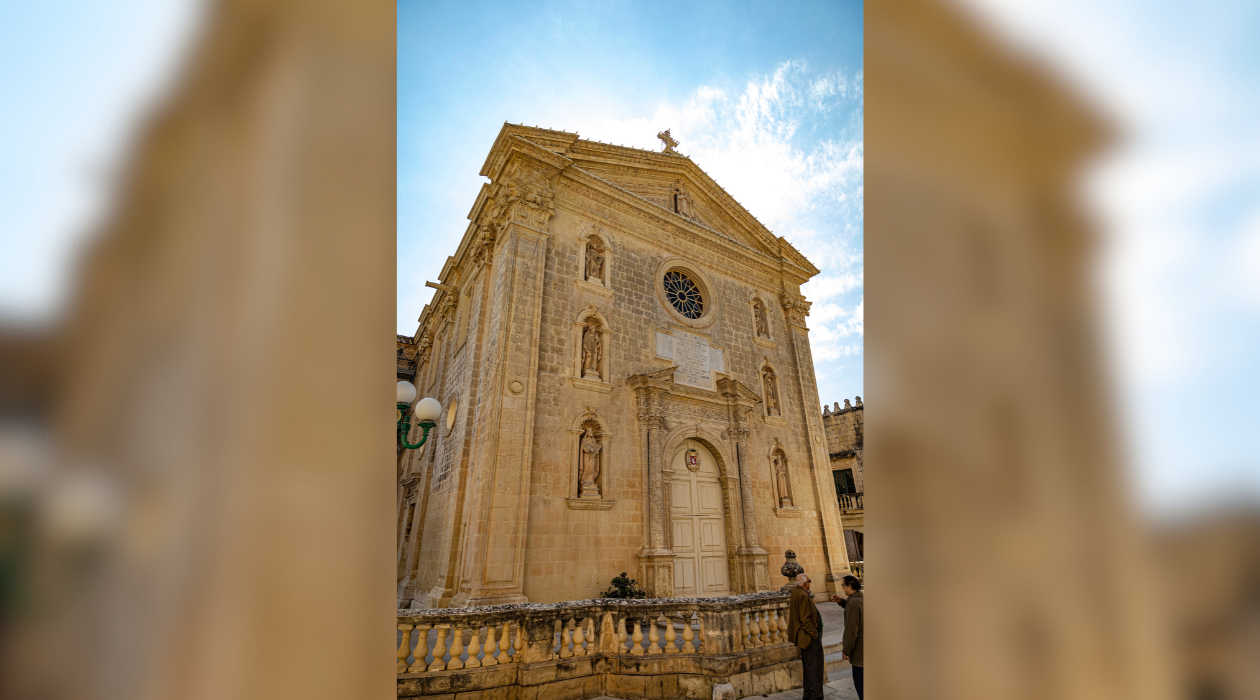
The Parish Church of the Assumption of the Virgin Mary in Attard was built in 1613 and is one of the most beautiful Renaissance churches in Malta. This church is traditionally attributed to the Maltese architect Tommaso Dingli (1591-1666). However, the design most likely originates from Vittorio Cassar (c. 1550-1609), while Dingli was likely the master mason or sculptor, being very young at the time. It is possible that the architect took inspiration from the Church of Santa Maria del Calcinaio (1484-1502) in Cortona, Italy.
A Dialogue Between Medieval Gothic and Maltese Baroque
"The facade of this church is one of the most unique in the islands, with a composition that evokes 14th-century style and Spanish decorative nuances. It stands out for its symmetrical arrangement of six niches that house statues of Saint Anne, Saint Joachim, Saint John the Baptist, Saint Joseph, Abraham, and David, carved by Francesco Saverio Sciortino in 1945. Above the main door, a large finely carved rose window serves as the main source of natural light for the interior, while the side doors feature delicate bas-reliefs of natural motifs and foliage.
Architecturally, the temple features a system of three domes: two low-drum domes with lanterns in the transepts and a main dome that rises over a tall octagonal drum. At the back is its historic bell tower, started in 1718, which houses the 'Publia' bell from 1812 and a highly valuable mechanical clock, made in 1872 by the renowned Maltese clockmaker Michelangelo Sapiano.
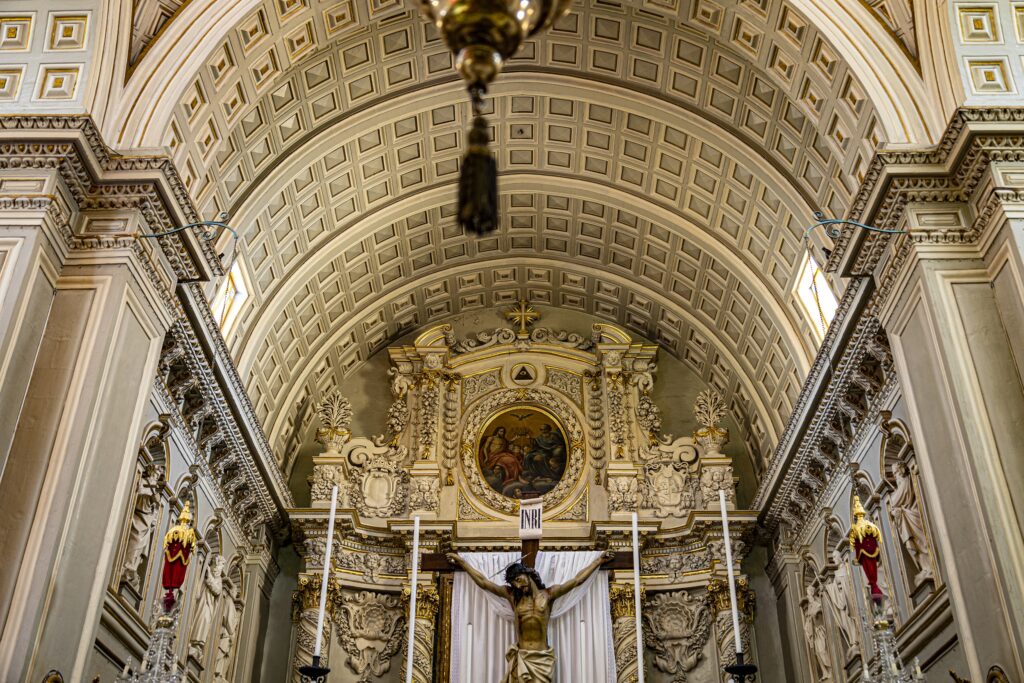
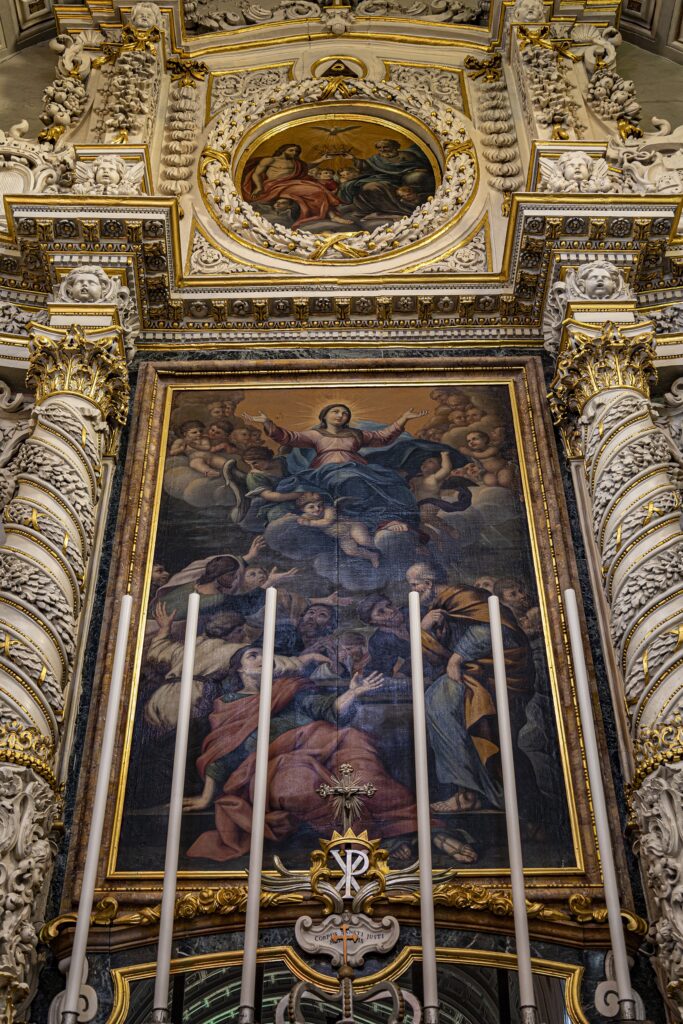
Inside, the main altar is presided over by the titular painting of the Assumption of the Virgin Mary, created in 1681 by Pasquale Buhagiar. The work, framed in an elaborate stone sculpture by Michele Casanova, captures the moment when angels elevate the Virgin towards her divine coronation, under the astonished gaze of the apostles. In addition to this Baroque piece, the church houses an exceptional titular porcelain statue, commissioned in 1874 from the Parisian ceramist Raffael Ignaz. Thanks to the co-financing of the European Union, restoration work has been carried out on its façade and sculptures to mitigate damage from pollution and the climate, ensuring the preservation of its rich aesthetic for future generations.