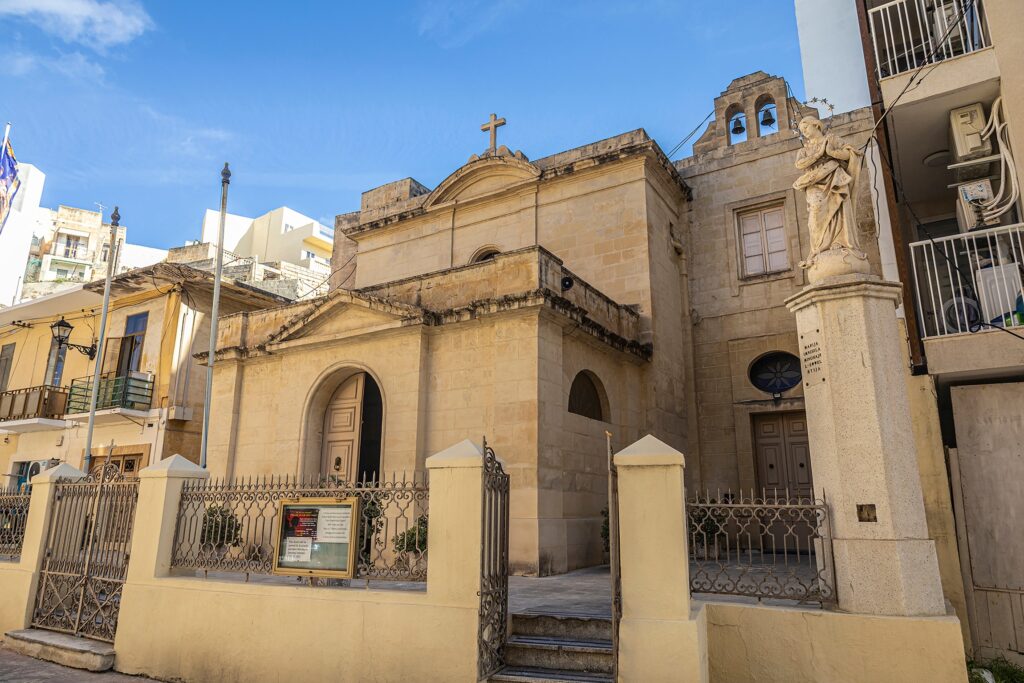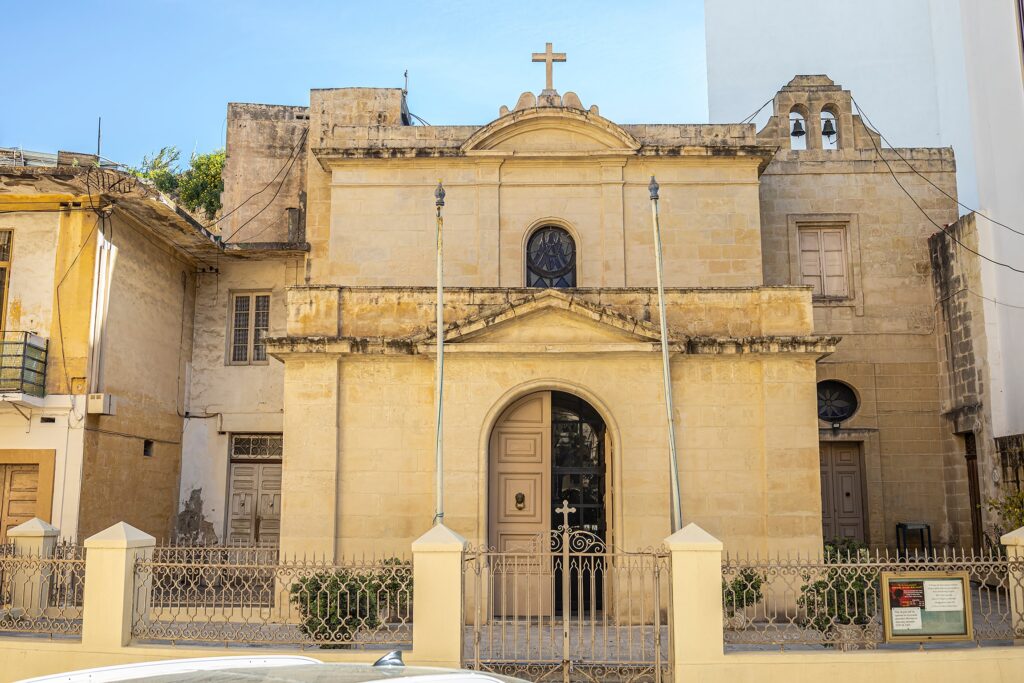
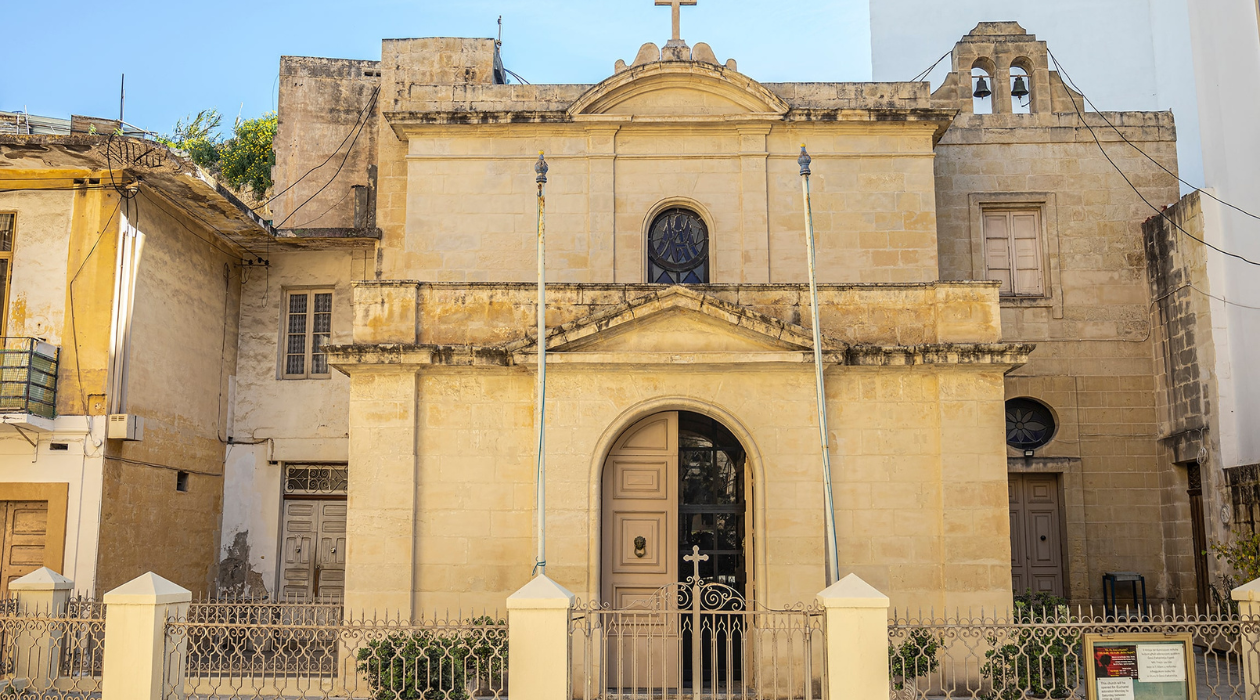
The Church of the Immaculate Conception in Msida was built in thanksgiving by the sailors who were saved from Turkish captivity. They dedicated the church to "Our Lady of Perpetual Help." This dedication is also recorded in the pastoral visit of Mons. Dusina in 1575. A later source mentions that the church was originally dedicated to the Assumption of Our Lady.
Historical Evolution and Devotion Against the Plague
Originating in the 16th century as a simple medieval structure with a rectangular plan, the church was rebuilt in 1640, acquiring its current configuration. Over the centuries, the building underwent various expansions, including the addition of a sacristy with marble flooring in 1670, a front parvis, and a portico with a triangular pediment built between 1857 and 1859. Its external appearance is characterized by an elongated window in the façade and a bell tower with two bells situated on an expanded side, while its interior stands out for its vaulted ceiling and a Baroque niche that houses the main image.
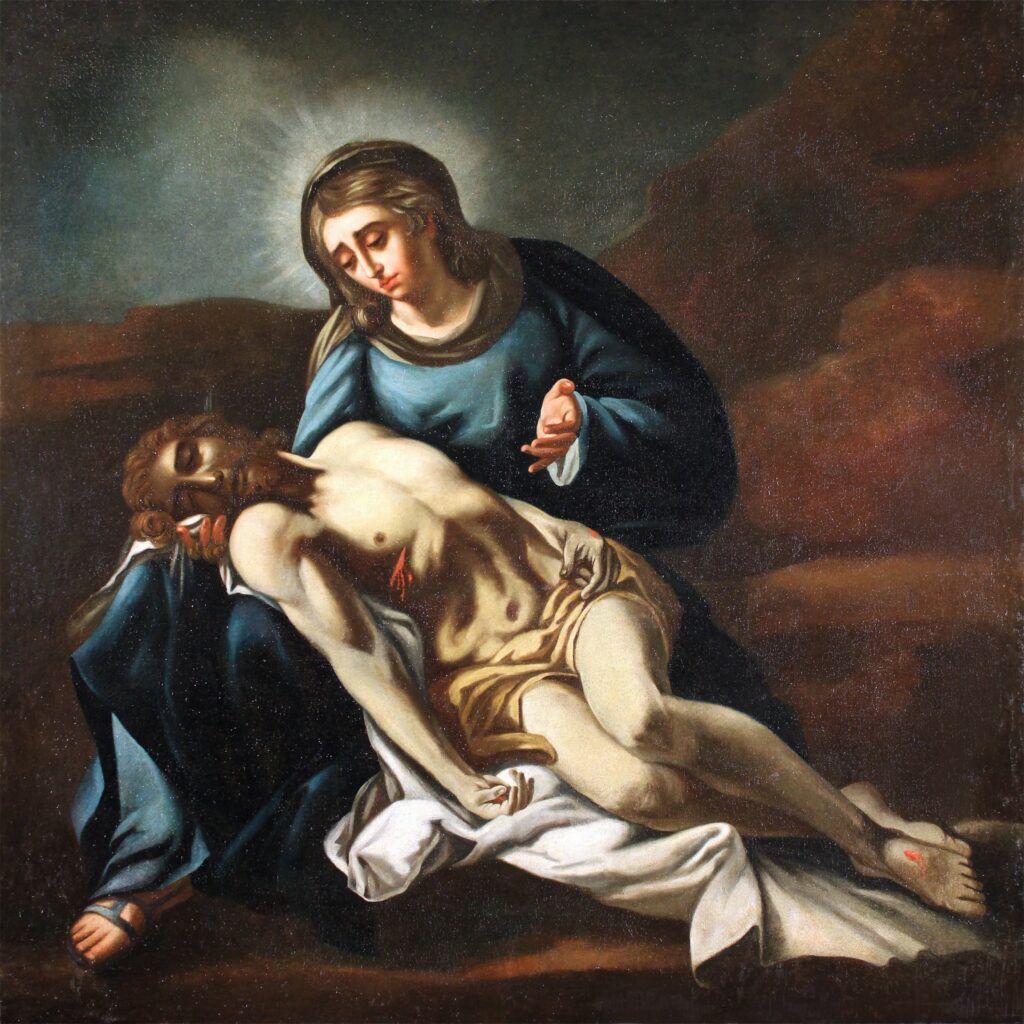
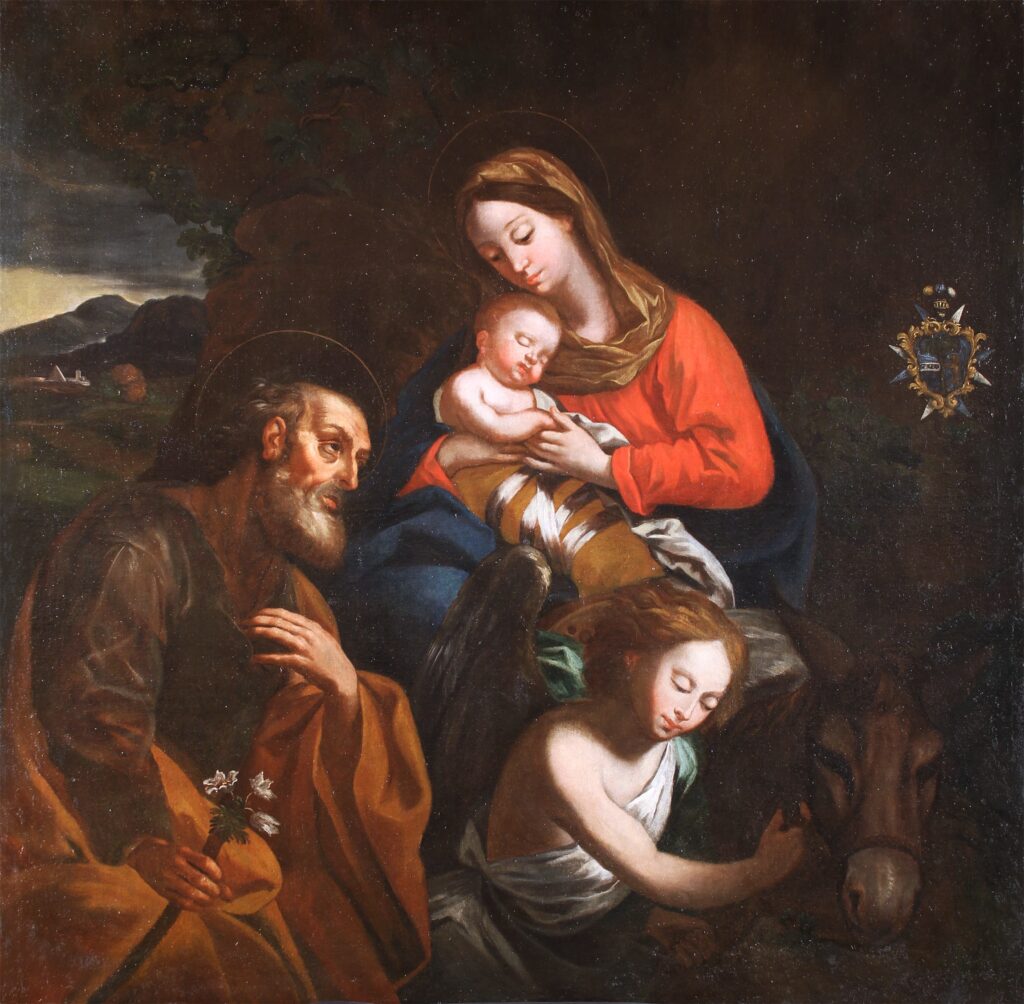
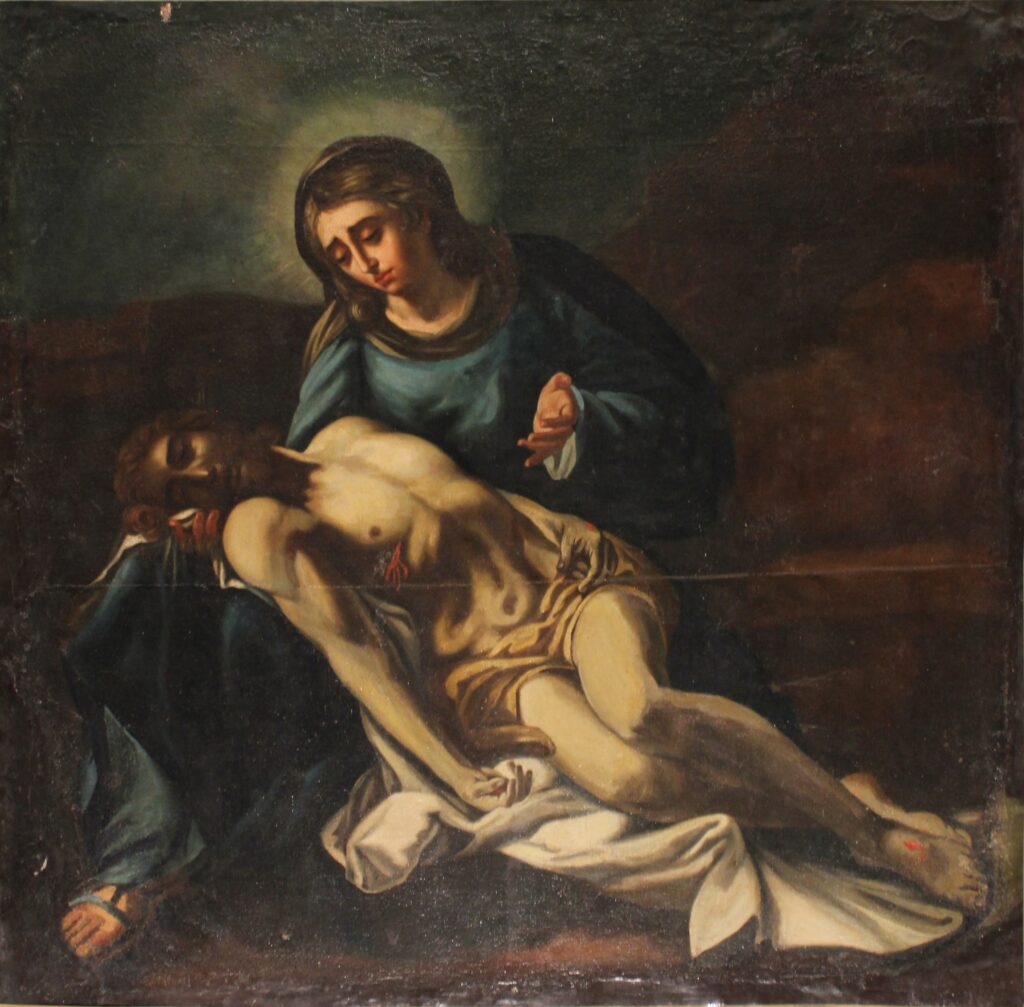
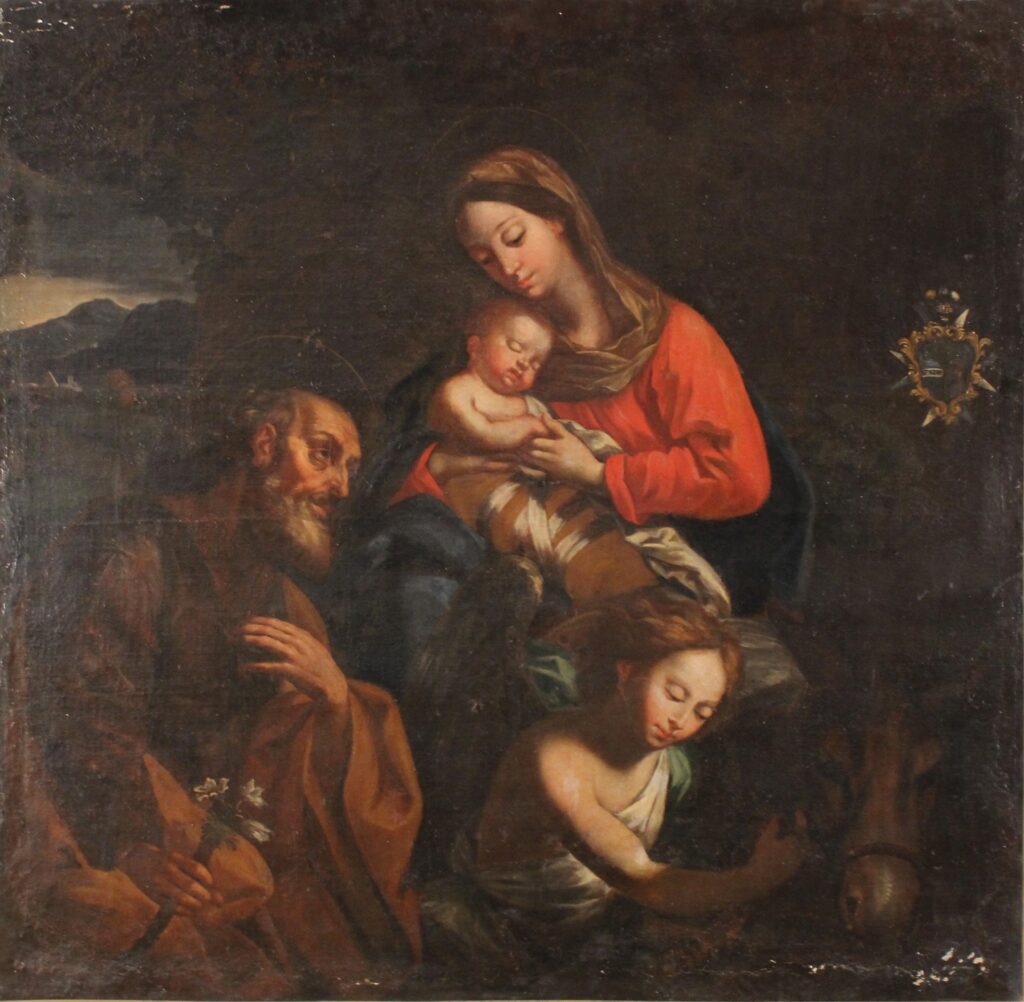
The artistic heritage of the temple includes two prominent Baroque paintings located next to the high altar. The first is a version of the "Pietà" by Annibale Carracci, which depicts with great drama the sorrow of Mary as she gazes upon the body of Christ. The second represents the "Flight into Egypt," where the Holy Family is guided by an angel through a wooded landscape. This latter piece features the coat of arms of a Knight of St. John, suggesting it may have been a donation from the Order. Although initially modest, the church was enriched thanks to the patronage of figures such as Knight Wolfgang Philipp von Guttenberg and the Famucelli family.
The central and most significant piece is the titular statue of the Immaculate Conception, sculpted in stone in 1676. The image portrays the Virgin in a white tunic, a blue mantle, and a halo of twelve stars, following the iconography of the Apocalypse. It was commissioned by Antonio Famucelli in thanksgiving after surviving the plague epidemic that devastated the islands that year. To ensure the permanence of this legacy, a project co-financed by the European Union has carried out conservation work aimed at mitigating humidity, halting structural aging, and restoring the painted layers of its artworks, thus guaranteeing their protection for the community.