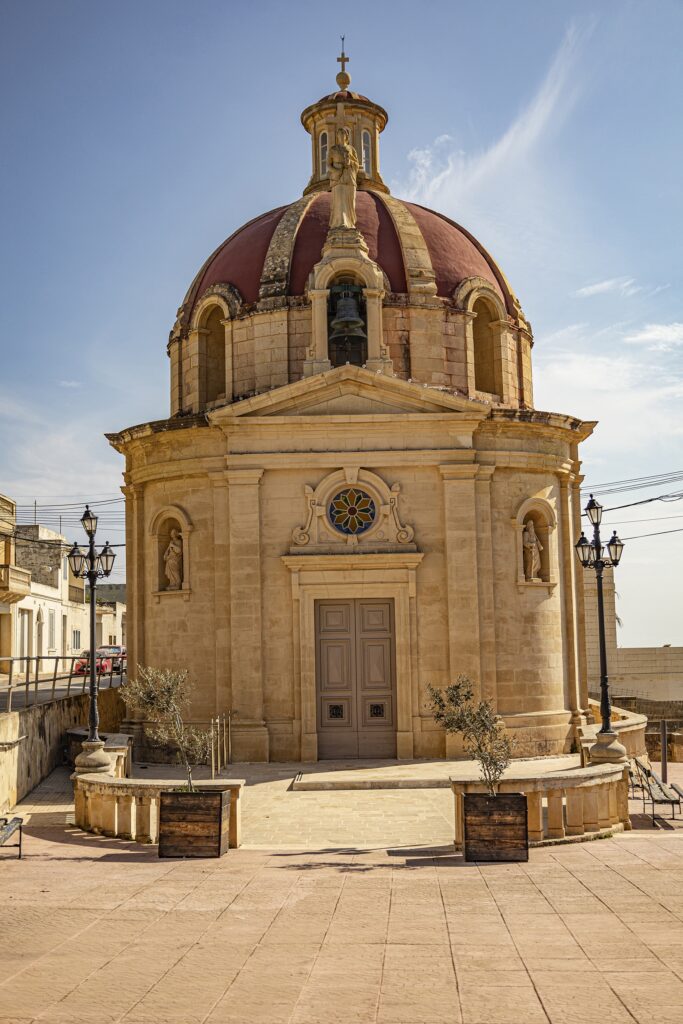
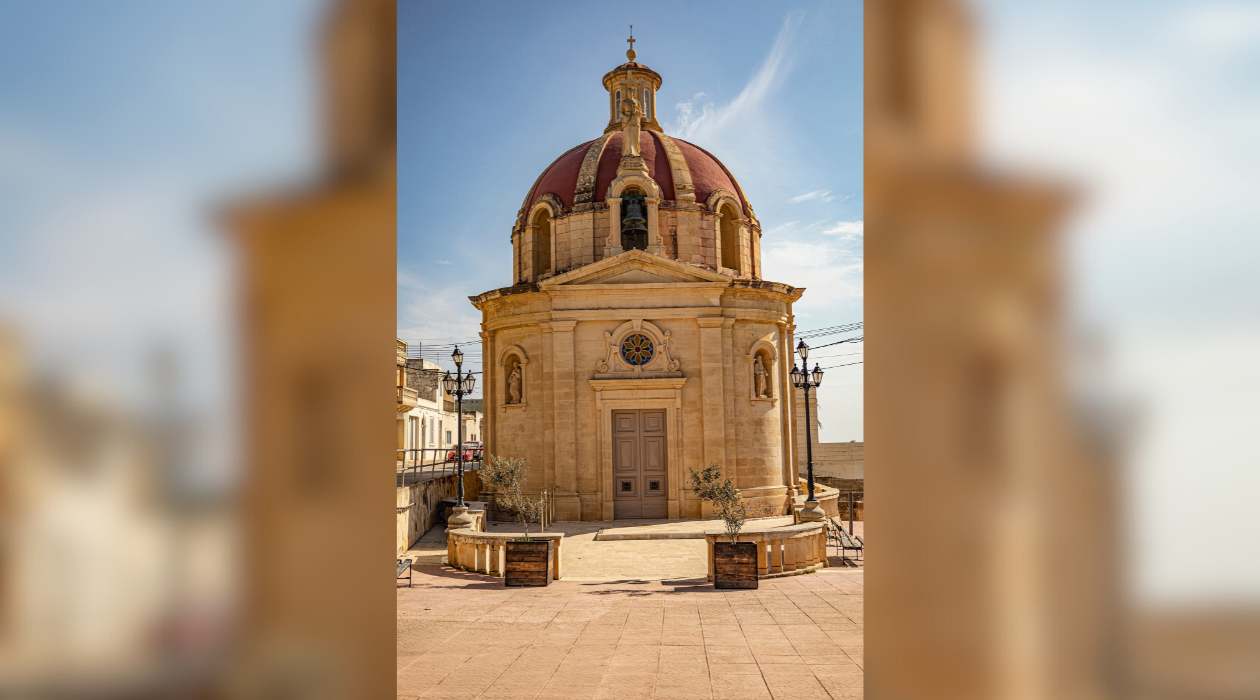
The Church of the Holy Family of Bidnija is a modern building of neoclassical design. The foundation stone was laid in 1921, and it was built according to the designs of the Maltese architect and stonemason Salvu Zahra (1874–1960), funded by the inhabitants of Bidnija to meet their spiritual needs. The church stands on a prominent hill, and its dome can be clearly seen above the surrounding landscape.
Architecture, Art and Conservation
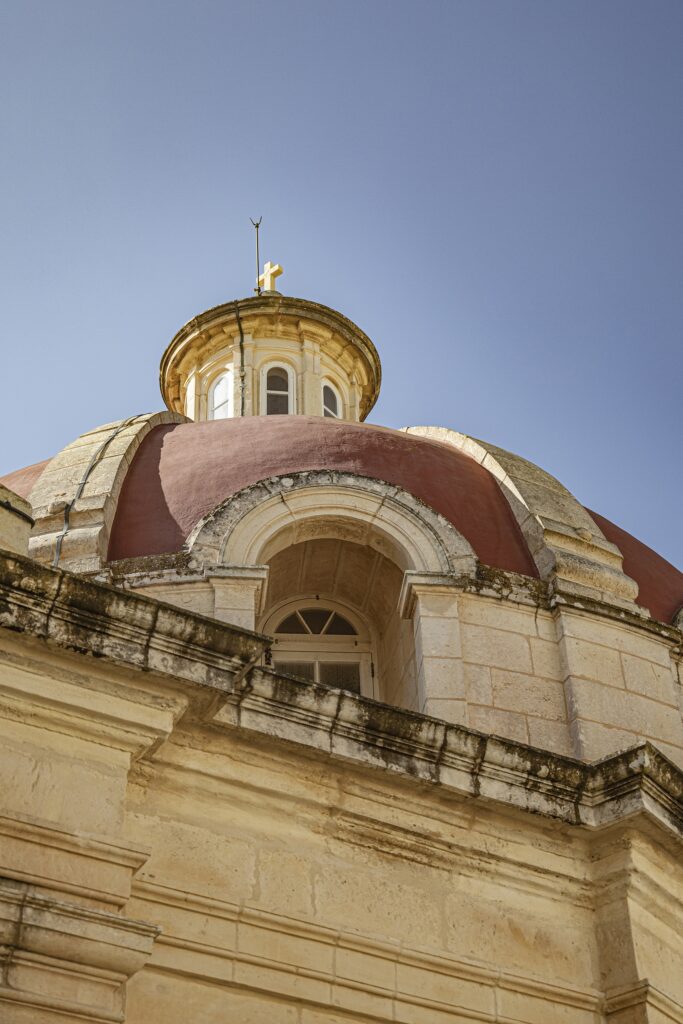
This church is distinguished by its circular plan and its imposing dome, pierced by eight windows that bring abundant natural light into the interior. Above the dome rises a lantern, also with eight windows, reinforcing the verticality and luminosity of the whole structure. On the main façade, on either side of the doorway, there are niches with stone statues of Saint Peter and Saint Paul, carved in 1946 by the Maltese sculptor Fabrizio Bartolo. The bell tower is located at the center of the façade, directly above the main entrance.
At the top of the bell tower stands a statue of a female figure symbolizing Faith, one of the three theological virtues along with Hope and Charity. She is identified by the book representing the Scriptures in her right hand, the chalice in her left, and the cross behind her. The original statue was removed in 1977 due to its advanced deterioration and replaced by a new work by the Maltese sculptor Marco Montebello, funded by the parishioner Francesco Sant of Bidnija.
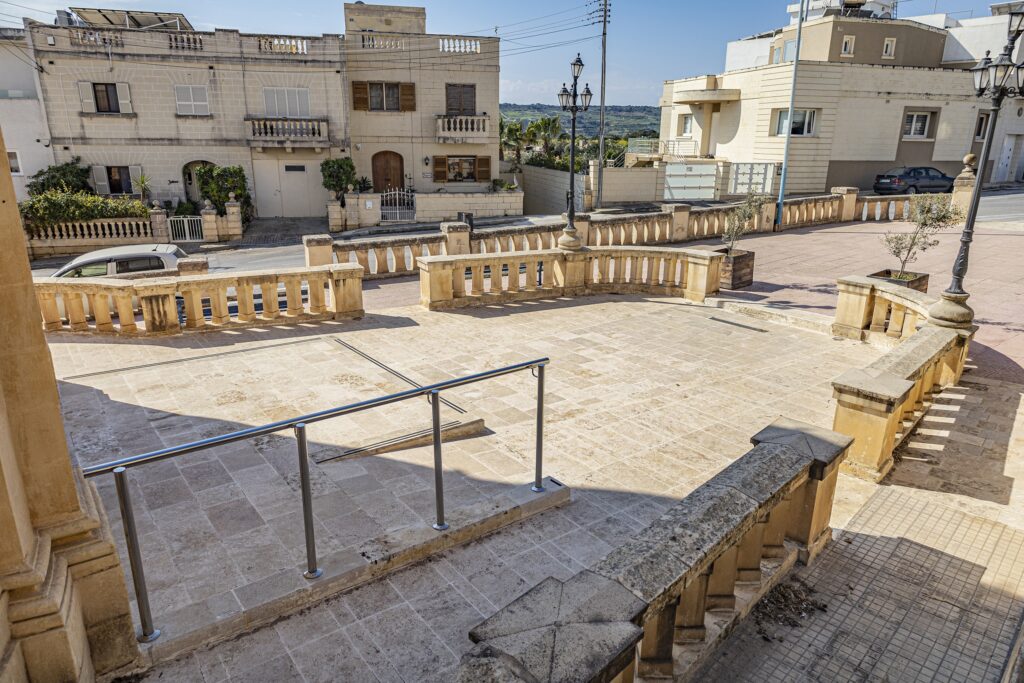
In front of the church stretches a wide parvis, whose hard-stone paving was donated by Giuseppe Vella, a native of Qala in Gozo and a resident of the nearby village of Wardija. The bell tower houses two bells installed in 2016 which, following tradition, were baptized. One bears the name “Georgina” in honor of Ġorġ Preca, and the other “Carmela,” in recognition of the benefactor Carmela Vella, who financed its acquisition.
The titular painting depicts the Holy Family of Nazareth and was painted in oil on canvas by the Maltese artist Gianni Vella. In the composition, the Child Jesus occupies the center, accompanied by the Virgin Mary on the left and Saint Joseph on the right. Above them appear the symbol of God the Father and the Holy Spirit in the form of a dove, completing the representation of the Holy Trinity. The scene, set in a humble domestic environment, shows Saint Joseph teaching Jesus the craft of carpentry while Mary watches serenely. The wooden planks placed at the Child’s feet symbolically foreshadow the Cross. The painting is bathed in a warm light that emphasizes the divinity of the Holy Family and of the Trinity. The sculpted frame of the painting features classical elements similar to those found on the façade of the parish church of Mosta.
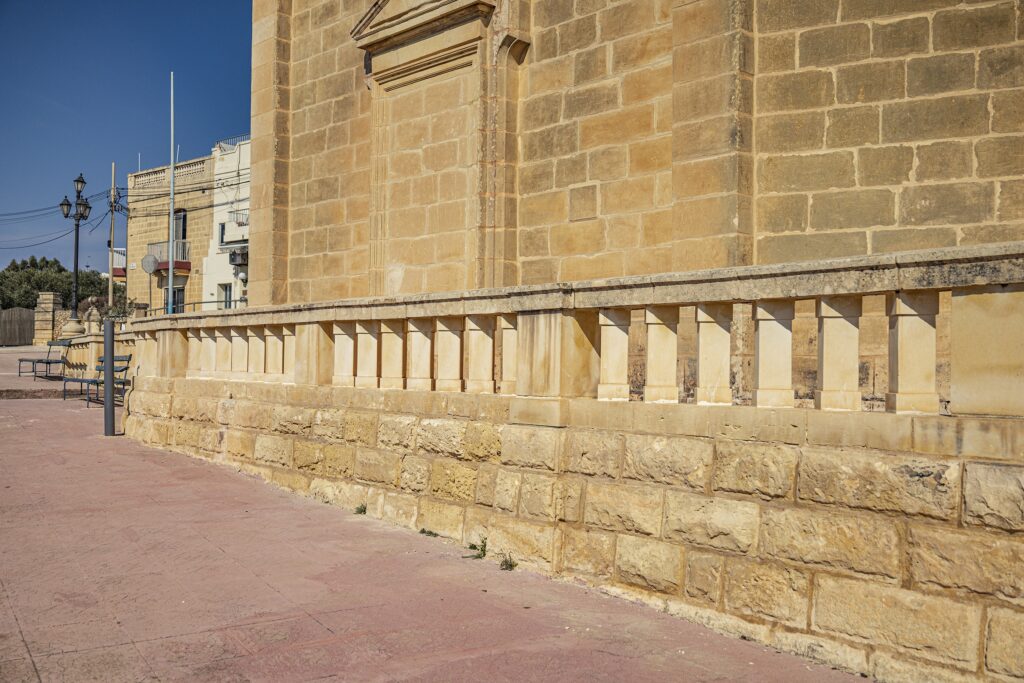
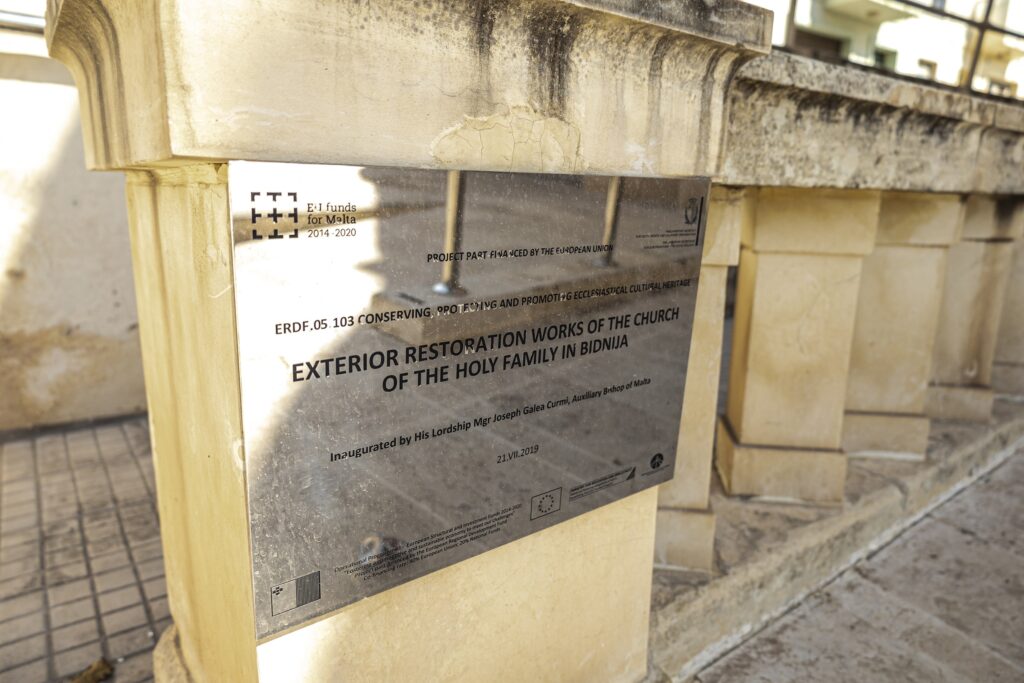
A project co-funded by the European Union focused on the conservation of the church, its bell tower, and the parvis. The interventions addressed the deterioration caused by weathering and pollution, as well as the structural consolidation of the bell tower. In addition, accessibility improvements were introduced in the parvis to facilitate access for all visitors. These works ensure the long-term preservation and enjoyment of this important historic building at the heart of the community.