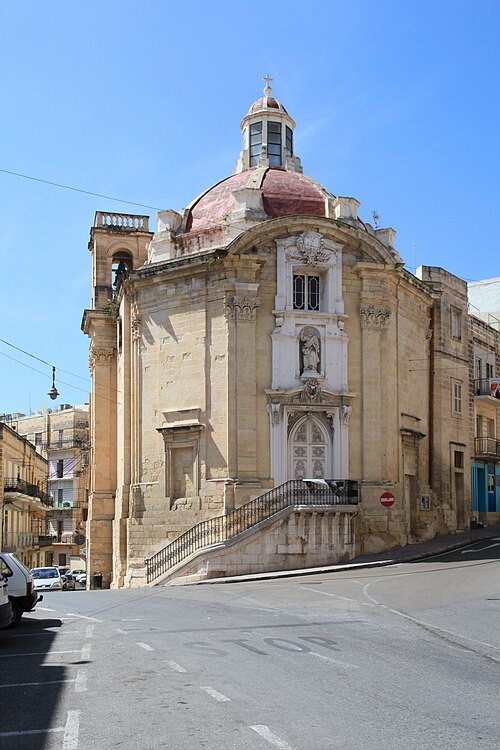
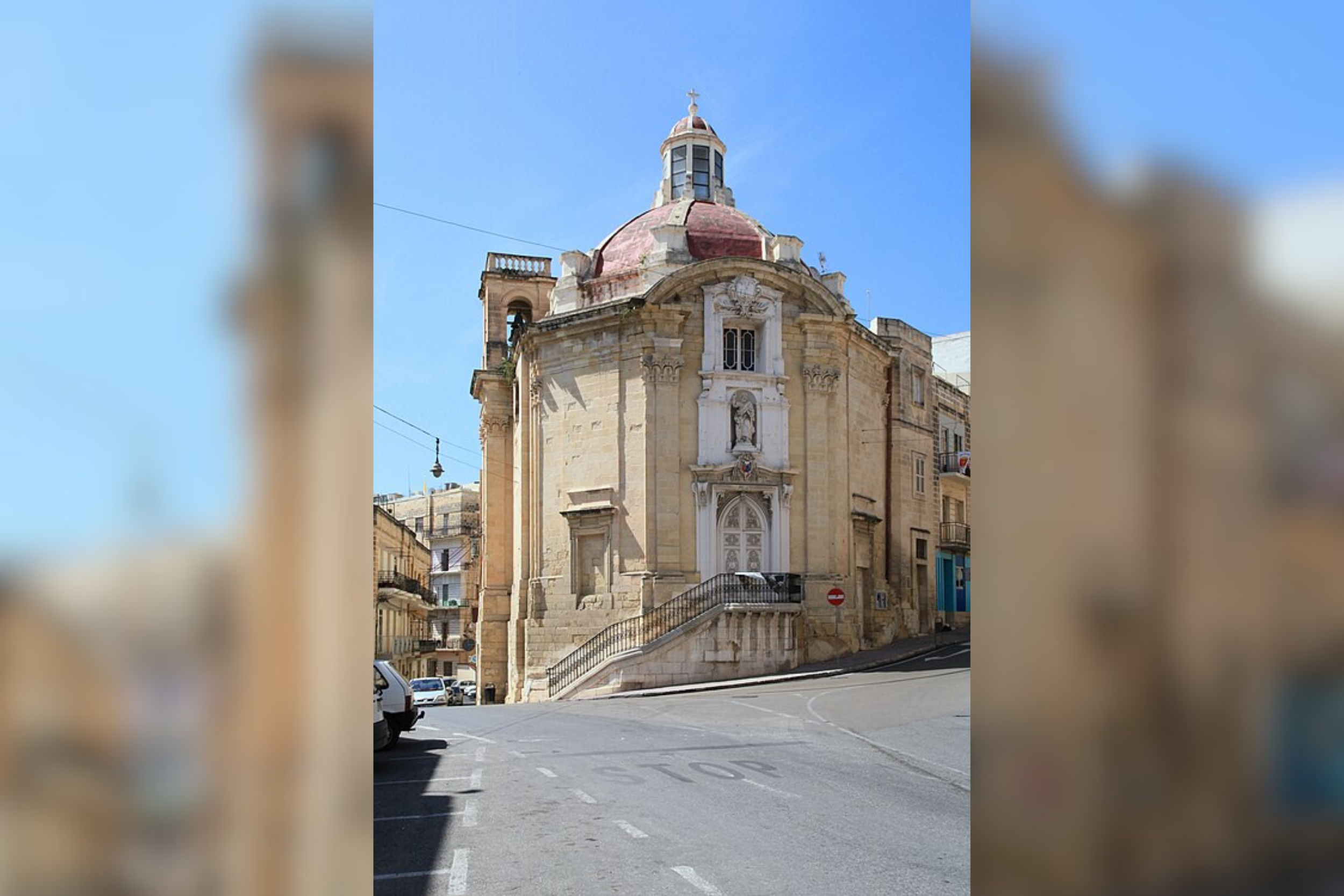
The design of St. Paul’s Church (St. Paul’s Churchis a work of early Baroque style with medieval roots, having been originally constructed in its current form around 1590. Situated in one of the higher areas of Cospicua , this church was erected to commemorate the shipwreck of St. Paul the Apostle in Malta, becoming a local center of pilgrimage. Unlike the city’s grand Collegiate Church, this temple stands out for its architectural sobriety and strategic location, designed to offer a privileged view over the defenses of the Three Cities.
Tradition and Refuge: St. Paul in Bormla
St. Paul’s Church is a symbol of Malta’s deepest religious identity. Located on one of Bormla’s hills, the church served as a spiritual landmark for residents living within the Santa Margherita Lines. During the 17th century, the temple was a place of refuge and prayer for the local community, especially during periods of military tension in the Grand Harbour. Its limestone facade, with clean lines and a robust structure, is an example of the functional Baroque that characterizes the smaller churches of the walled cities.
The interior of the church is noted for its decorative simplicity and its atmosphere of contemplation. The centerpiece is the altar dedicated to St. Paul, which houses a representation of the saint at the moment of his shipwreck—an image that resonates deeply with the maritime history of Cospicua’s residents. Despite the passing centuries, the temple preserves a series of frescoes and stone-carved details that have been carefully maintained by the local community. The peace found within its walls contrasts with the intense activity of the nearby dockyards, offering a space of silence and reflection.
Beyond its architecture, the church is a testament to the area's historical continuity. Having survived sieges and modern-era bombings, St. Paul’s Church has been kept as a guardian of Bormla’s traditions. Each year, the Feast of St. Paul is celebrated here with special devotion, uniting families in a celebration that strengthens the sense of community. Today, it remains an active place of worship and an essential point for understanding the sacred geography of the Three Cities. Consecrated as a sanctuary of tradition and faith, it is a mandatory stop on the tour of Cospicua’s fortifications.