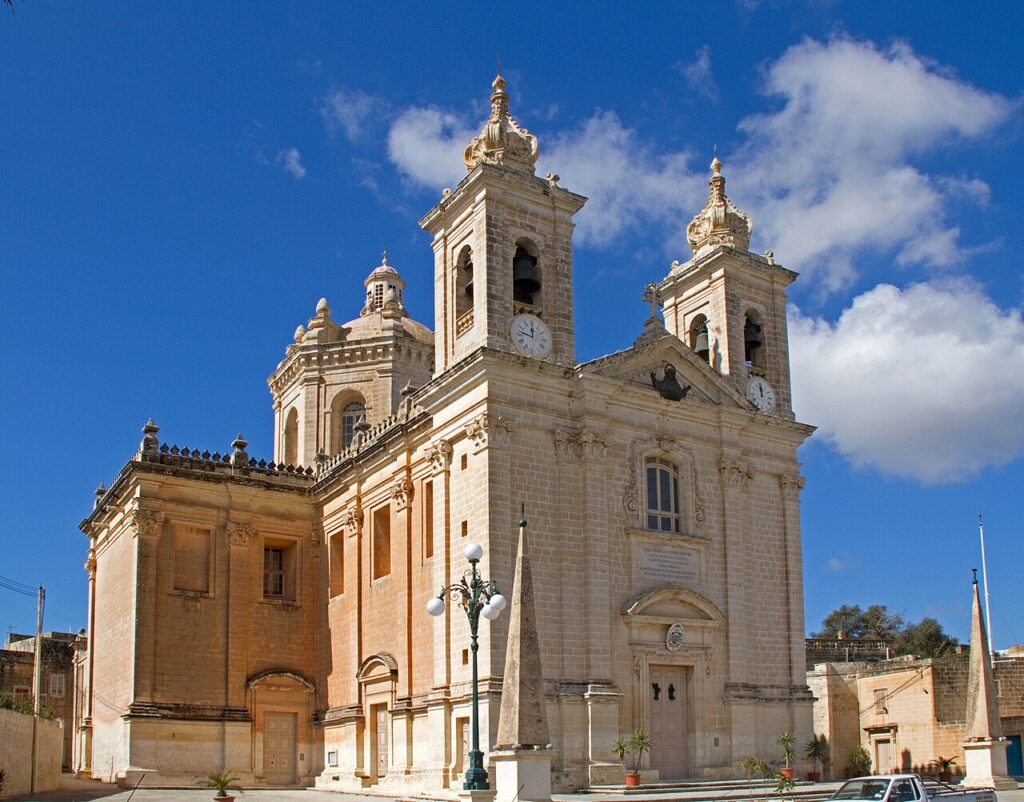
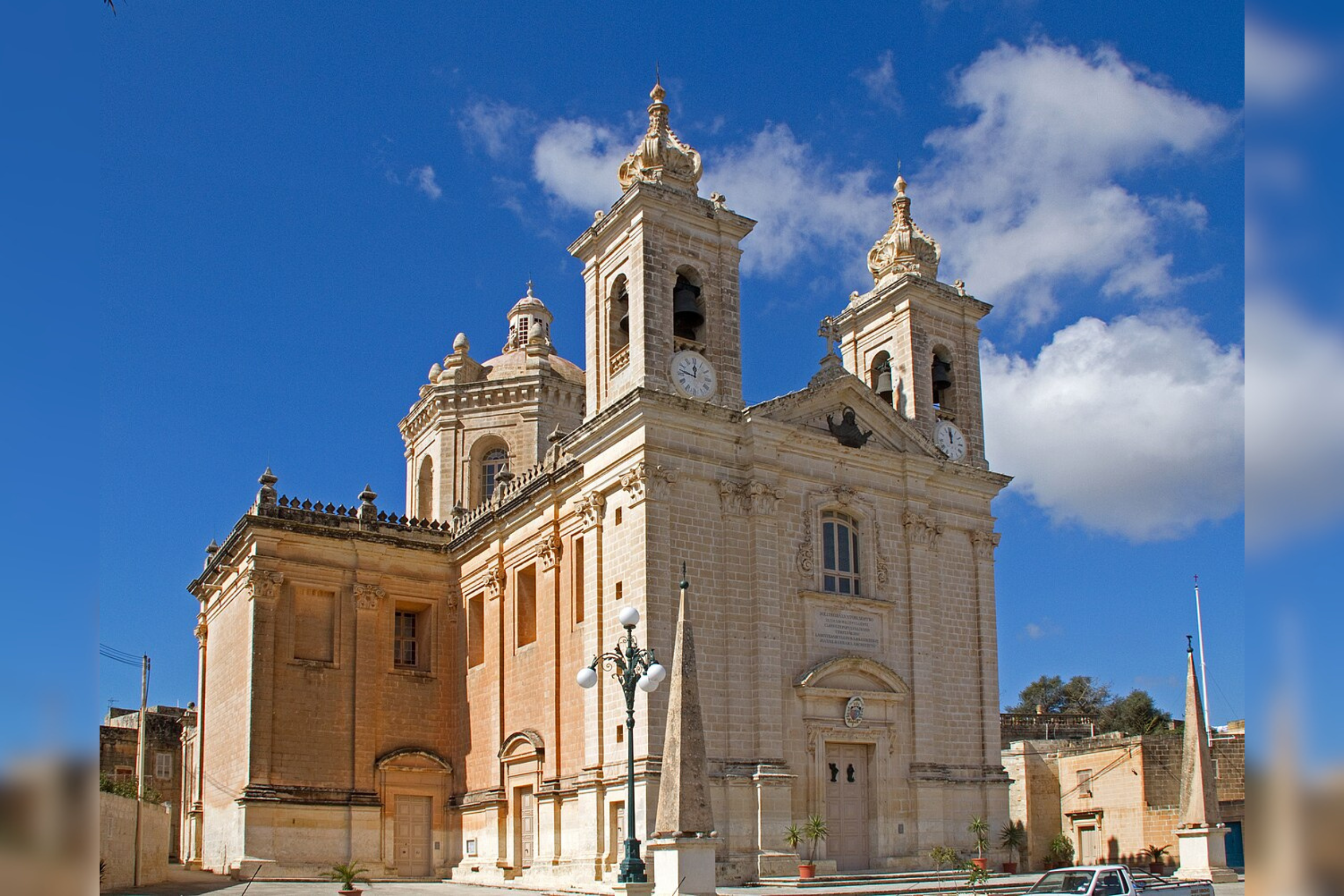
The design of the Parish Church of Our Saviour is one of the most significant works of 17th-century architecture in Malta, built between 1694 and 1702. Situated in the center of Lija, this church stands as the architectural and social heart of one of the most traditional and stately localities on the island. Unlike temples that followed a more heavy Baroque style, this parish stands out for the harmony of its proportions, having been designed by the Maltese architect Giovanni Barbara, who achieved an exceptional balance between Renaissance sobriety and early Baroque decorative elements.
An Icon of the Three Villages
The Church of Our Saviour represents the elegance of a community that has historically been chosen by the Maltese nobility and upper middle class for their summer residences. Its facade is imposing and balanced, flanked by two bell towers that dominate the village skyline. The temple was elevated to the status of a parish in 1594, although the current structure is the result of the expansion necessary due to population growth in the 17th century. Its dome is one of the most well-proportioned in Malta, serving as a visual guide through the narrow stone streets of Lija's historical core.
The interior of the church is a space of great artistic and spiritual refinement. The central element is the titular painting of the Transfiguration of Jesus, a masterpiece that presides over the high altar and is the focus of celebrations during the famous August feast, known throughout Malta for its spectacular fireworks. The temple houses high-quality marble altarpieces and wood carvings that reflect the prosperity of the parish benefactors over the centuries. The interior lighting enhances the details of the naves and the dome, creating an atmosphere of great serenity for those who visit.
Beyond its architecture, the church is famous for being the center of the loudest and most colorful festival of the Maltese summer. Having survived the bombings of World War II without major damage, it remains today a testament to the construction mastery of Giovanni Barbara. Visiting this temple allows one to enjoy the tranquility of Lija, walking through its bougainvillea-filled alleys before entering the majesty of its parish. Consecrated as a symbol of tradition and art, it is an essential piece to complete the 300 points of historical interest in Malta.