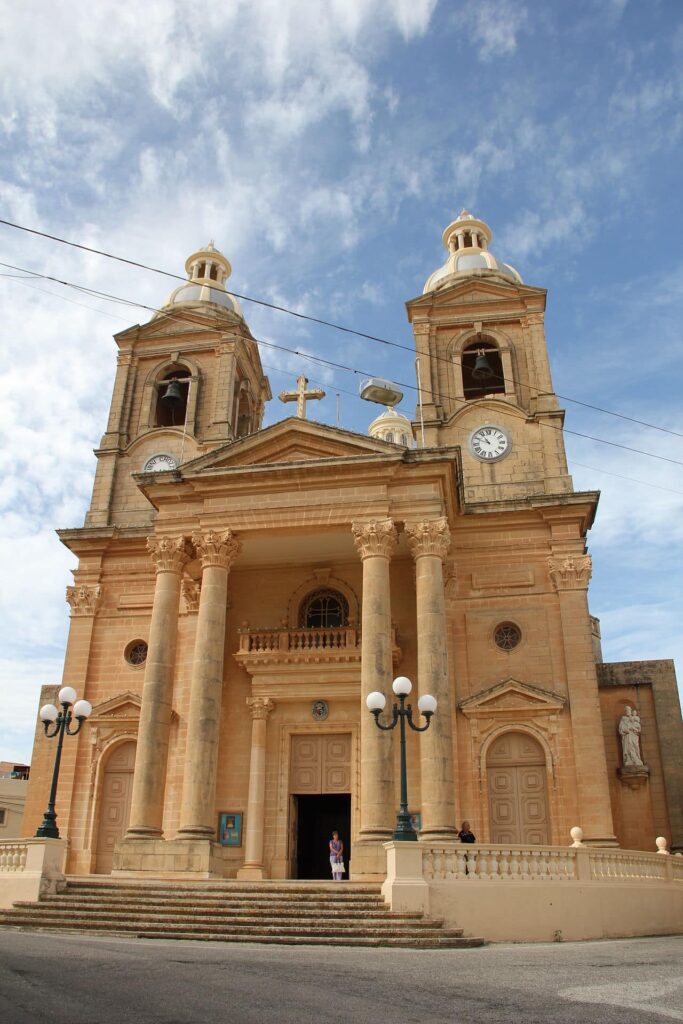
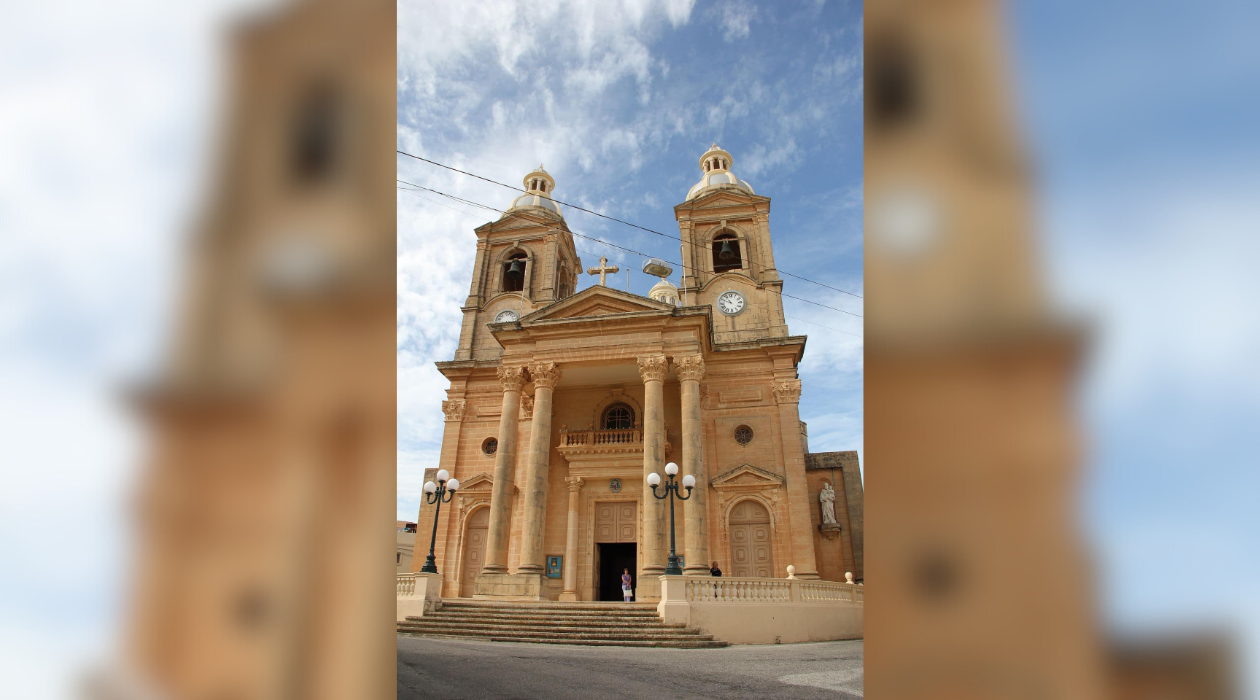
The parish church of Dingli was built in several stages, on the site of a previous church that had been constructed between 1678 and 1680. The current church dates back to the 19th century, although there have been many recent changes to its structure.
History, Art, and Devotion
Between 1958 and 1968, the parish church of Dingli was expanded and transformed under the direction of the Maltese architect. Guzè D’Amato (1886–1963)This included the construction of the side aisles, the reconstruction of the bell towers, the atrium, and a new façade with a portico. Later, between 1968 and 1973, the dome was erected by the stonemason Gerald Spiteri, following the designs of the Maltese architect Italo Raniolo, and its interior was decorated by the Gozitan sculptor Alfred Camilleri Cauchi (b. 1943).
The façade is distinguished by an imposing portico supported by two pairs of Corinthian columns on plinths, crowned by a triangular pediment. Above the main door stands a balcony with a balustrade and a semicircular window. The side doors, also topped with triangular pediments and small round windows, lead directly into the nave. The whole structure opens into an oval atrium. The two bell towers are topped with small domes with lanterns: the southern tower houses three bells cast in 1990 by the Italian firm Achille Mazzola (Valduggia), named "Santa María," "El Salvador," and "San José"; the tower known as "tal-arlogg" retains the historic bells, including the largest one, cast by Giulio Cauchi in 1880.
Among the most valuable works is the polychrome wooden statue of San Juan Bautista, of southern French or Italian origin and late Gothic style. It was brought to Malta in 1530 by the Knights of St. John. The statue depicts the saint wearing an animal skin tied with a cord, holding the Lamb of God and a golden staff topped with a cross. Although it was covered with dark brown paint, recent studies revealed remnants of its original gilding and polychromy. In 1684, it was donated by the Prior of the Conventual Church of St. John in Valletta to the Grotto of St. Paul in Rabat and was later moved to the parish of Dingli.
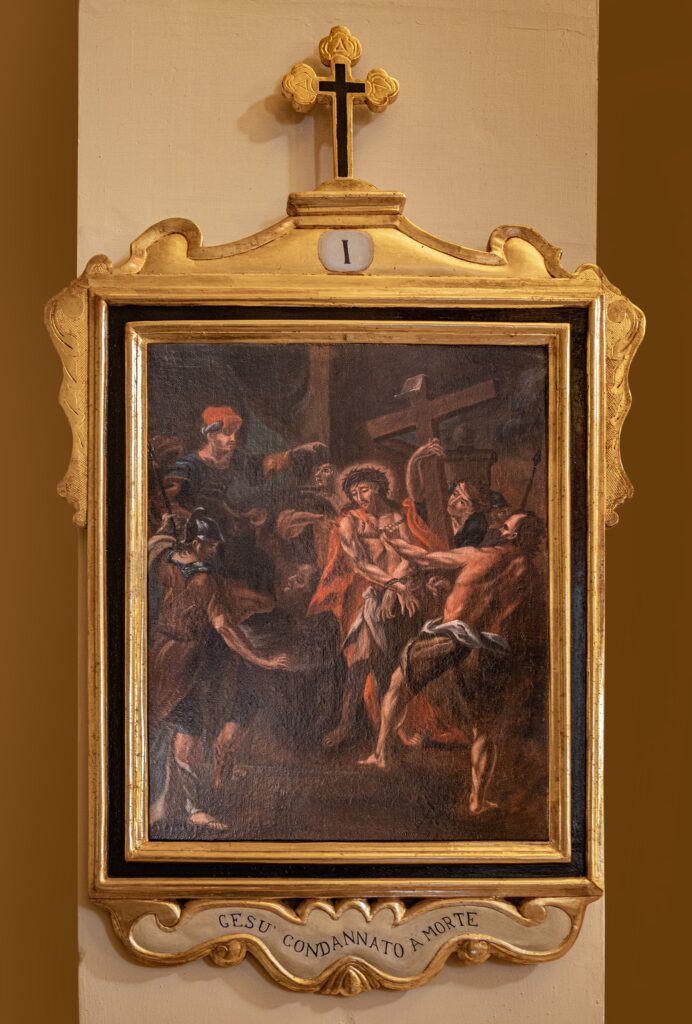
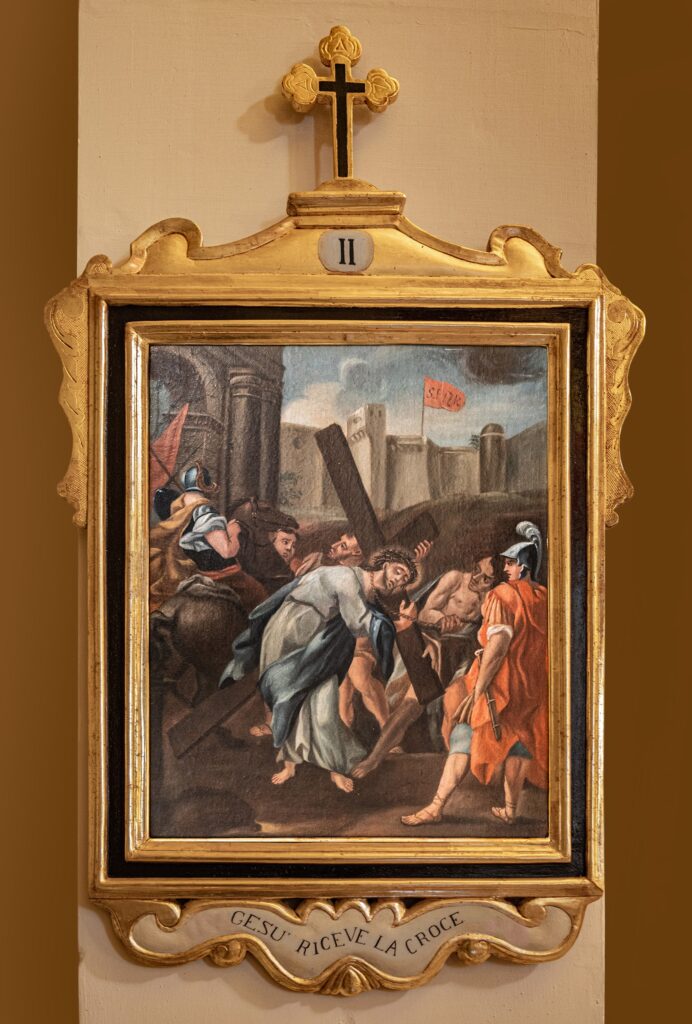
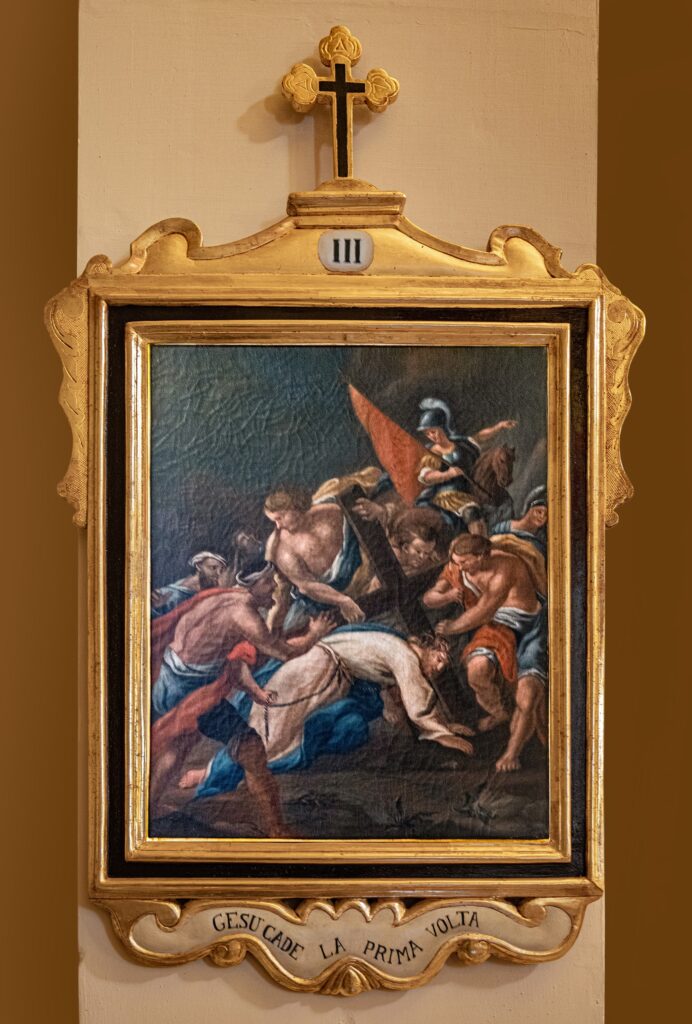
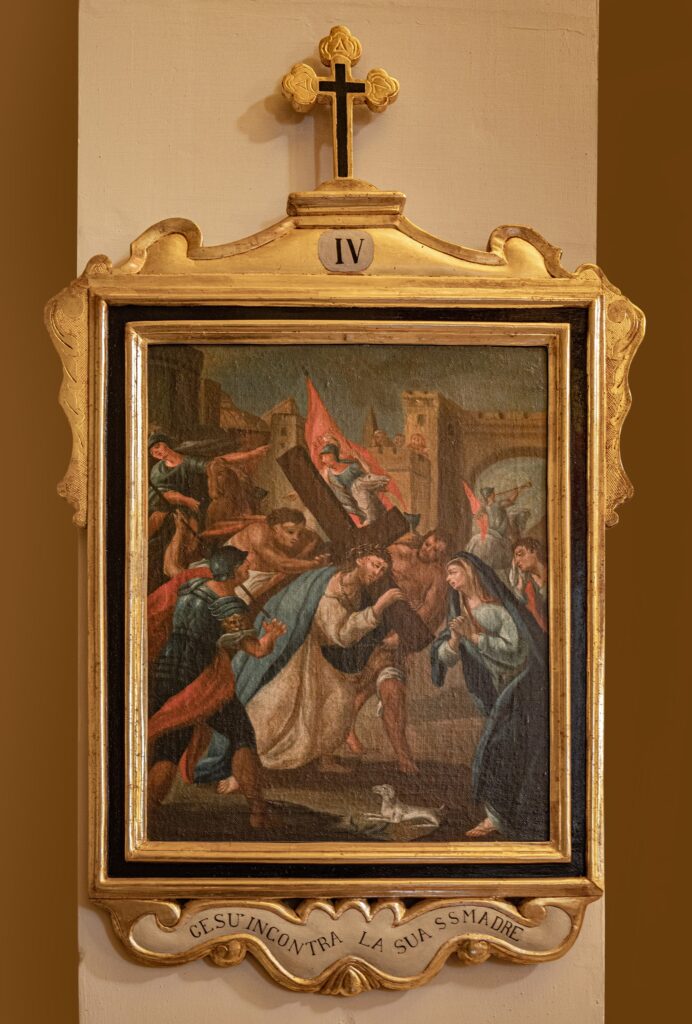
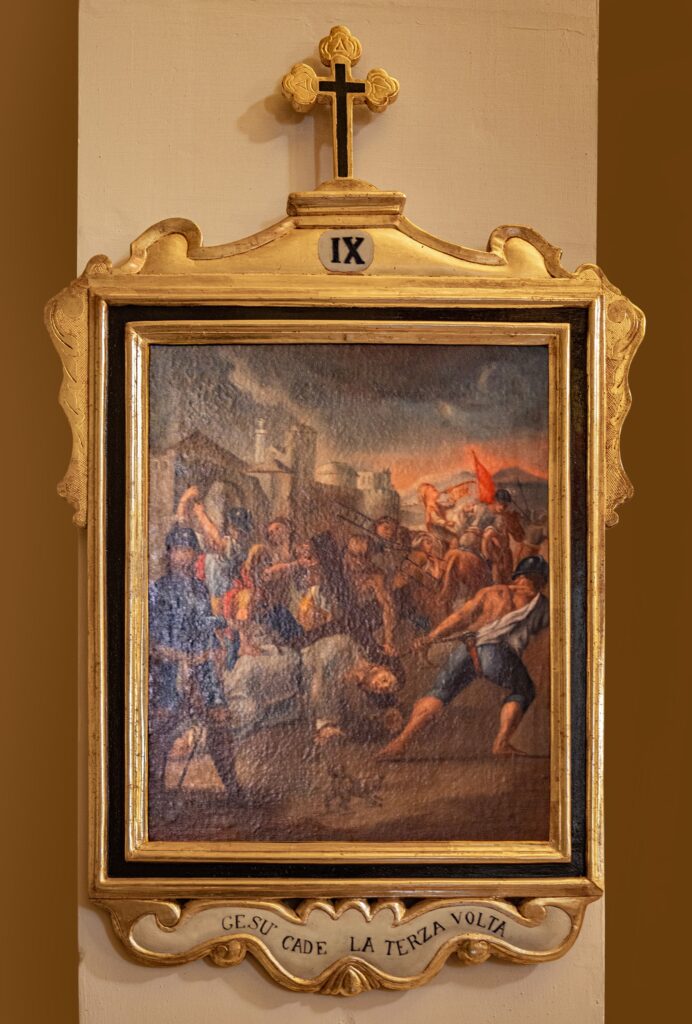
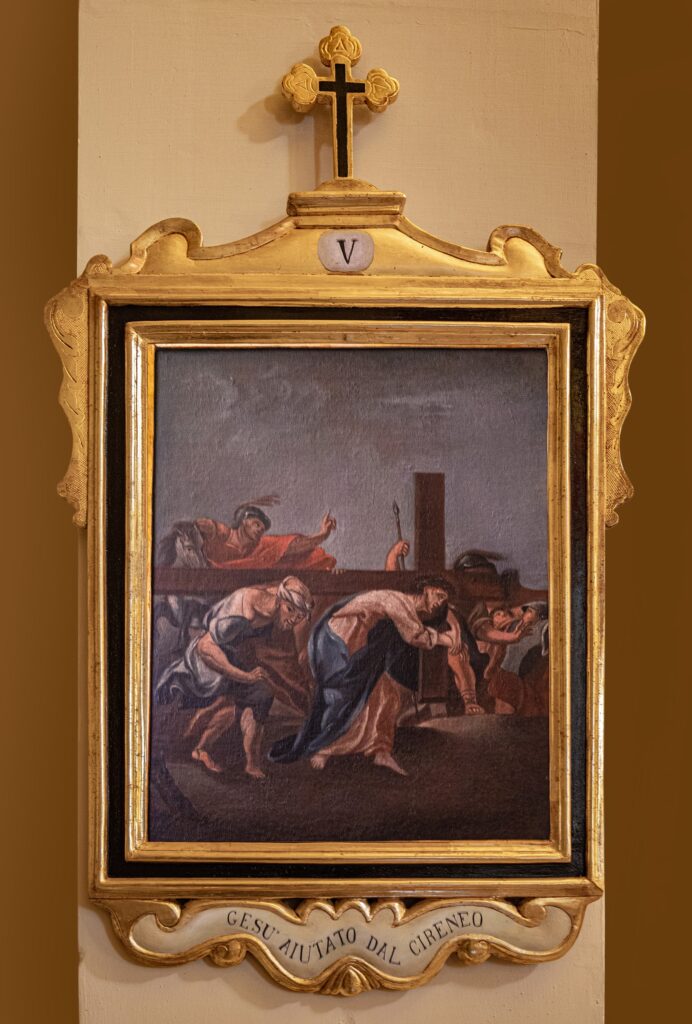
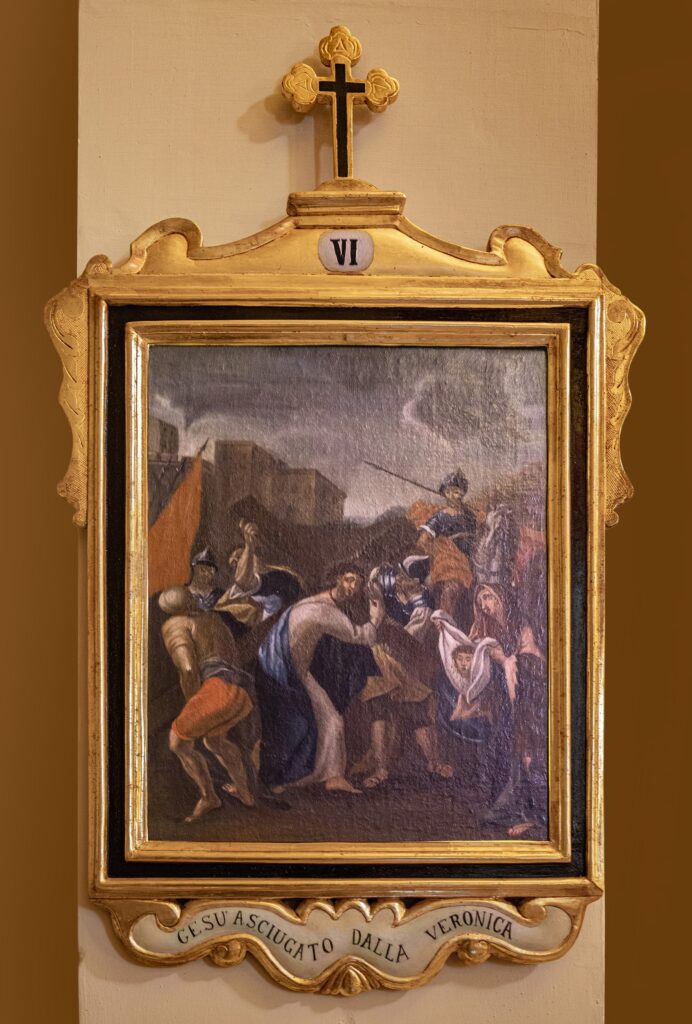
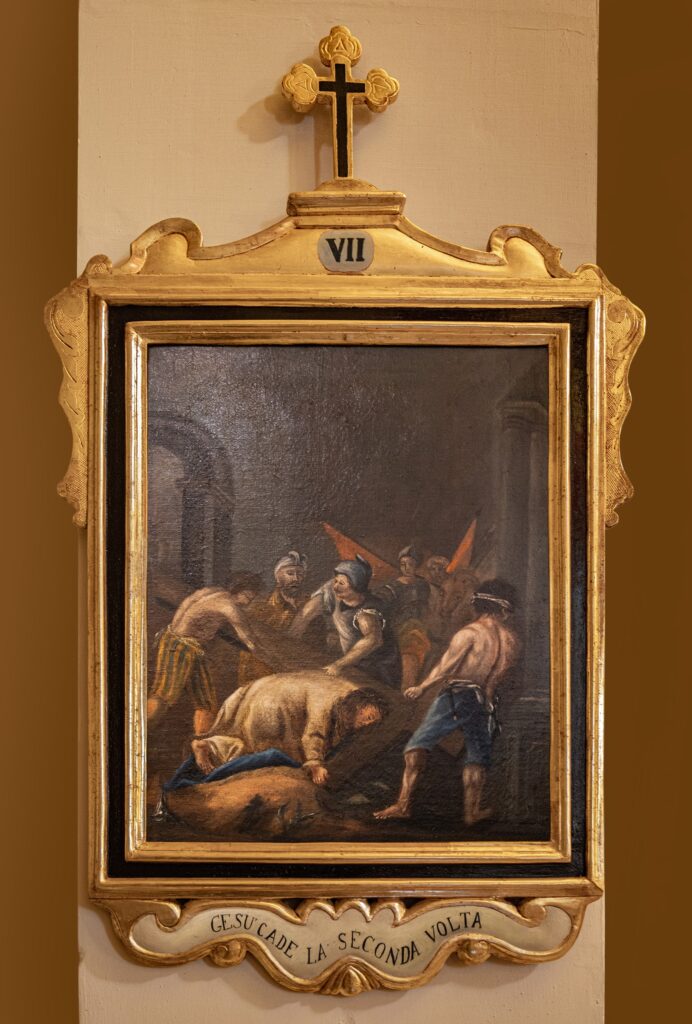
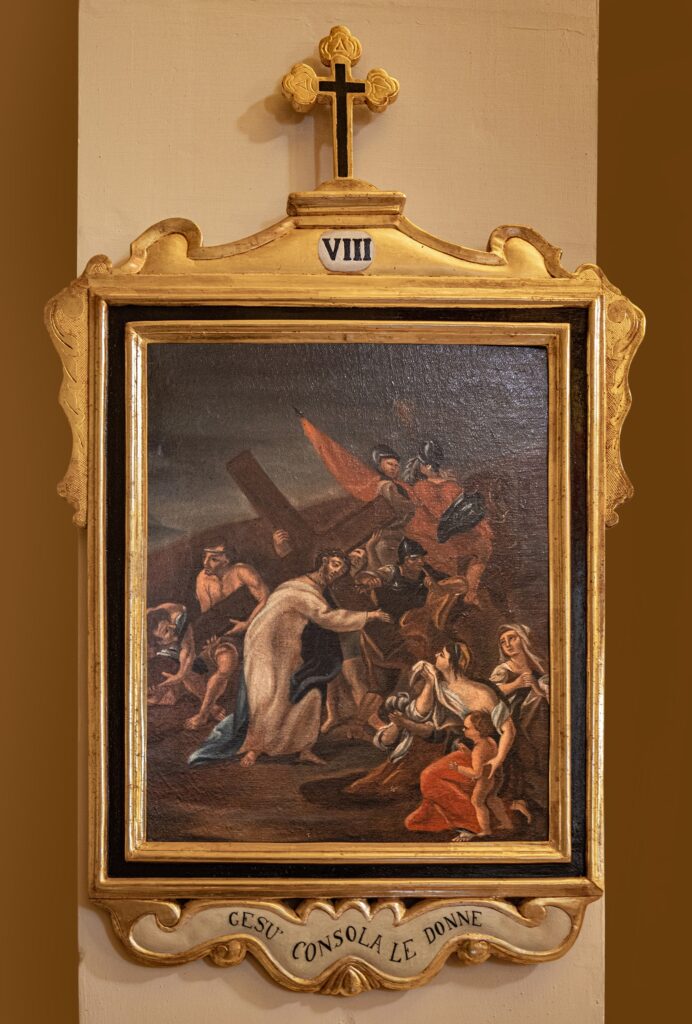
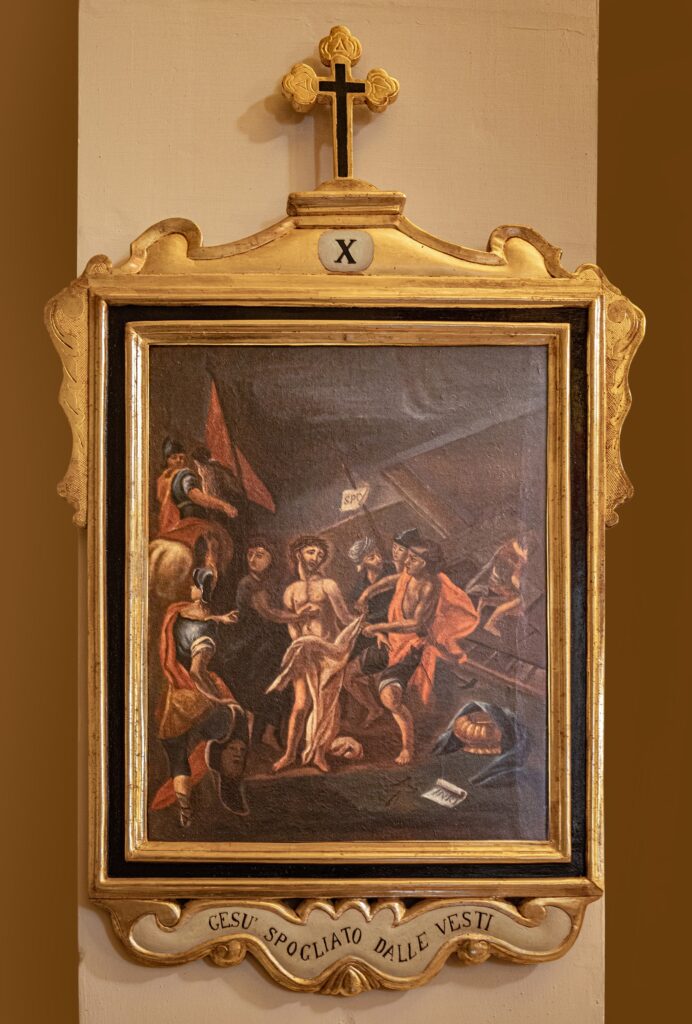
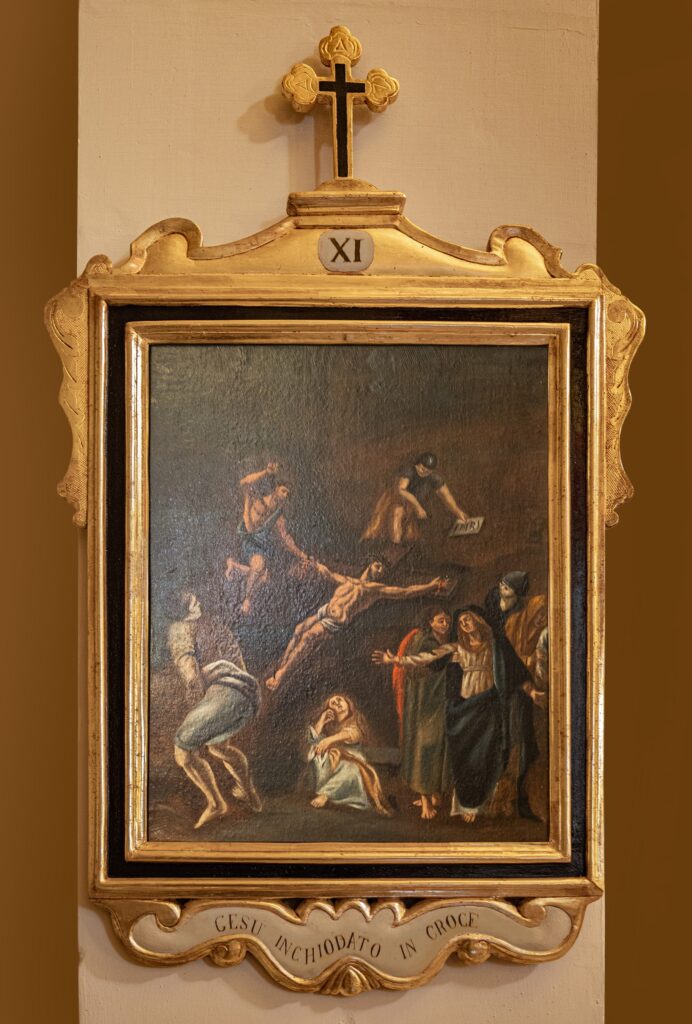
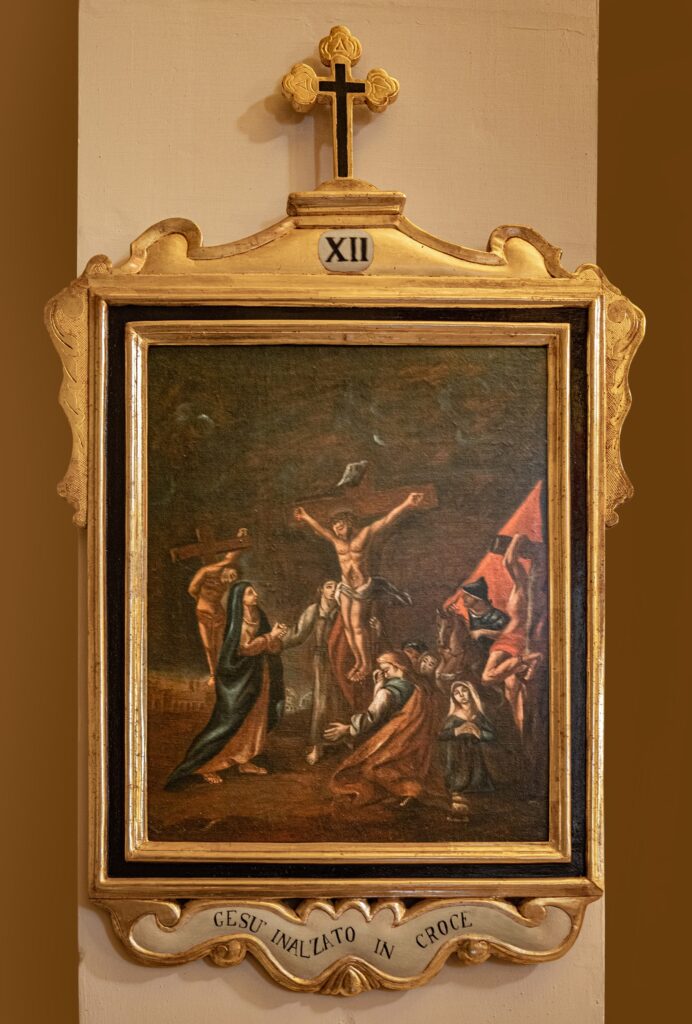
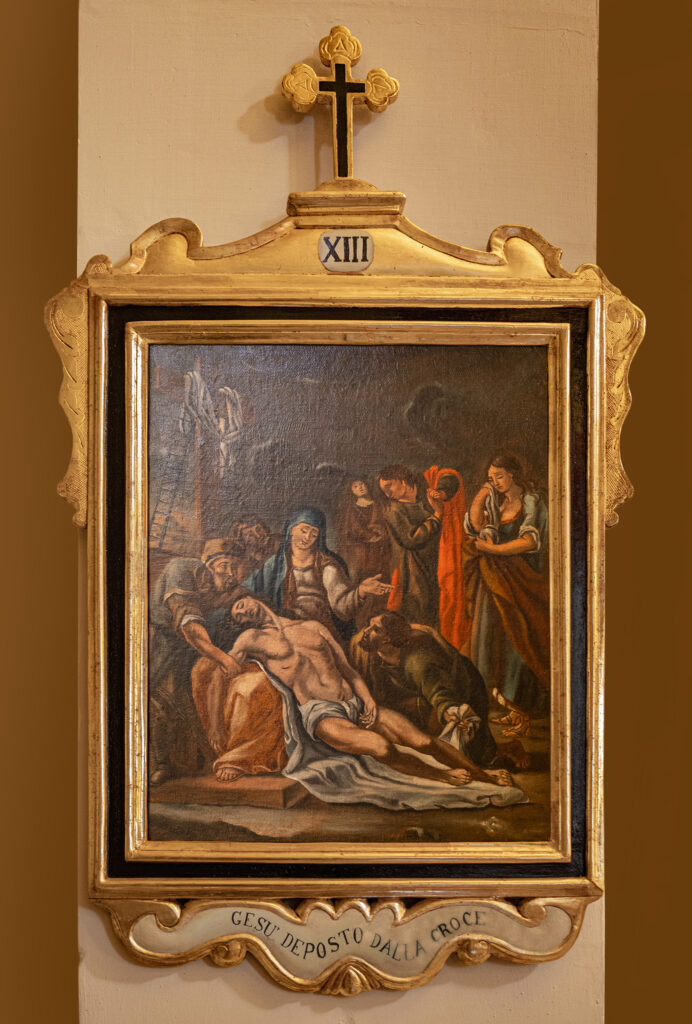
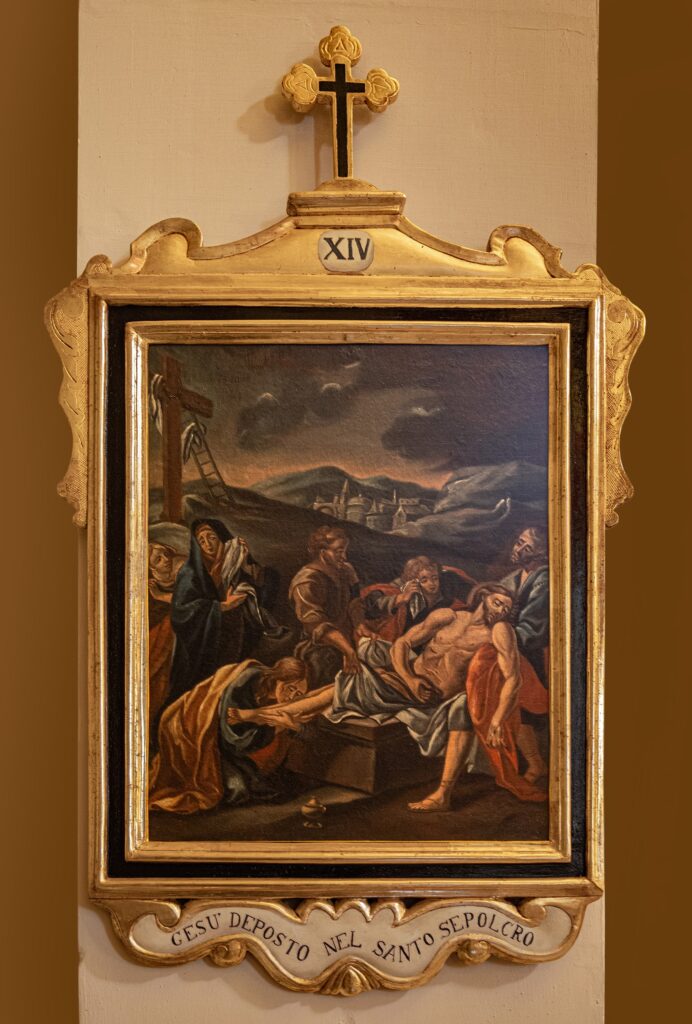
The pictorial heritage includes an 18th-century Stations of the Cross, consisting of thirteen late Baroque paintings depicting scenes such as Christ falling under the cross, the encounter with Mary and Saint Veronica, the Crucifixion, and the Burial. Notable works dedicated to the Virgin Mary also stand out: the altarpiece of Our Lady of the Rosary — featuring the Virgin and Child accompanied by Saint Dominic and Saint Catherine of Siena; the "Adoration of the Magi," with Gaspar, Balthazar, and Melchior offering gold, frankincense, and myrrh; and the 17th-century Baroque oil painting of the Betrothal of the Virgin and Saint Joseph. The niche of Our Lady of the Rosary, painted in oil on stone, features monochrome panels with golden details, while its gilded wooden pedestal displays Baroque scrolls and the monogram "MV" framed in a decorative oval.
The main painting, "The Assumption of Our Lady," was created in 1910 by the Italian artist Virgilio Monti (1852–1942). In a modern style, it depicts the Virgin ascending to heaven with great prominence, accompanied by angels holding lilies and a banner with the initials MV, symbols of purity, while putti hold roses at her feet. At the bottom, the Apostles surround her tomb, completing the traditional iconography.
A recent project co-financed by the European Union enabled the comprehensive conservation of the medieval sculpture of Saint John the Baptist, through cleaning, consolidation, and restoration of the polychromy and gilding. These interventions not only ensured its long-term preservation but also provided new historical evidence about its possible arrival in Malta from Rhodes with Grand Master Villiers de l'Isle Adam, or its connection to the chapel of the great galley Gran Caracca Sant'Anna (1522–1548).
Together, the church of Dingli stands as a valuable testimony of faith, art, and historical continuity, where architecture, sculpture, and painting converge to express centuries of Marian devotion and Maltese heritage.