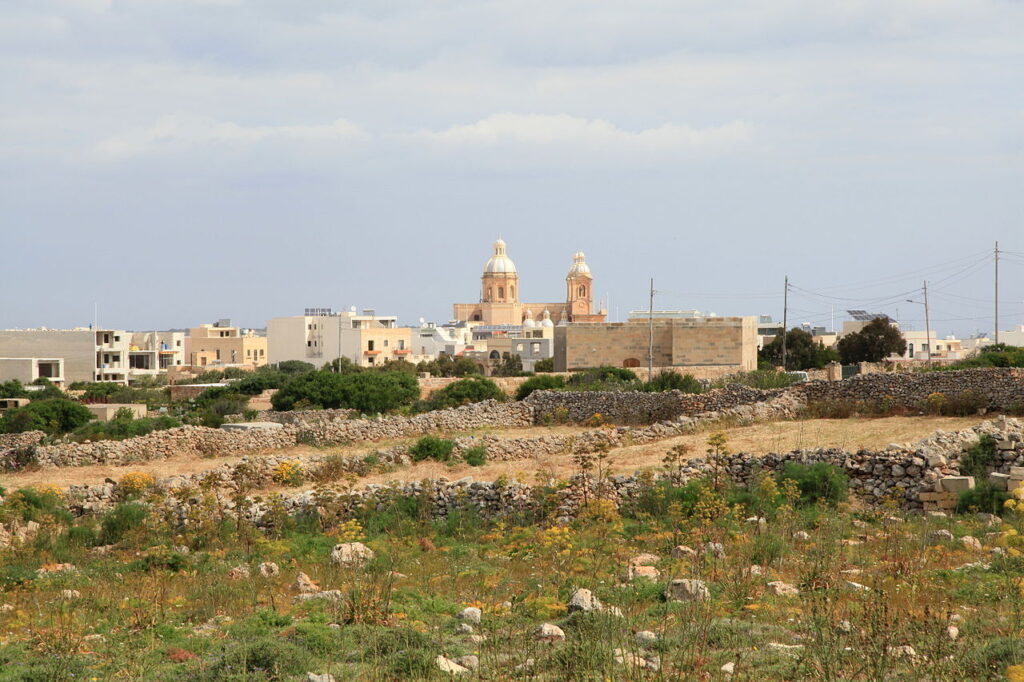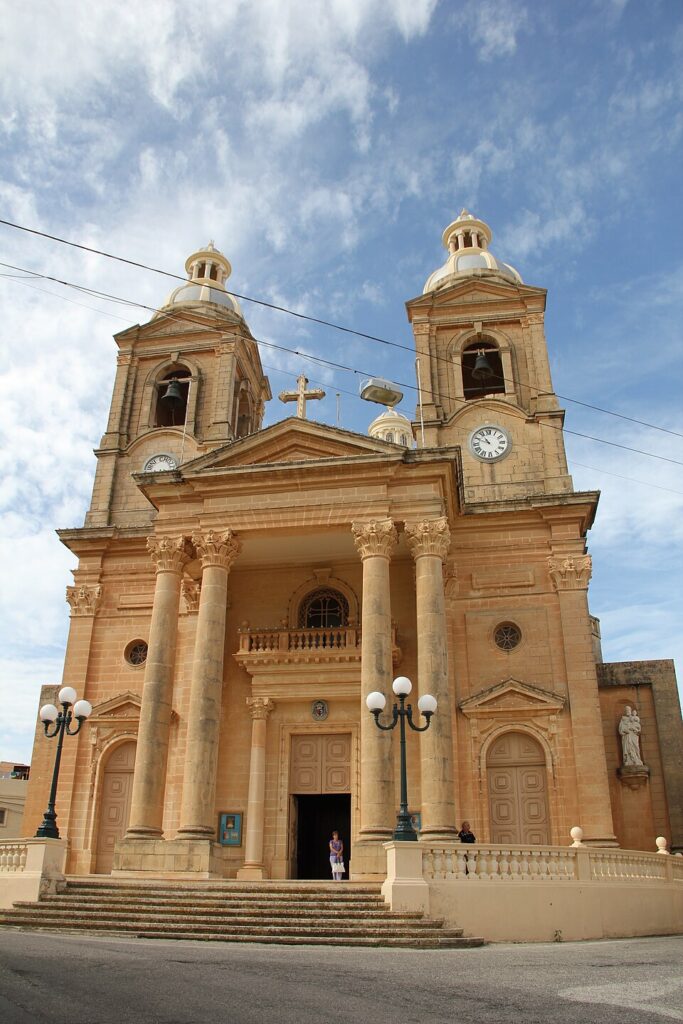
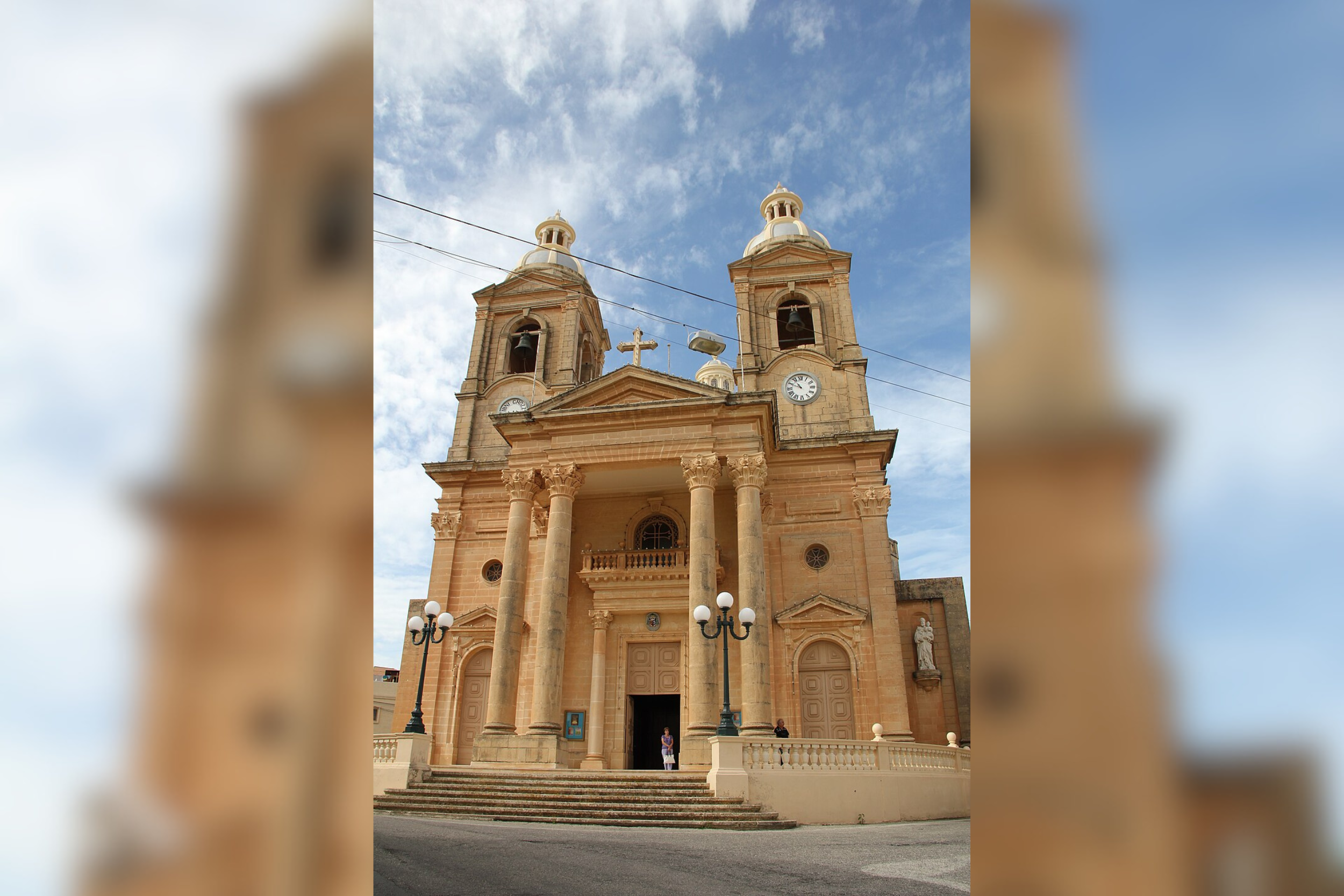
The design of the Parish Church of the Assumption is a prominent work of the Baroque style, built primarily between 1903 and 1910. Situated at the highest point of Dingli, this church stands over the core of one of the most elevated localities in Malta. Unlike other temples that occupy valleys or harbors, this parish was designed to withstand the western winds and serve as a spiritual beacon on the highest plateau of the archipelago, having been designed by architect Francesco Bruno to replace a previous 17th-century structure that had become too small for the population.
A Symbol of Identity in the Heights
The Church of the Assumption represents the devotion of a rural agricultural community that has lived in close relationship with the land and the sea. Its facade is sober yet elegant, with a compact structure that reflects the solidity required for its geographical location. The temple was elevated to the status of a parish in 1678, although the current building is a showcase of the architectural revival of the early 20th century. Its red dome is a visual reference point that can be seen from many kilometers away, marking the western limit of the island.
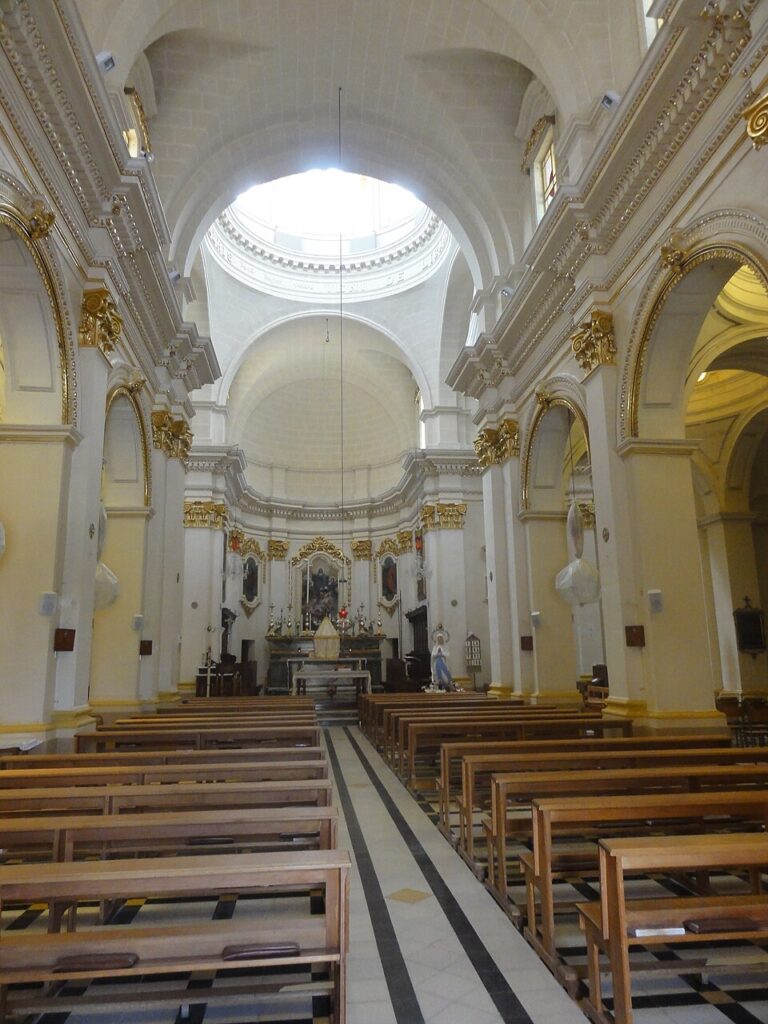
The interior of the church is a space of great luminosity and artistic detail. The central element is the titular statue of the Assumption of the Virgin, a piece of great devotional value that takes center stage during the festivities on August 15th. The temple houses altarpieces showing the transition of pictorial styles in Malta, with frescoes decorating the ceilings and marble altars funded by local families over decades. The layout of its central nave allows for excellent acoustics, making its religious ceremonies an immersive experience for visitors.
Beyond its artistic value, the church is the center of social life in Dingli, a village that has maintained its traditional character despite urban development. Having been officially consecrated in 1939, it remains today an architectural landmark that serves as a perfect preamble before visiting the Dingli Cliffs. Visiting this temple allows one to appreciate the simplicity and faith of one of Malta's most authentic communities while enjoying an unparalleled natural environment. Consecrated as a sanctuary of peace in the heights, it is an essential piece to complete the 300 points of historical interest in Malta.