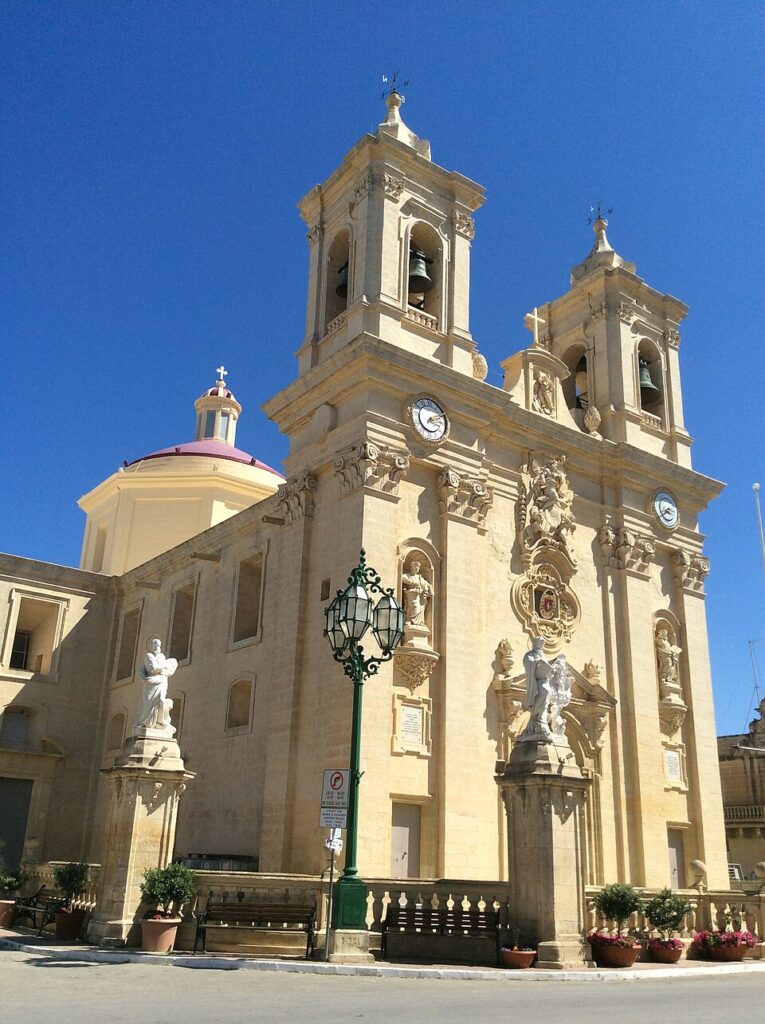
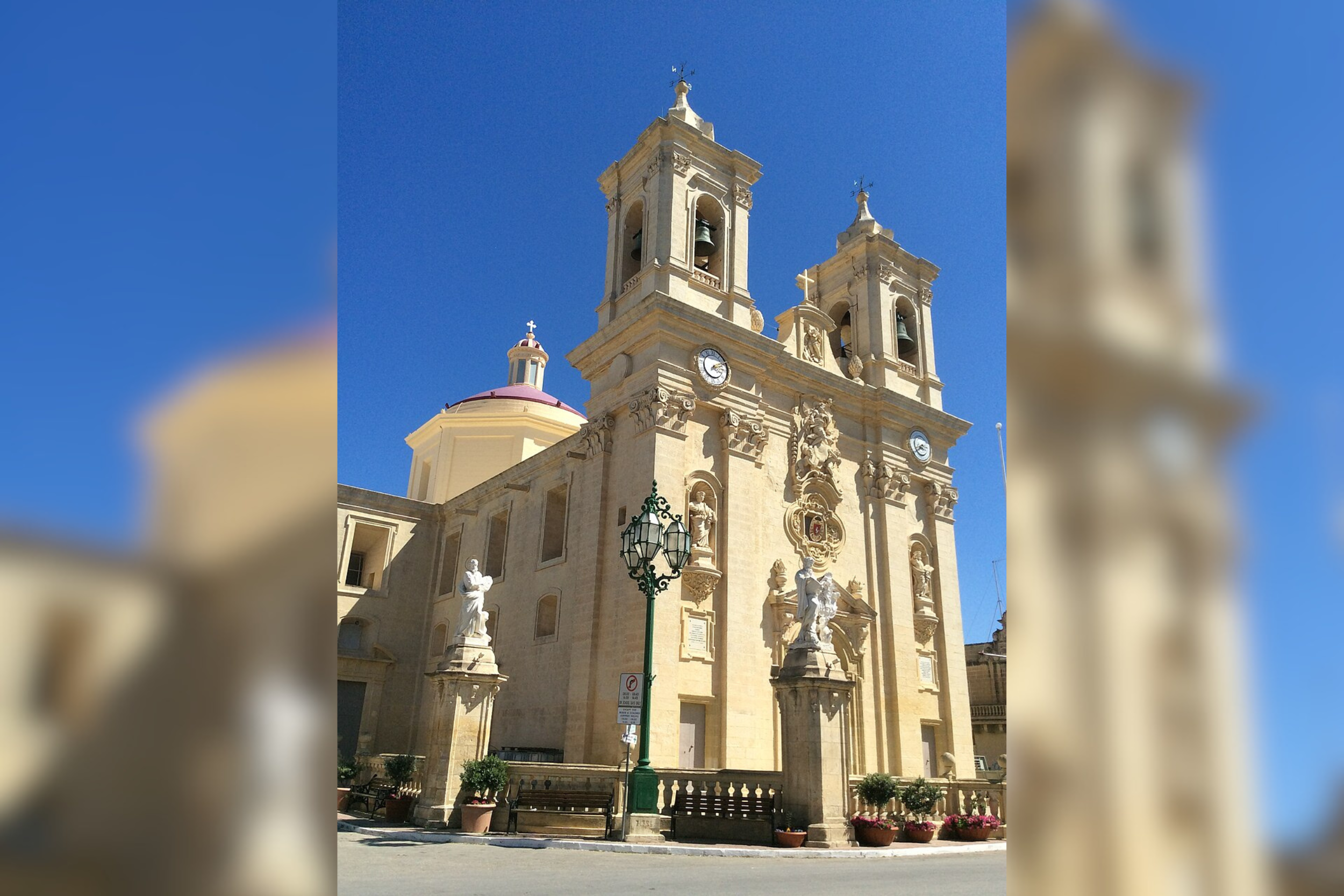
The design of the Parish Church of St. Bartholomew is a masterpiece of the Baroque style, whose current structure was built primarily between 1610 and 1638. Situated in the heart of Għargħur, one of the oldest and most picturesque villages in Malta, this church stands over the historical core of the locality. Unlike other temples that were entirely rebuilt after the war, this parish preserves much of its 17th-century essence, having been originally designed by the famous Maltese architect Tumas Dingli, known for his ability to merge late Renaissance architecture with early Baroque.
A Legacy of Tumas Dingli in the Heart of the North
The Church of St. Bartholomew represents the identity of a community that has managed to preserve its traditions over the centuries. Its facade is a perfect example of Baroque balance, with Corinthian columns and an elegant pediment that invites reflection. The temple was elevated to the status of a parish in 1610, which prompted a series of decorative improvements during the 18th century, including the addition of its iconic bell towers. Its elevated position in the village makes it a constant visual reference point for those walking the nearby nature trails.
The interior of the church is a display of sacred art and popular devotion. The central element is the titular statue of St. Bartholomew, an impressive work carved in wood in Rome in 1772 by the sculptor Melchiorre Gafà. The temple houses altarpieces of great artistic value, detailed frescoes in its vault, and marble side altars that reflect the richness of Maltese religious heritage. The acoustics and natural light filtering through its dome create a unique atmosphere of solemnity, especially during the week of the parish feast, when the interior is decorated with traditional red and gold fabrics.
Beyond its architecture, the church is the center of social and cultural life in Għargħur. Having resisted the passage of time and urban transformations, it remains today as one of the best-preserved examples of Tumas Dingli's architecture on the island. Visiting this temple allows one to discover the calm of a traditional Maltese village while admiring the transition from the Renaissance style to the purest Baroque. Consecrated as a symbol of faith and resilience, it is an essential piece to complete the 300 points of historical interest in Malta.