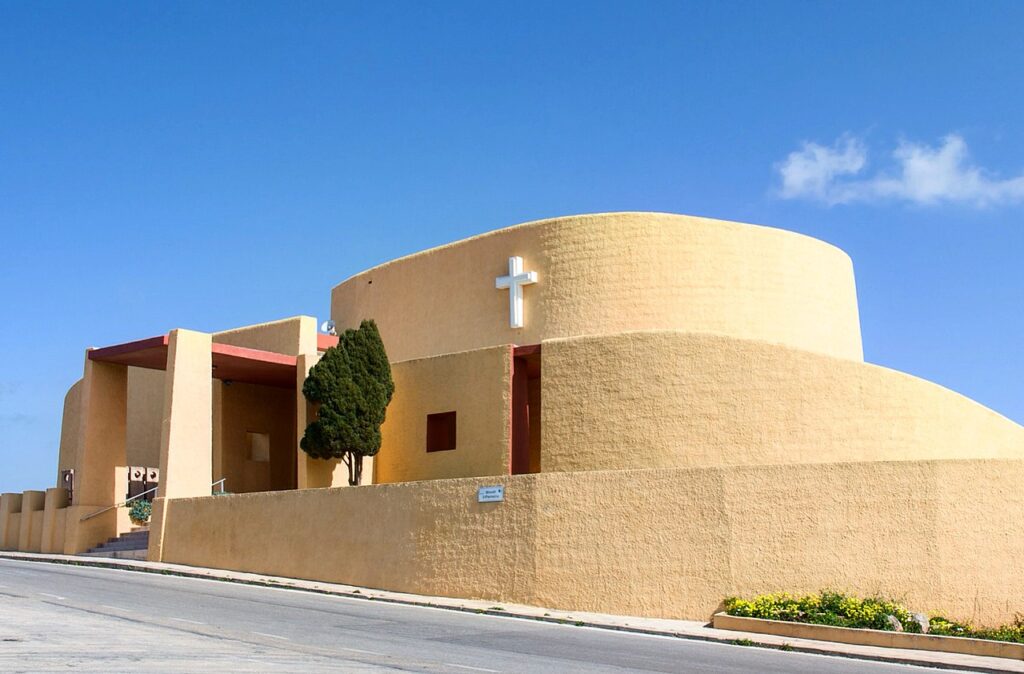
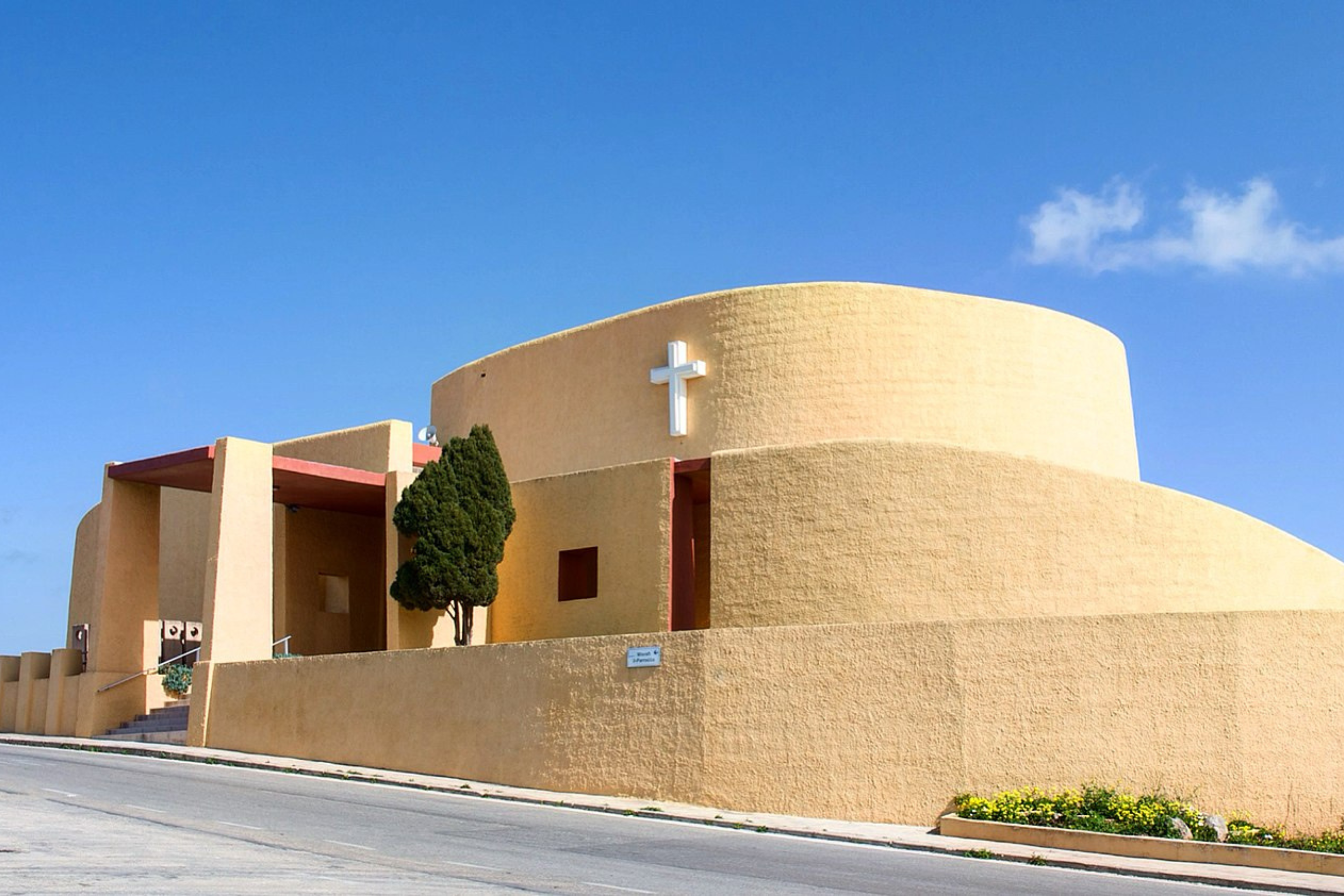
The design of Parish Church of St. Joseph is a masterpiece of modern architecture and Critical Regionalism, designed by the renowned Maltese architect Richard England in 1962. Situated in the small rural village of Manikataits construction took place between 1964 and 1974. This temple represents a radical break from traditional Baroque dome designs, becoming an icon of religious avant-garde in the Mediterranean and the first major commission of England's career.
A Fusion of the Sacred and the Rural
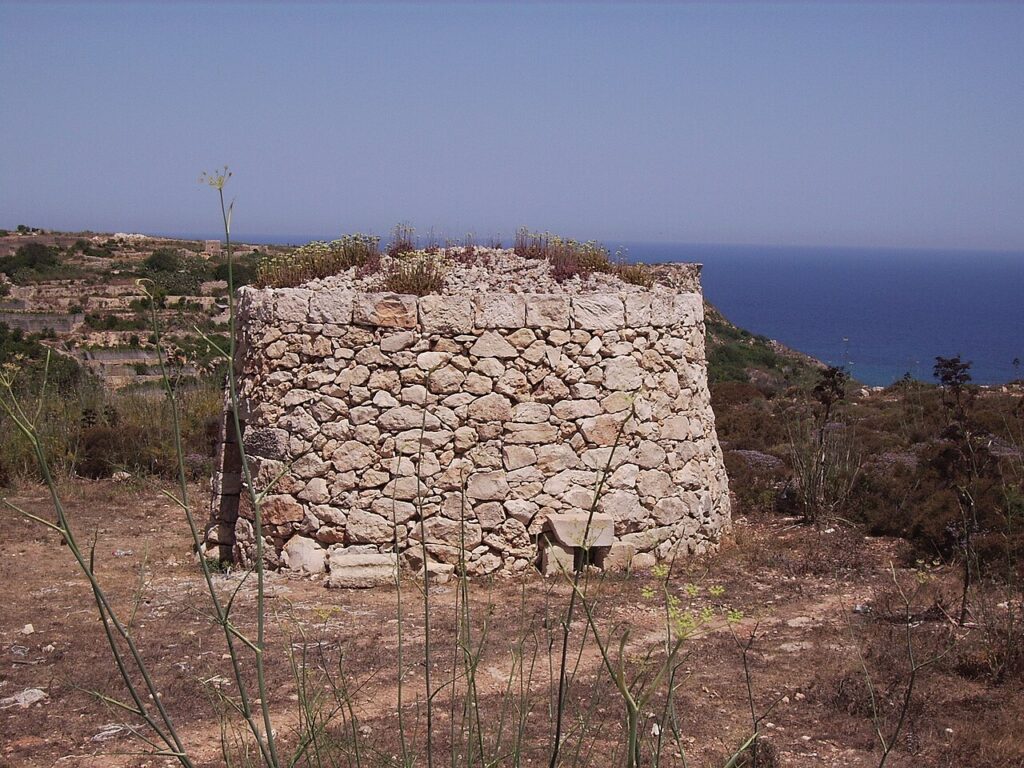
The Church of St. Joseph in Manikata represents an abstract interpretation of the “girna”, the traditional stone hut used by Maltese farmers in the countryside. Richard England’s concept sought to capture human spirituality in harmony with the natural environment and the peace of the rural setting. Its curved walls, which create an atmosphere of great intimacy, not only recall agricultural structures but also pay homage to the configuration of Malta's prehistoric Megalithic Temples , bridging the island's ancient past with 20th-century modernity.
The interior of the church reflects the reforms of the Second Vatican Council, seeking a closer connection between the altar and the faithful. Despite having a very limited budget during its construction, the design achieves a sculptural plasticity inspired by Le Corbusier’s Notre Dame du Haut chapel. The use of natural light and the texture of limestone create a unique meditation space, far from the gilded opulence of other parishes. The building was declared a Grade 1 monument in 2011, recognizing its invaluable worth as the most important example of contemporary architecture in the archipelago.
Beyond its innovative form, the church is a symbol of the resilience of the Manikata community, who worked alongside Rector Manwel Grima to see their parish completed after years of effort. Visiting this temple allows one to appreciate how architecture can dialogue with the landscape without losing its sacred character. Consecrated in 1985, it remains today a point of reference for architecture students and travelers seeking the more modern and artistic side of Maltese faith. It is an essential piece to complete the catalog of 300 historical interest points on the island.