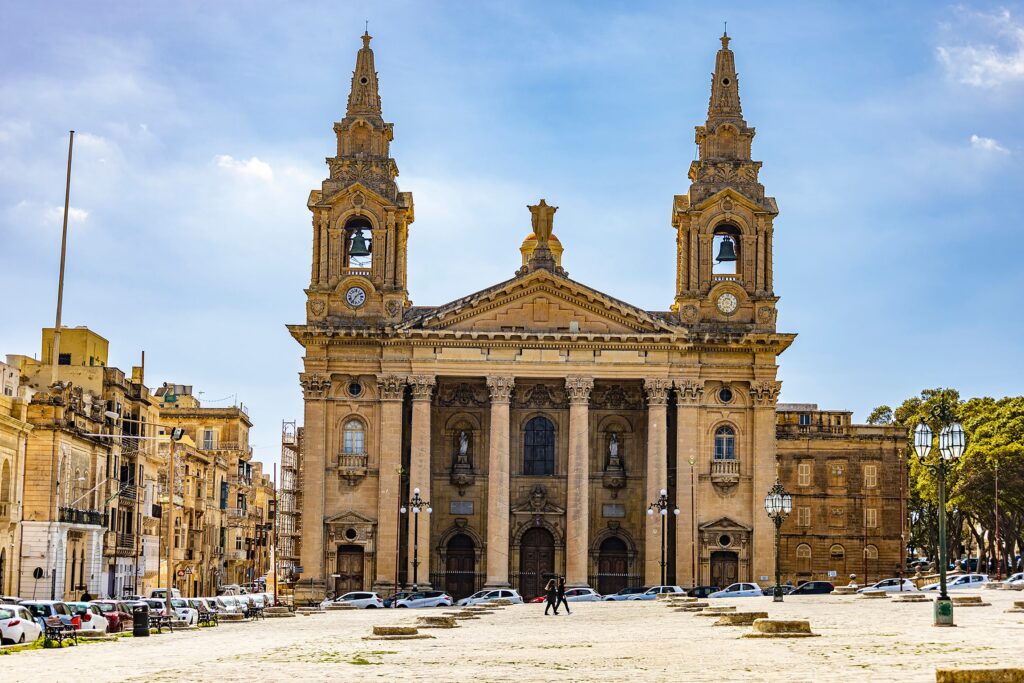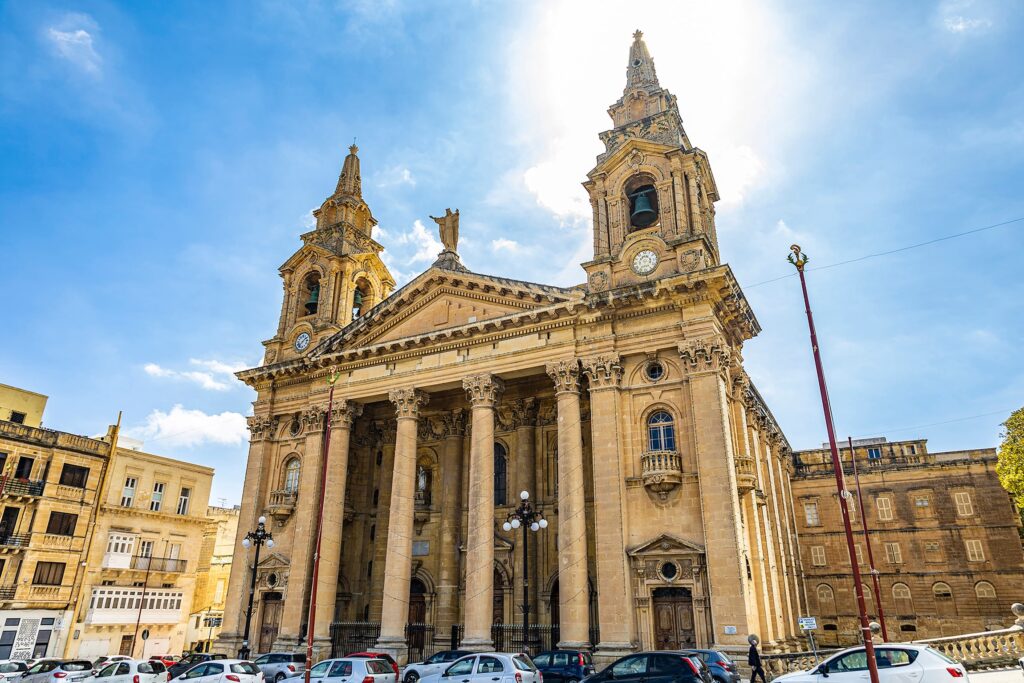
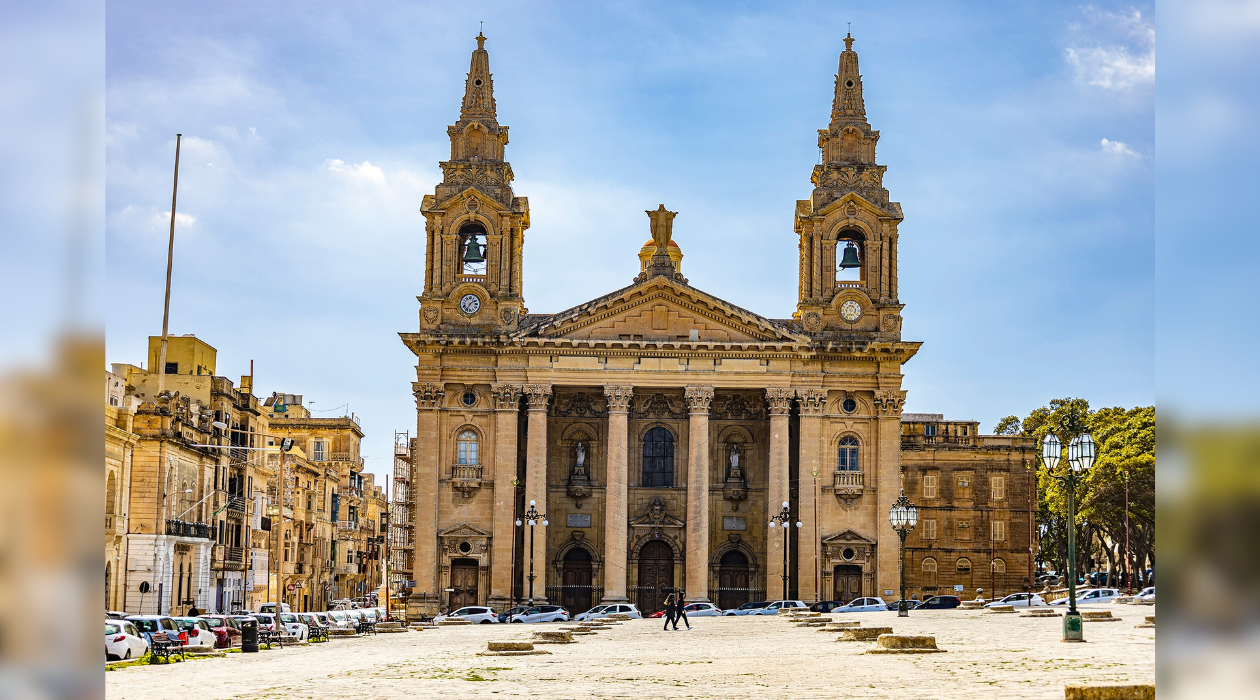
The parish church of Floriana was built between 1733 and 1771 by Francesco Marandon, architect of the Order of St. John, and later by the Maltese architect Giuseppe Bonnici (1706-1779). In the 19th century, the designer Dr. Nicola Zammit (1815-1899) introduced further changes.
Resilience and Grandeur in the Heart of Floriana
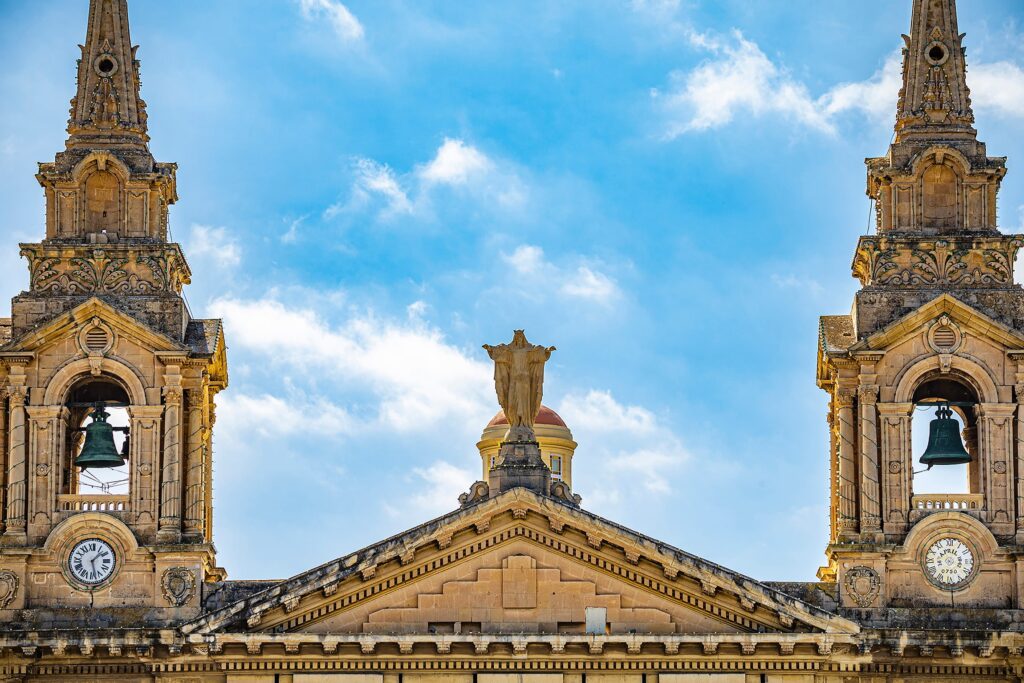
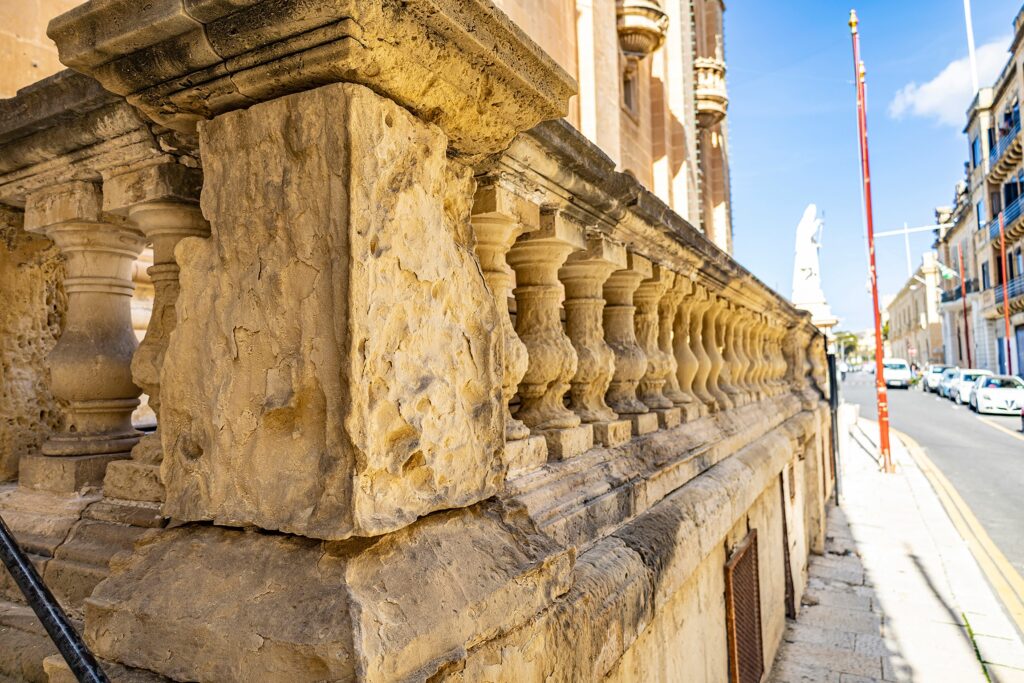
The Church of St. Publius stands out as one of the largest temples in Malta, with a structure that has evolved from the 18th century until its complete reconstruction after the severe damage suffered during World War II. Its imposing façade, completed in 1885 and inspired by the architecture of Christopher Wren, features a majestic portico with Corinthian columns flanked by two Baroque bell towers originally designed by Giuseppe Bonnici. The pediment is crowned by a statue of Christ the King, created by John Spiteri Sacco, which replaced the original one after the post-war period. The church opens up to a large parvis surrounded by balustrades, which visually connects with the historic Granaries of the city.
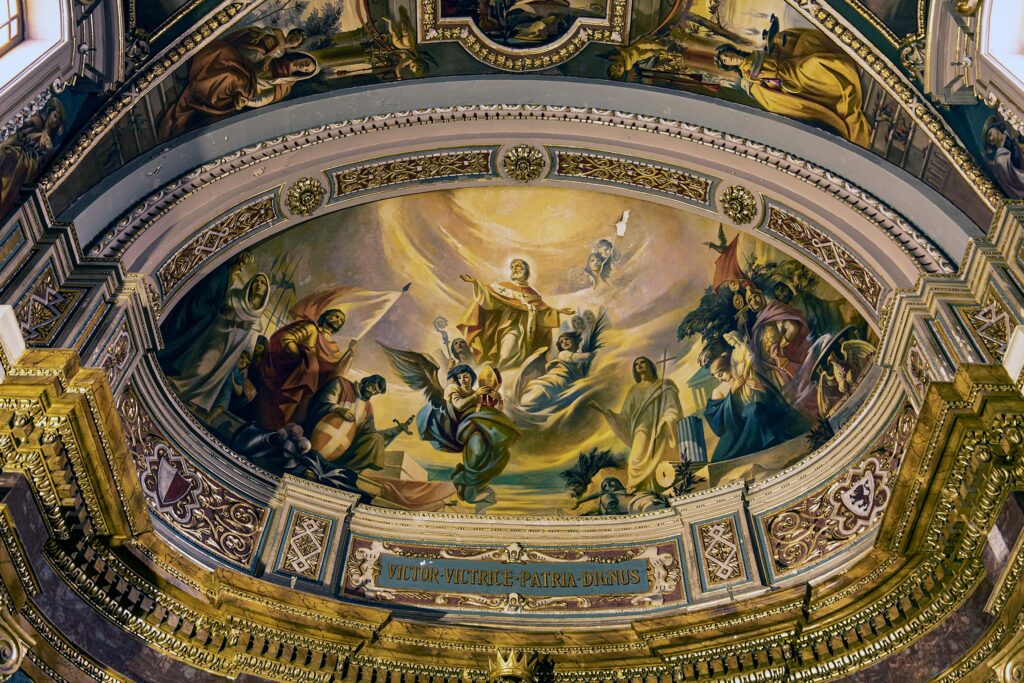
The interior, with a Latin cross layout, houses ten side altars and the notable Oratory of the Brotherhood of St. Publius. A fascinating discovery during the reconstruction was the finding of an altarpiece hidden behind the altar of Our Lady of the Rosary, originally dedicated to Saint Thomas the Apostle, the patron saint of the builders' guild that spearheaded the original façade. The interior architecture is completed by a dome reconstructed after the war and large columns that define its side aisles, added in successive expansions during the 19th century.
The titular painting, located in the main altar, depicts the "Martyrdom of St. Publius" and was created in 1773 by Filippo Vincenzo Pace under the Baroque influence of Antoine Favray. The artwork portrays the first bishop of Malta in a state of grace while being attacked by a lion, symbolizing his martyrdom under Emperor Hadrian. Thanks to a project co-financed by the European Union, critical conservation interventions have been carried out to mitigate damage from fires, pollution, and the passage of time, ensuring that both the structure and the valuable heritage of the oratory and sacristy remain intact for the community.