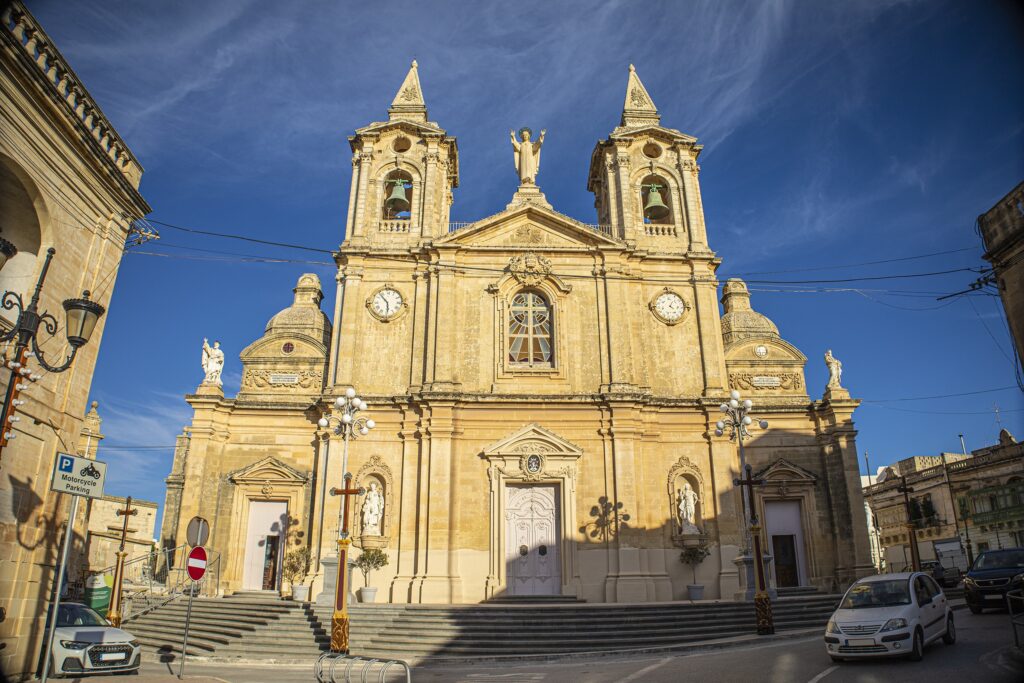
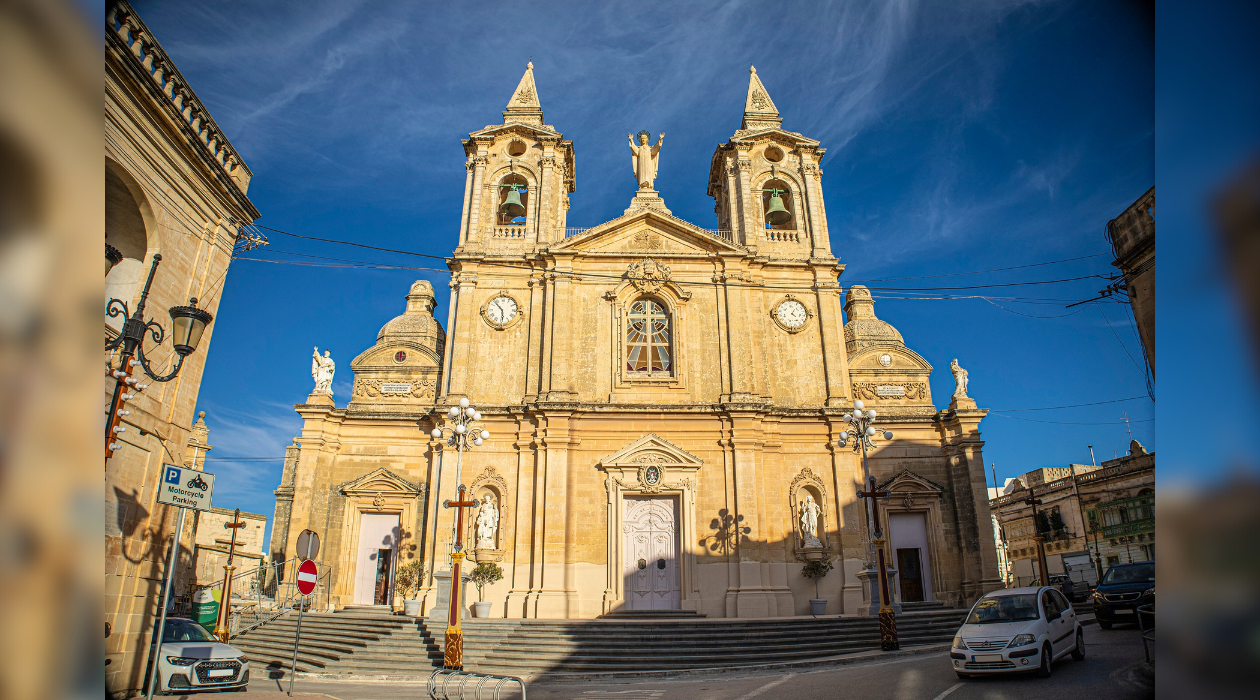
The parish church of Żurrieq was built in the mid-17th century on the site of two medieval chapels dedicated to Saint Catherine of Alexandria and Saint Peter. The façade was rebuilt between 1753 and 1758. The bell towers and side aisles were modified according to the plans of Dr. Nicola Zammit and were completed in 1909. Today, the church consists of a choir, a spacious nave, two transepts, side aisles, and a sacristy. It houses ten side altars.
A Baroque Treasure and the Art of Mattia Preti
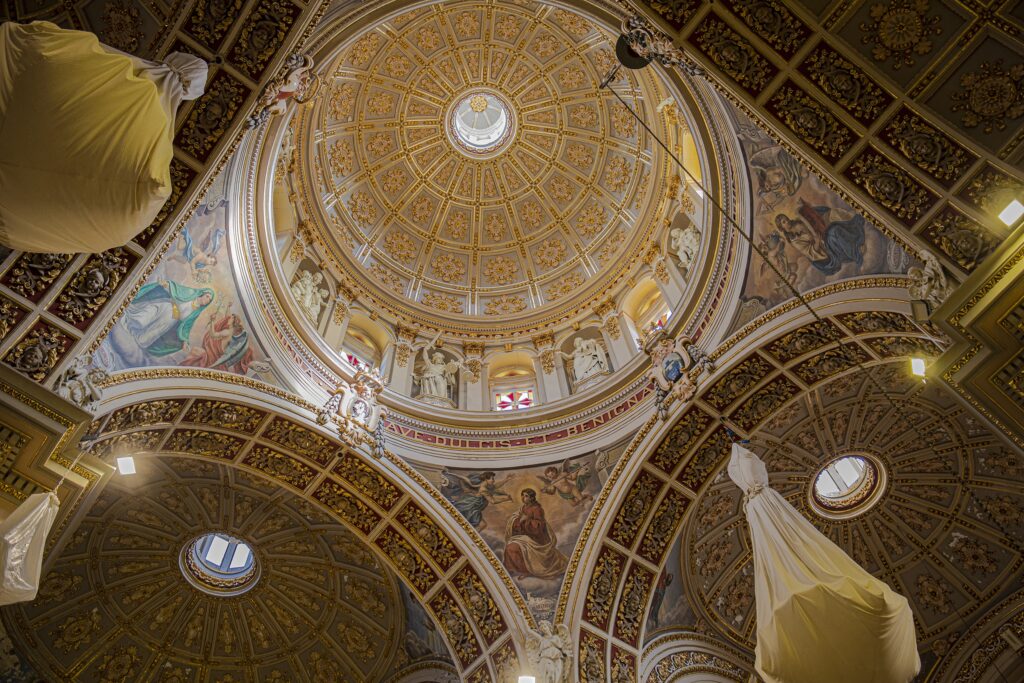
The Parish Church of Żurrieq is a cornerstone of Maltese heritage, notable for its three-bay, two-level façade crowned by a triangular pediment featuring a statue of Christ the King, created by Marco Montebello based on a design by Vincenzo Apap. Its bell towers, supported by Corinthian pilasters, house six bells and are adorned with delicate floral motifs. A unique architectural feature is its dome, inherited from the original 17th-century church; this structure represents a transitional phase toward the style of Lorenzo Gafà, rising on an octagonal drum with elongated windows that flood the presbytery with light.
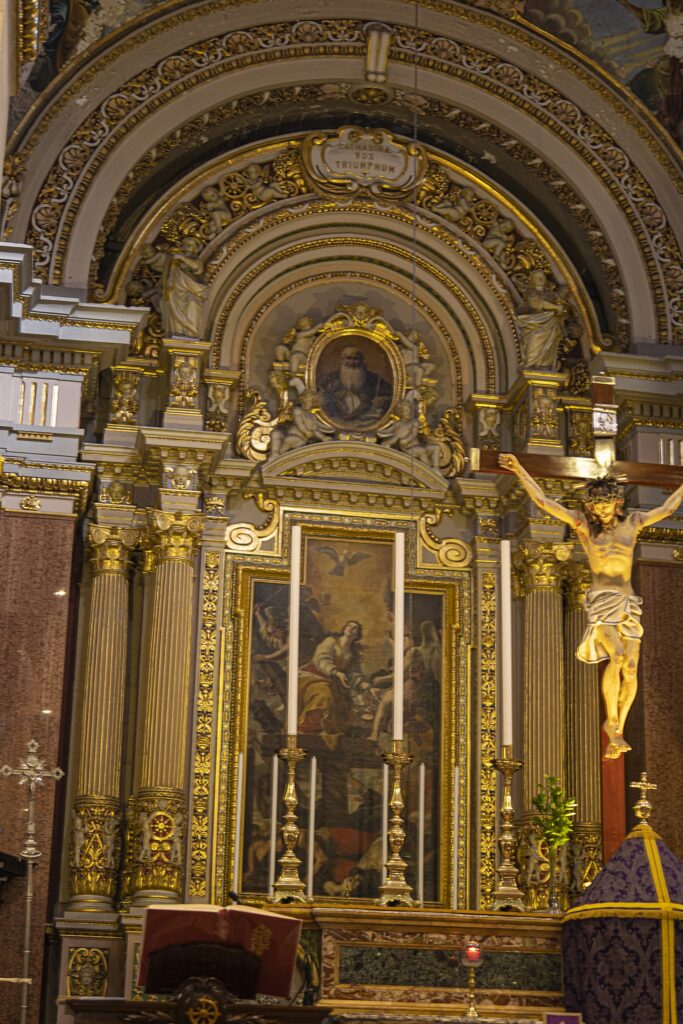
The interior of the church is a display of art and symbolism. In 1970, the painter Rafel Bonnici Calì decorated the pendentives of the crossing with representations of the cardinal virtues (Martyrdom, Virginity, Fortitude, and Wisdom). Additionally, the drum of the dome is embellished with eight niches that contain stone statues of the Beatitudes, carved by Alfred Camilleri Cauchi with the assistance of Angelo Agius. The space is completed by three low saucer domes that crown the transepts and the choir, creating a spatial harmony characteristic of the mature Baroque of the island.
The undisputed jewel of the church is its titular painting, The Martyrdom of Saint Catherinepainted around 1671 by the renowned artist Mattia Preti. The work captures the moment when the Holy Spirit descends upon the saint as an angel frees her from her chains atop a broken spiked wheel, with the executioners defeated at its base. Thanks to a project co-financed by the European Union, critical interventions have been carried out to halt water infiltration and dome deterioration, as well as to install an efficient LED lighting system that highlights the building’s beauty while ensuring its long-term structural preservation.