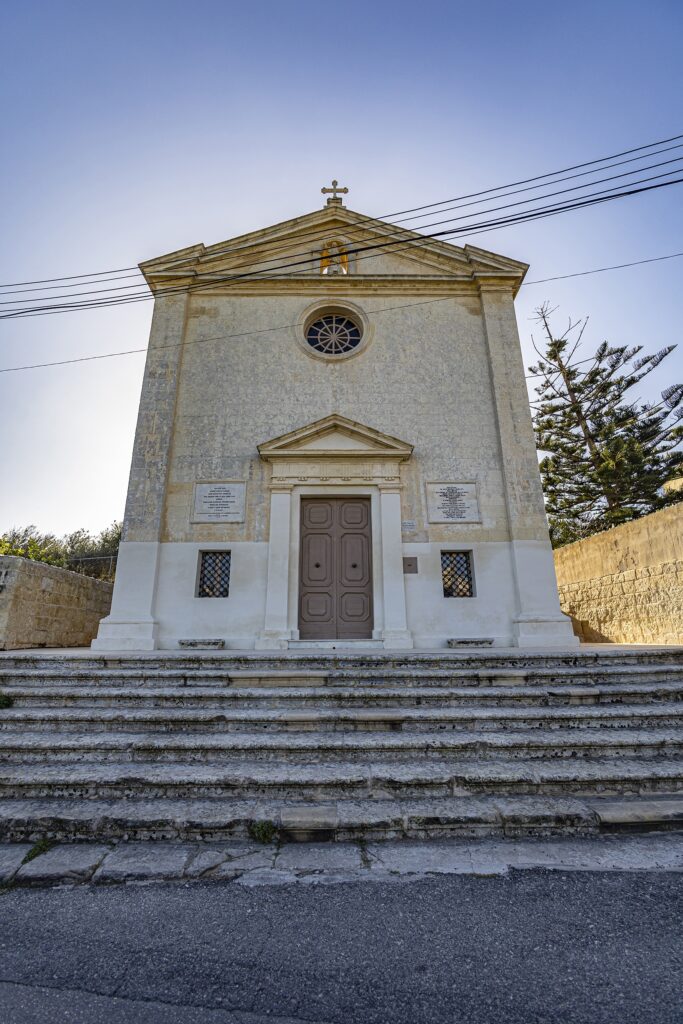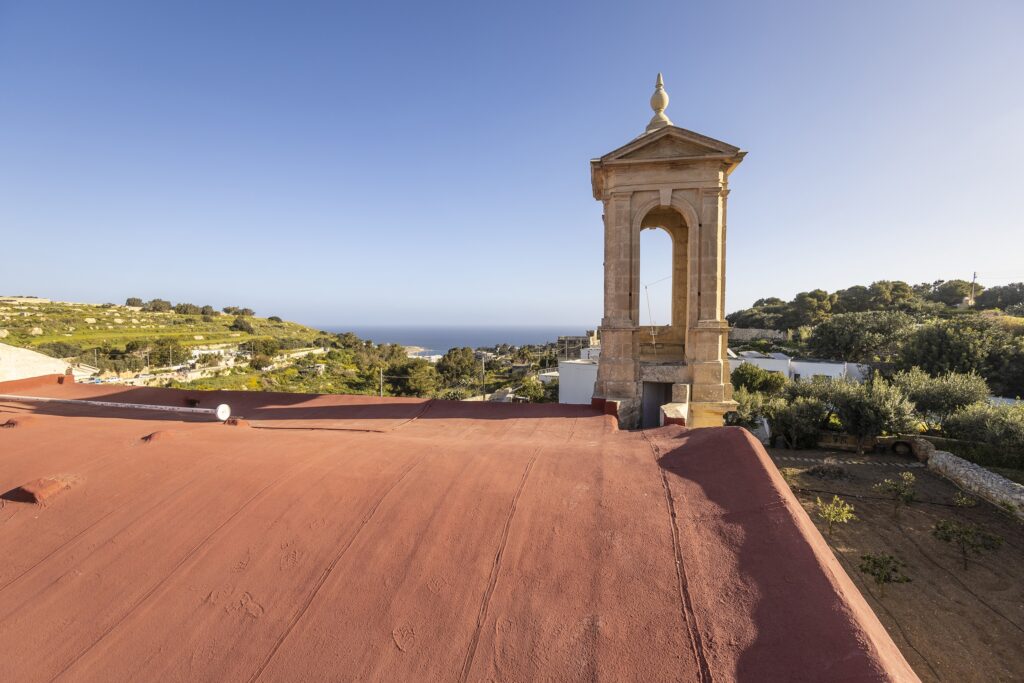
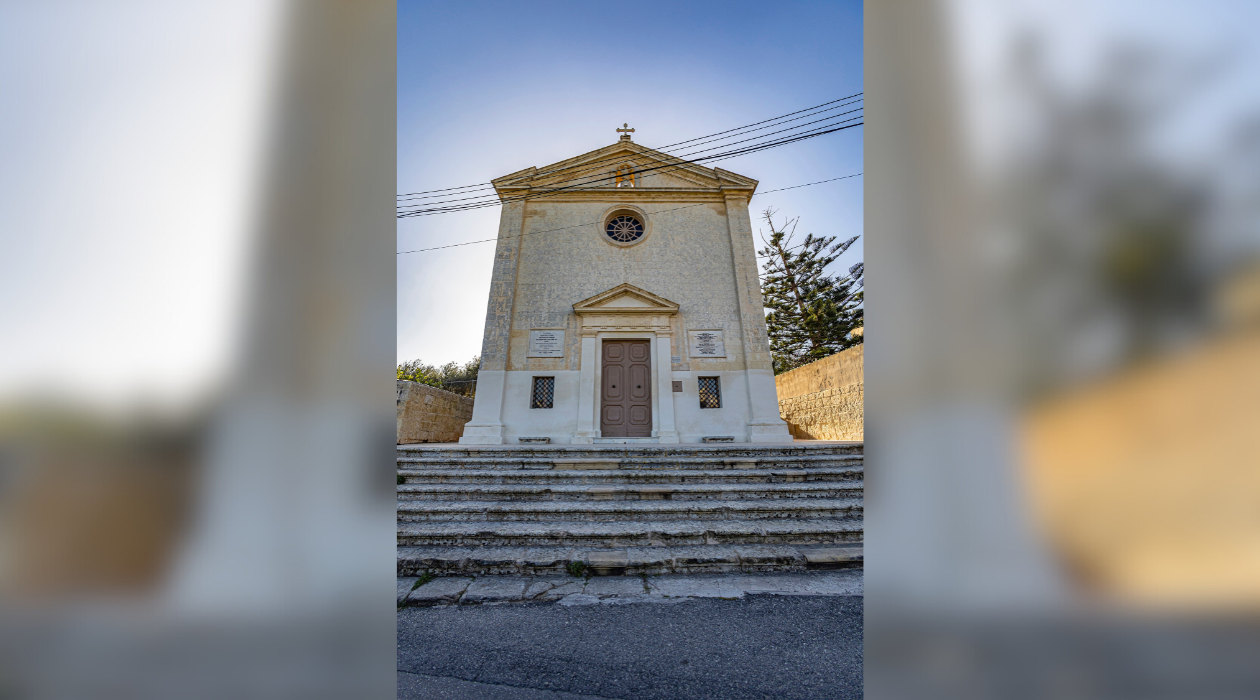
The church of Saint Mary was founded in the 17th century as a gesture of thanksgiving. According to a record from the 1565 pastoral visit, the Virgin Mary appeared to a local maiden and cured her of her illness, which gave rise to the special devotion associated with this church. This devotion is reflected in two marble plaques placed on the church façade in 1950. The church is built on elevated ground overlooking the surrounding landscape, with views of the valley towards the coast.
Church of the Assumption, attributed to Tommaso Dingli: Baroque Architecture and Conservation
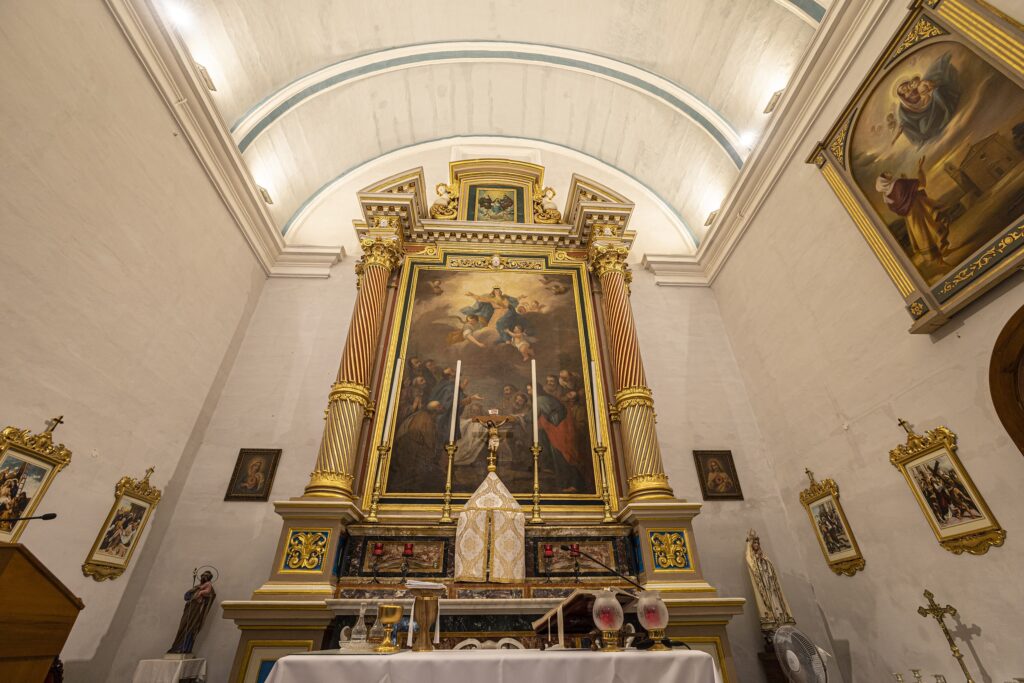
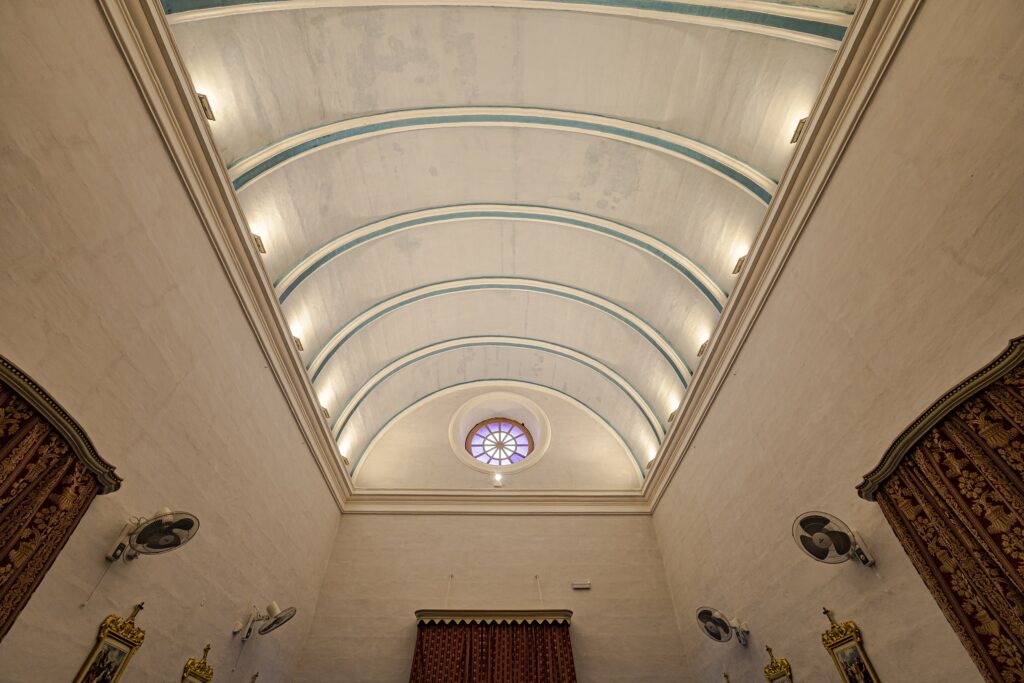
The architecture of this church is attributed to the Maltese master Tommaso Dingli, a prominent figure in 17th-century ecclesiastical architecture in Malta. The building features a rectangular plan and a sober yet elegant style, characterized by its barrel vault. The high altar is framed with colored marble and flanked by columns supporting a Baroque-style broken pediment. Both the altar and the temple's flooring are made of marble, which adds unity and decorative richness to the interior.
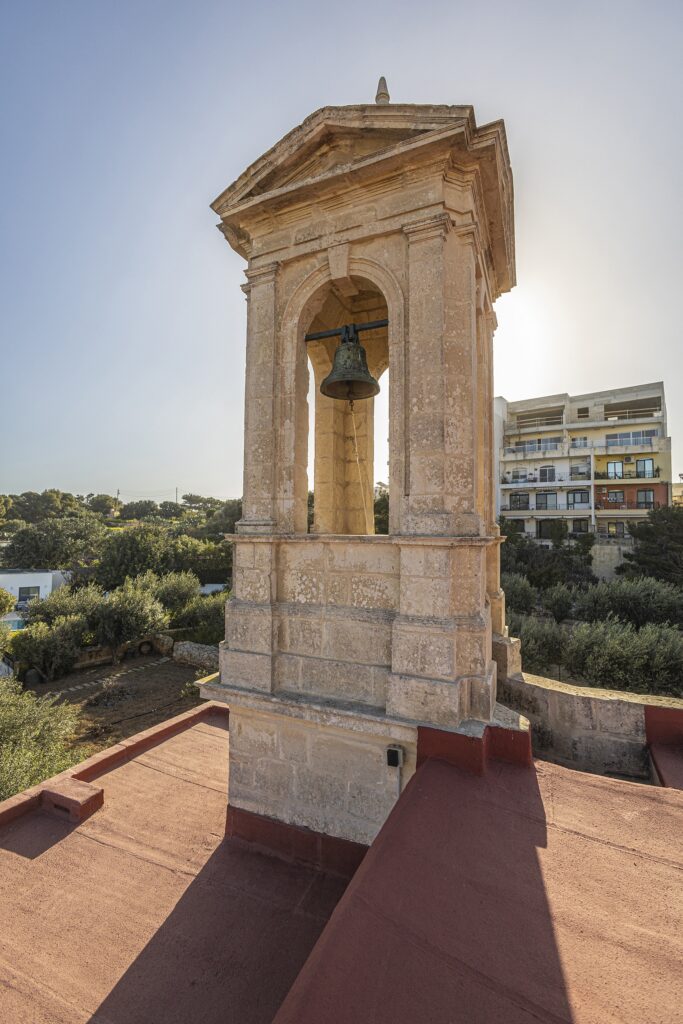
Above the main door, a circular window opens, directly illuminating the altar painting. The façade is crowned by a triangular pediment, reinforcing its classical composition. The stone statue of the Assumption that adorns the ensemble was carved by the local sculptor Wenzu Sammut. In 1935, a bell tower with a small bell was added to the rear of the church.
The titular painting of the Assumption was executed in the second half of the 18th century by the Maltese artist Rocco Buhagiar, in the Baroque style. The work, created in oil on canvas and framed in carved and gilded wood, depicts the Virgin Mary being carried to heaven in body and soul three days after her death. The Virgin appears suspended upon a cloud, surrounded by angels, with her arms open and her gaze lifted towards the Holy Trinity. In the lower part, the apostles gather around the empty tomb; one of them, positioned on the right, directs his gaze toward the shroud. The scene is bathed in a divine light descending from above, contrasting with the dimmer, more earthly lighting that envelops the apostles.
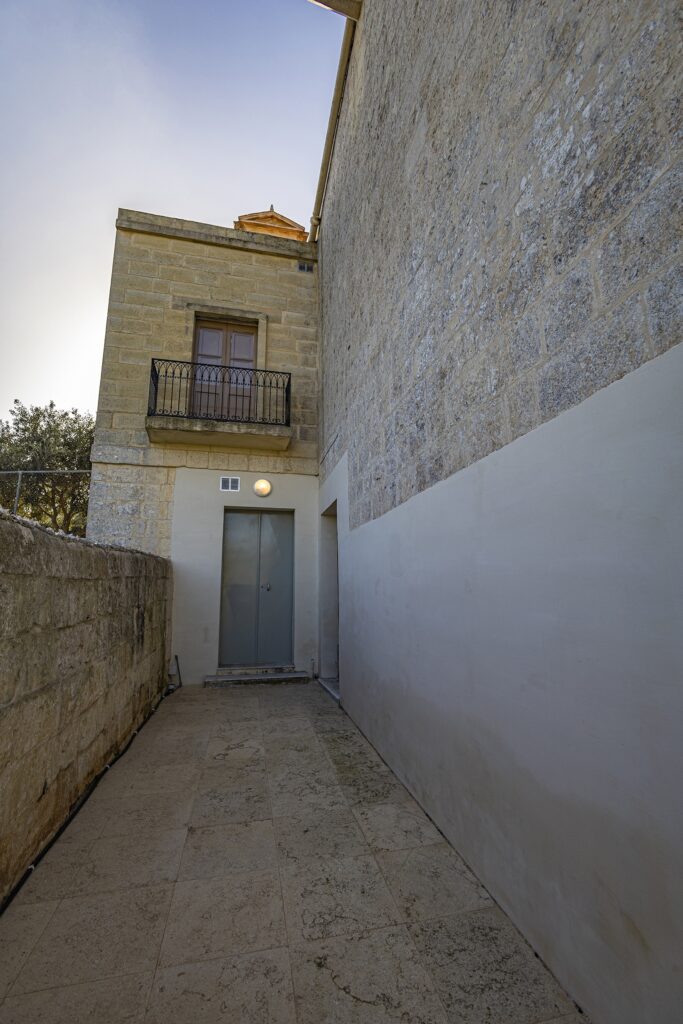
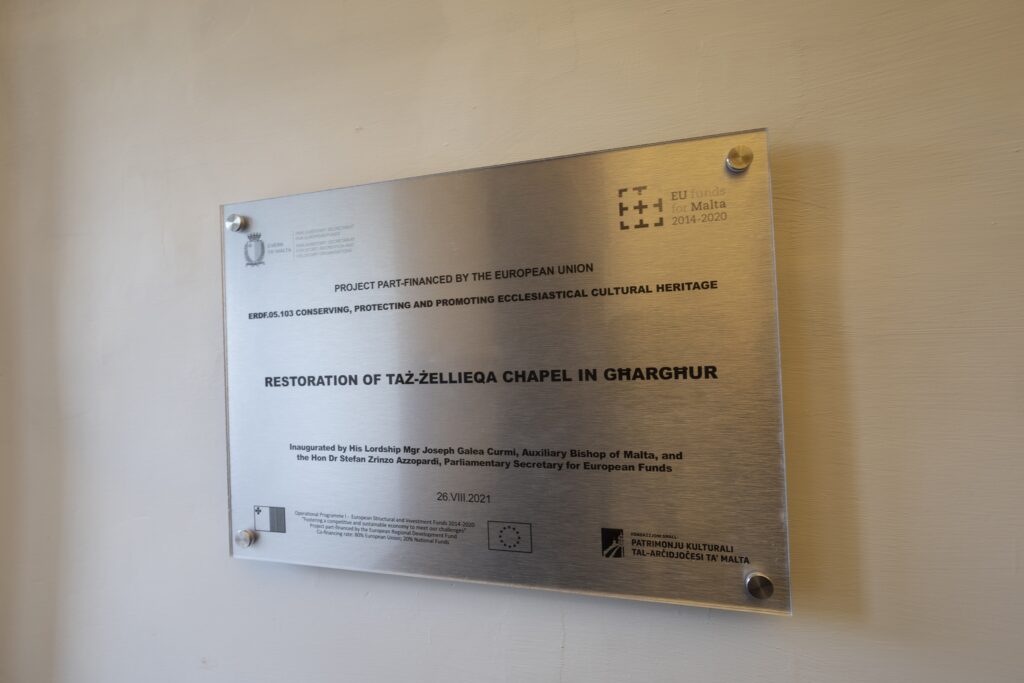
A project co-financed by the European Union focused on the comprehensive conservation of the building, addressing the deterioration caused by weather and pollution, both externally and internally. The interventions allowed for the restoration of the temple's aesthetic qualities and ensured its structural stability. Furthermore, an efficient lighting system was installed, adapted to current regulations, along with facilities that improve accessibility, thereby ensuring the preservation and enjoyment of this historic building at the heart of the community.