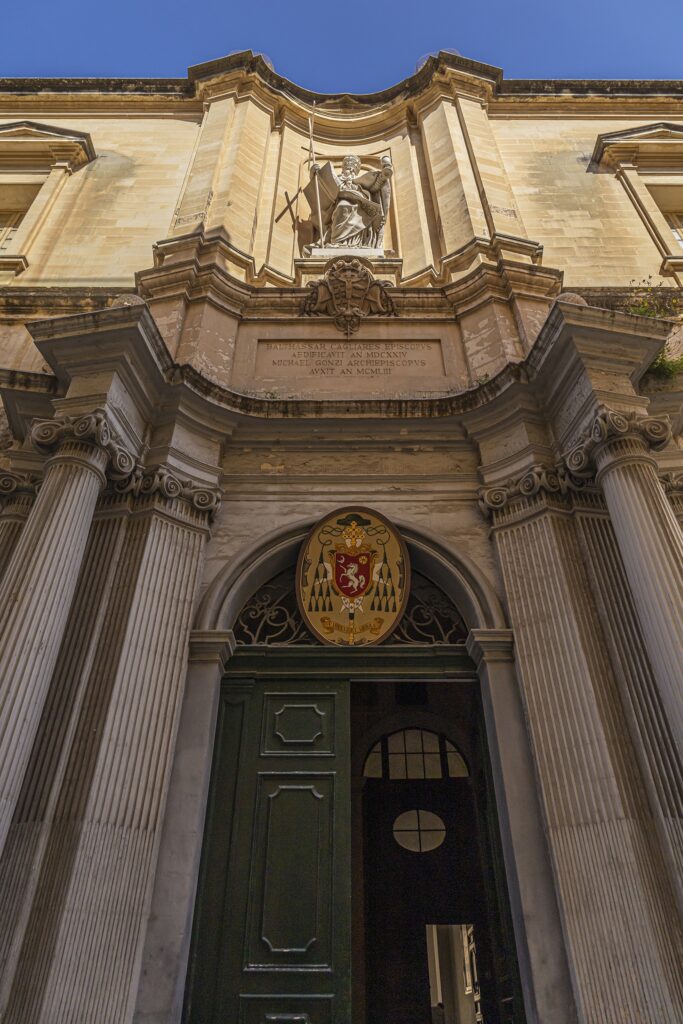
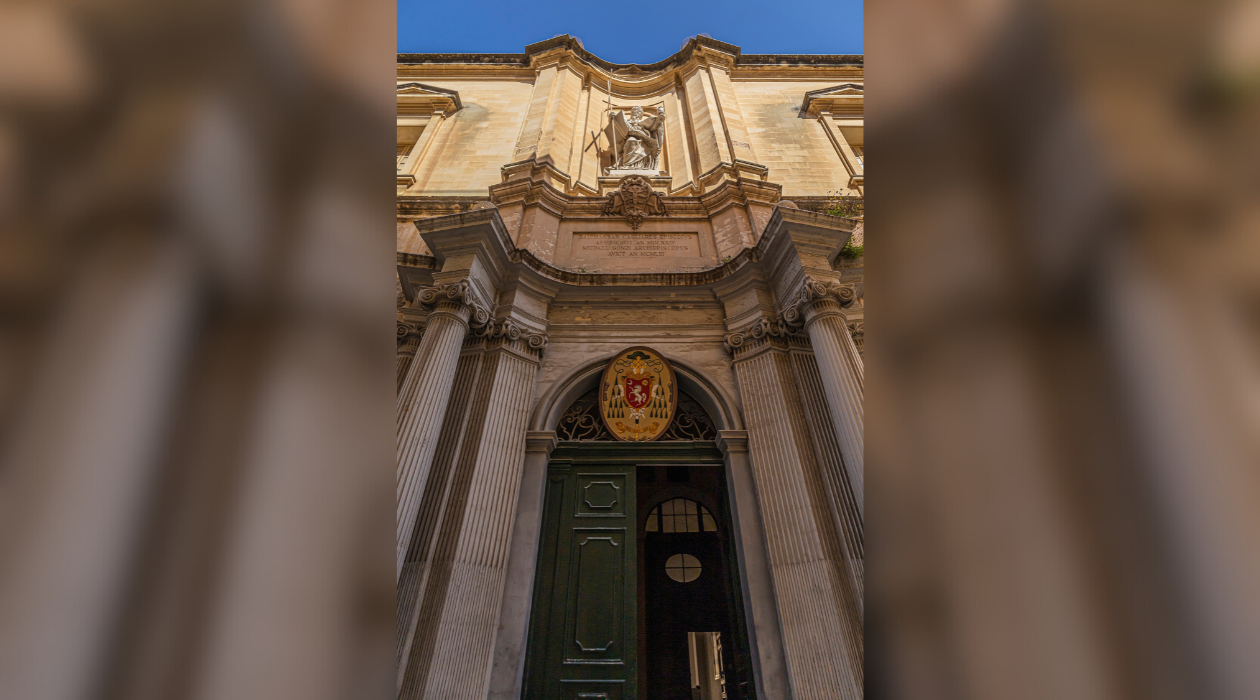
The Archbishop’s Palace in Valletta was built between 1622 and 1632, following a design traditionally attributed to the Maltese architect Tommaso Dingli (1591–1666). In the 18th century, its façade was enhanced with a magnificent Baroque portico, in line with contemporary trends in civic architecture. It was constructed as the residence of the bishop—later Archbishop of Malta—and as the administrative center of the Diocese of Malta, serving both purposes until the late 20th century.
Architectural Nobility and Hidden Gardens in Valletta
The Archbishop’s Palace in Valletta is a late 16th-century gem, notable for its Italianate style and its unique adaptation to the city’s topography. Originally founded by Bishop Baldassare Cagliares in 1624, the building has evolved over the centuries, with Baroque renovations by Bishop Alpheran de Bussan and the addition of a second floor in 1953 under Archbishop Michael Gonzi. Unlike the typically rustic designs of Girolamo Cassar, the palace façade features smooth, elegant pilasters that give it a refined aesthetic, integrating seamlessly into the layout of Archbishop Street.
One of the greatest treasures of the palace is its large private garden at the rear, a rare oasis in Valletta. This green space is home to citrus trees and is connected to a natural freshwater spring that emerges from vaulted basements excavated directly into the rock. The palace’s hydraulic system includes a deep cistern and a 17th-century fountain, showcasing fascinating historical engineering that takes full advantage of the stone foundations on which the building stands.
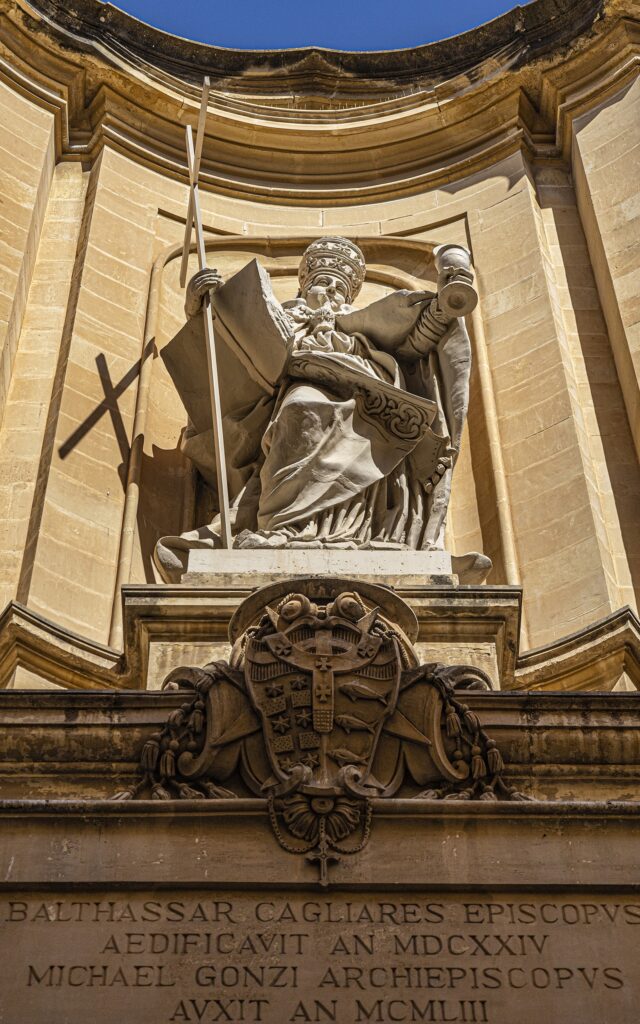
The focal point of the façade is a niche housing a sculpture of the theological virtue of Faith, depicted wearing a papal tiara and holding the chalice and the Holy Scriptures. Just below it is Archbishop Gonzi’s coat of arms, accompanied by an inscription detailing the building’s history from its foundation to its 20th-century expansion. Thanks to a project co-financed by the European Union, restoration work has been carried out on the masonry, woodwork, and metalwork to mitigate the effects of pollution and weathering, ensuring that this palace, situated in the heart of a UNESCO World Heritage site, preserves both its structural integrity and historical beauty.