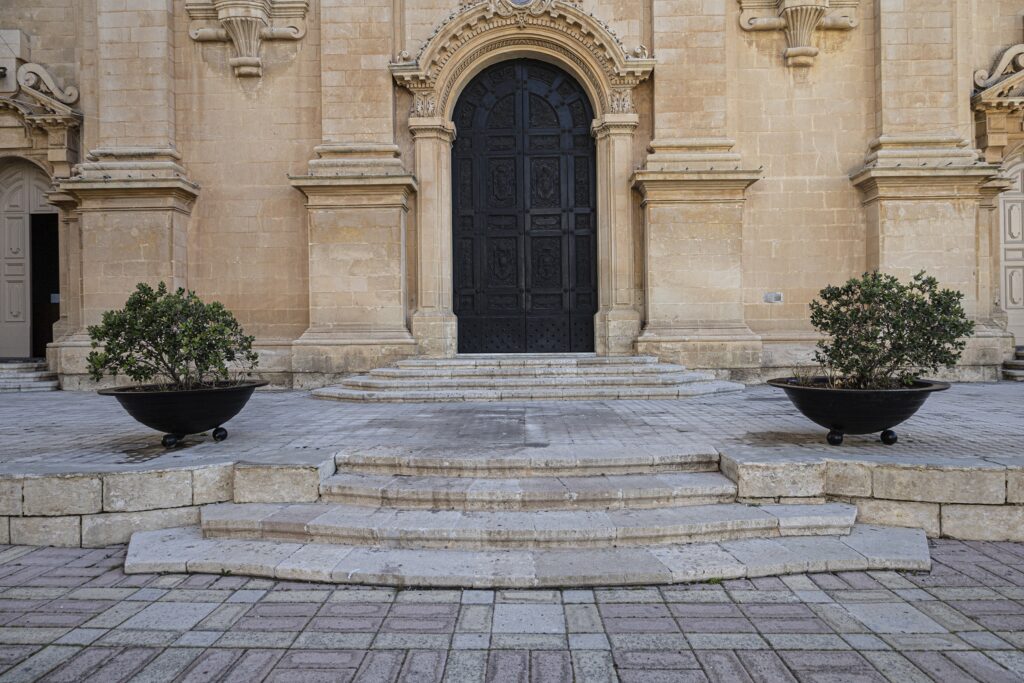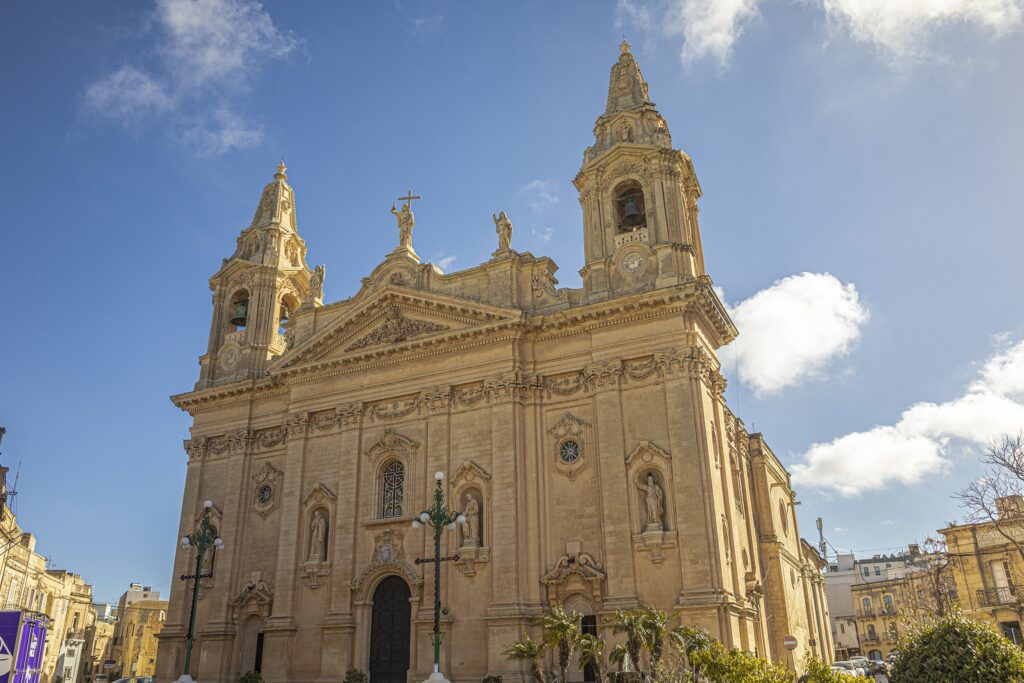
The parish church of Naxxar was first built between 1614 and 1636 and is attributed to the Maltese architect Vittorio Cassar (c. 1550–1607), with Tommaso Dingli serving as master mason, later becoming an architect. Between 1909 and 1910, the church was expanded with a new, wider façade and side aisles. The church was erected on the site of several earlier, smaller churches. The chapels of the new church were dedicated to the patron saints of the demolished churches.
Baroque Treasure and Historical Legacy of Malta
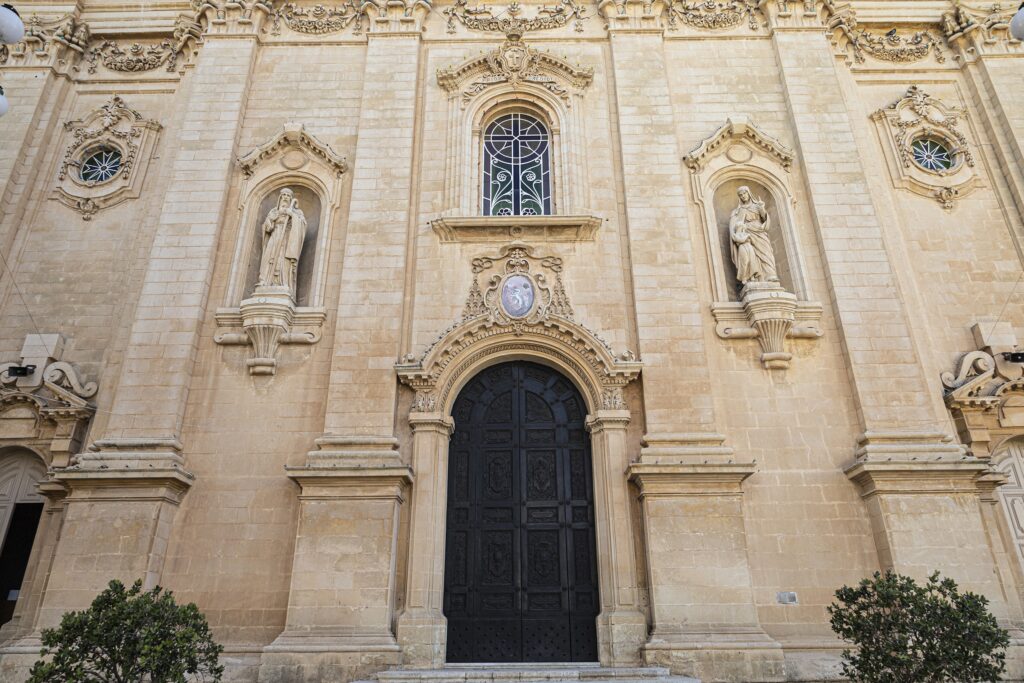
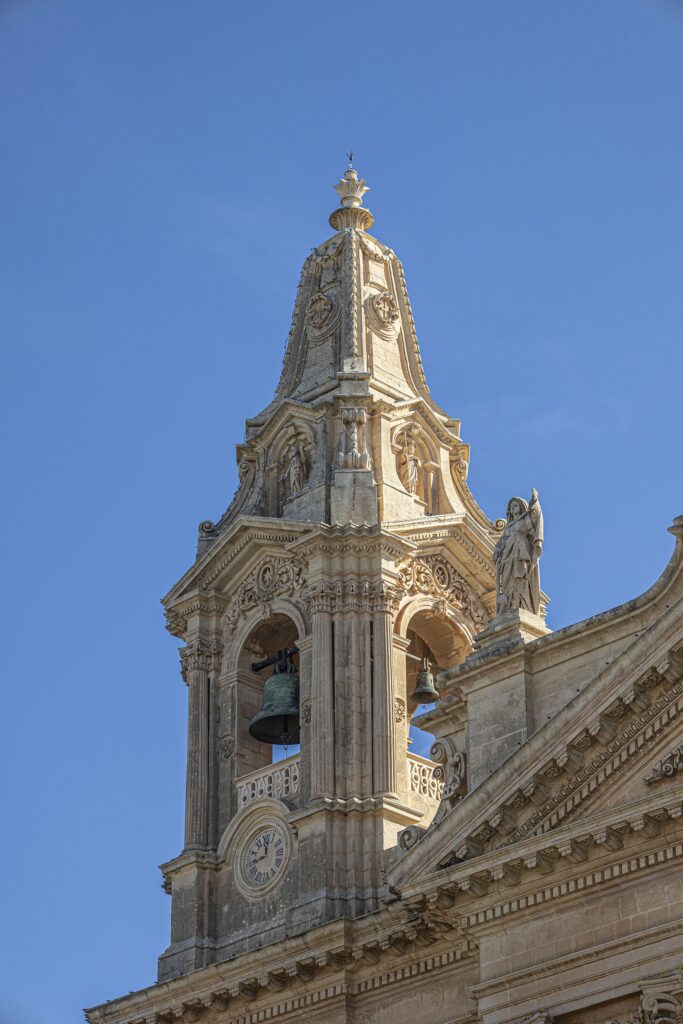
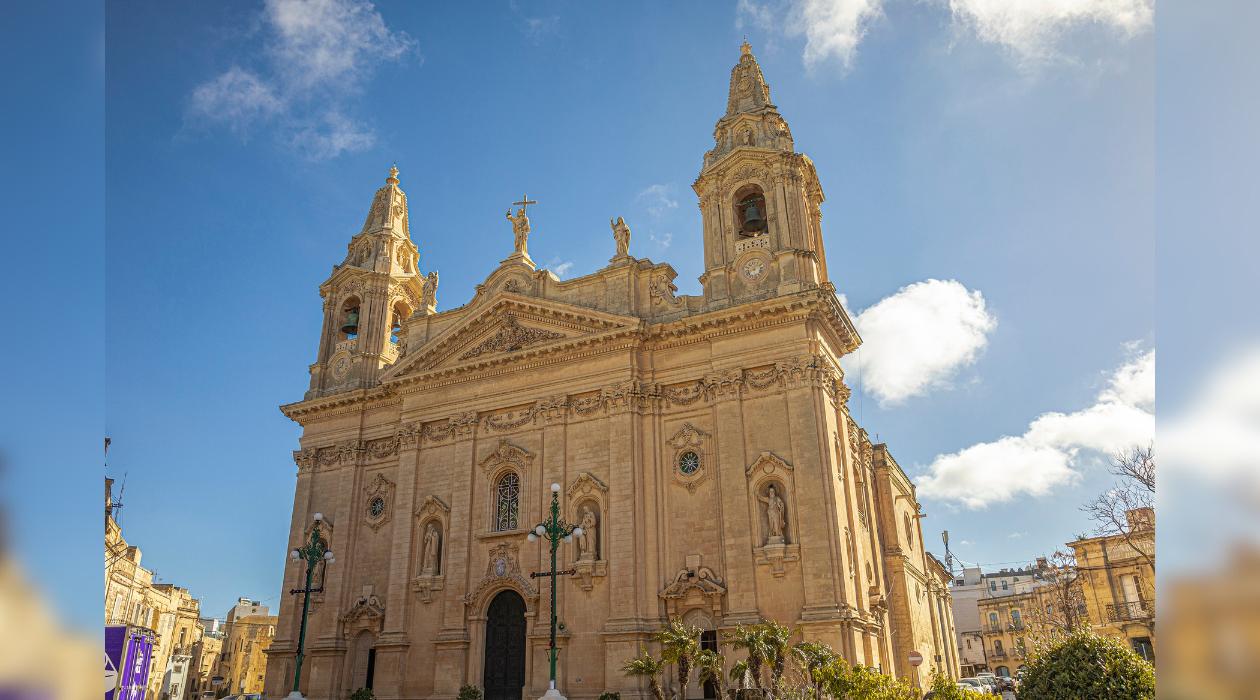
The Church of the Nativity of the Virgin Mary is one of the most fascinating architectural examples in Malta, notable for a structure that incorporates five entrances: the main portal, two on each side of the nave, and two in the transepts. Although its original dome was completed in 1630, the current appearance of the façade dates from 1910, when the old structure was replaced with the present design. This façade is divided into three sections defined by the main door, crowned by an elongated window and flanked by niches containing statues. The architectural ensemble culminates in a triangular pediment with a plinth supporting three monumental statues installed in 1915, which symbolize the theological virtues of Faith, Hope, and Charity.
Inside, the church houses an exceptional decorative richness resulting from various interventions throughout the 20th century. Between 1920 and 1930, the nave’s vault was embellished under the design of Captain Robert Mizzi, who created sculpted ornamentation alternating Latin and eight-pointed crosses in combinations of white, red, yellow, silver, and gold. This evolution was complemented by the installation of a new marble floor in the 1930s and, later, between the 1970s and 1990s, the decoration of the side domes with paintings by Paolo Camilleri Cauchi and works by prominent artists such as Anton Agius, John Muscat, Lawrence Attard, and Horace Farrugia.
The artistic heart of the church is its titular painting of the Nativity of the Virgin Mary, executed between 1699 and 1709 by an unknown artist who followed the refined and opulent style of Mattia Preti. The work captures the sacred birth in a grand architectural setting; in the foreground, attendants are seen bathing the newborn, while in the background Saint Anne rests surrounded by women and Saint Joachim remains in prayer. The scene is blessed from above by putti who look down through an opening in the ceiling, from which a ray of divine light emerges, illuminating the composition.
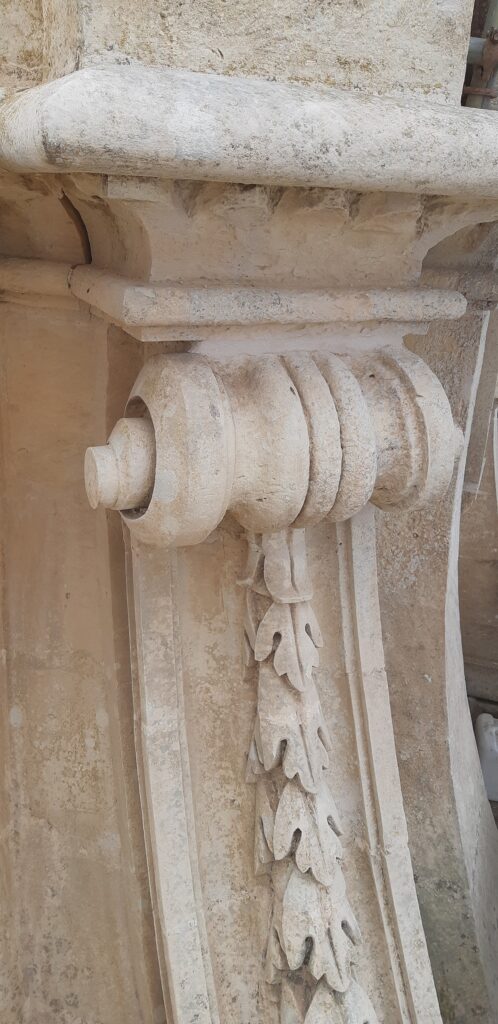
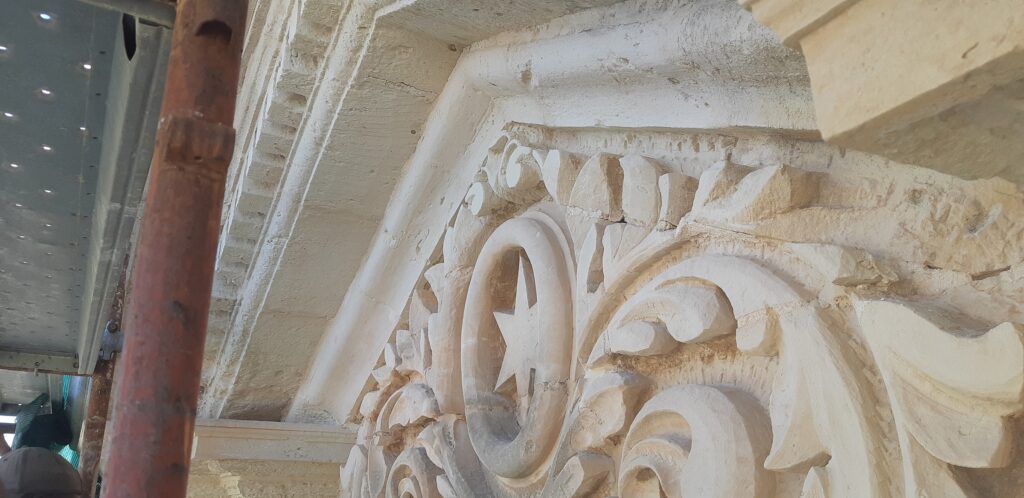
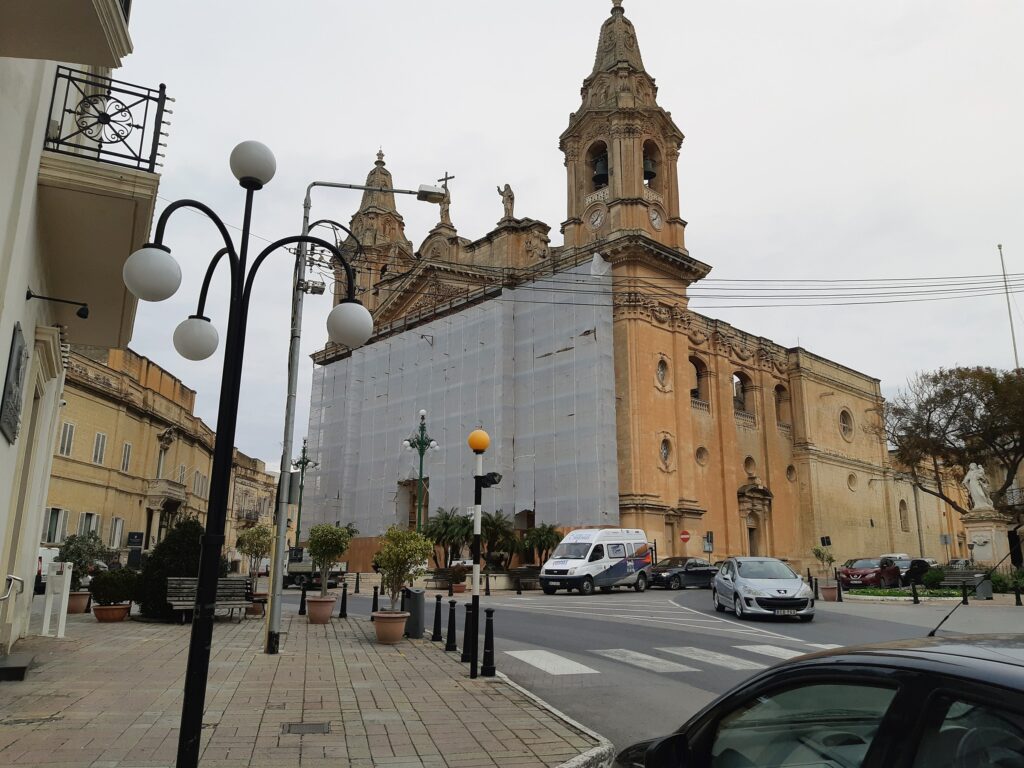
Recently, to ensure the protection of this historic stronghold at the heart of the community, an ambitious conservation project co-financed by the European Union was carried out. These interventions focused on restoring the façade and sculptures, mitigating the structural and aesthetic deterioration caused by weather and pollution, thereby ensuring that future generations can continue to enjoy the integrity and beauty of this historic monument.