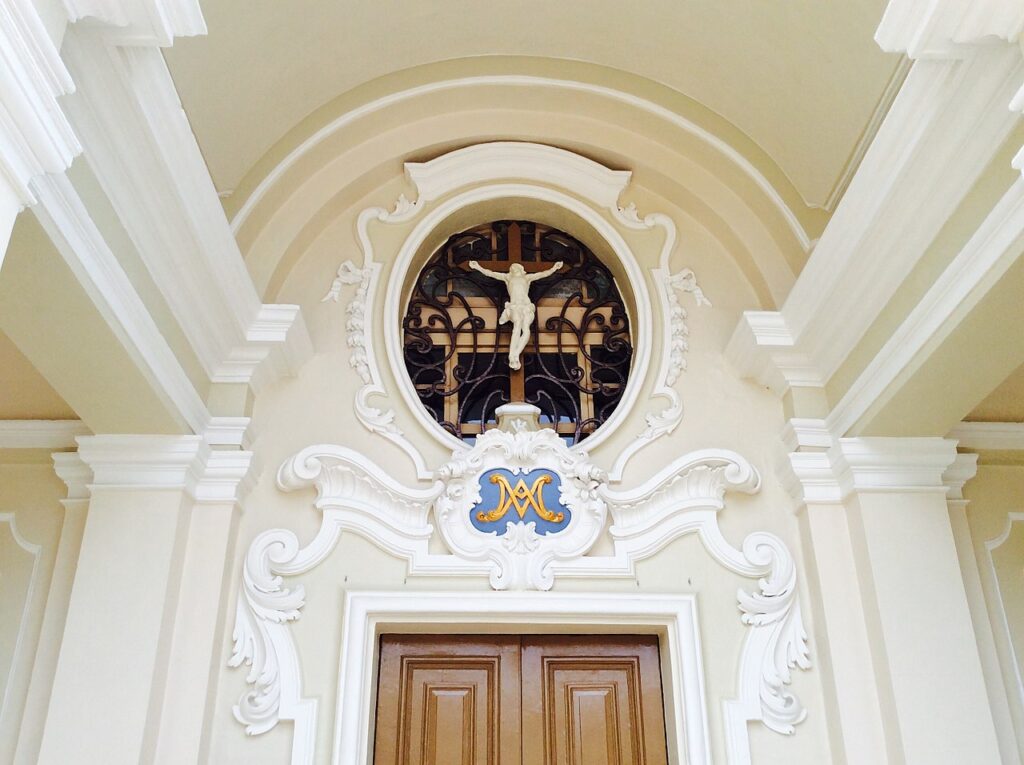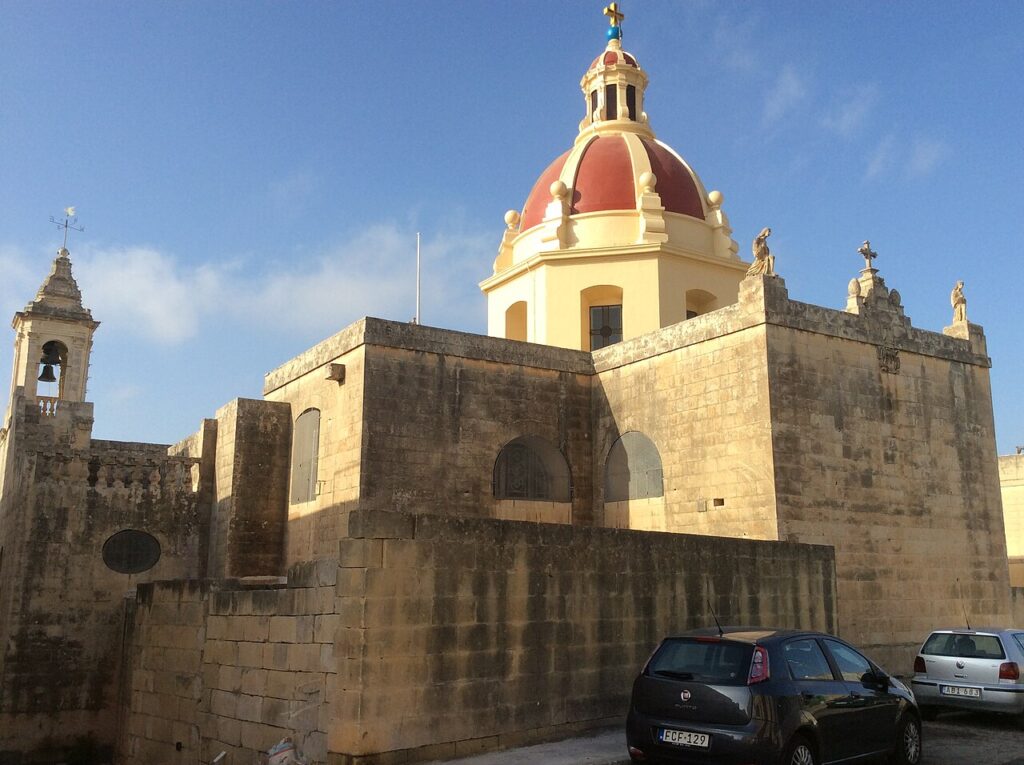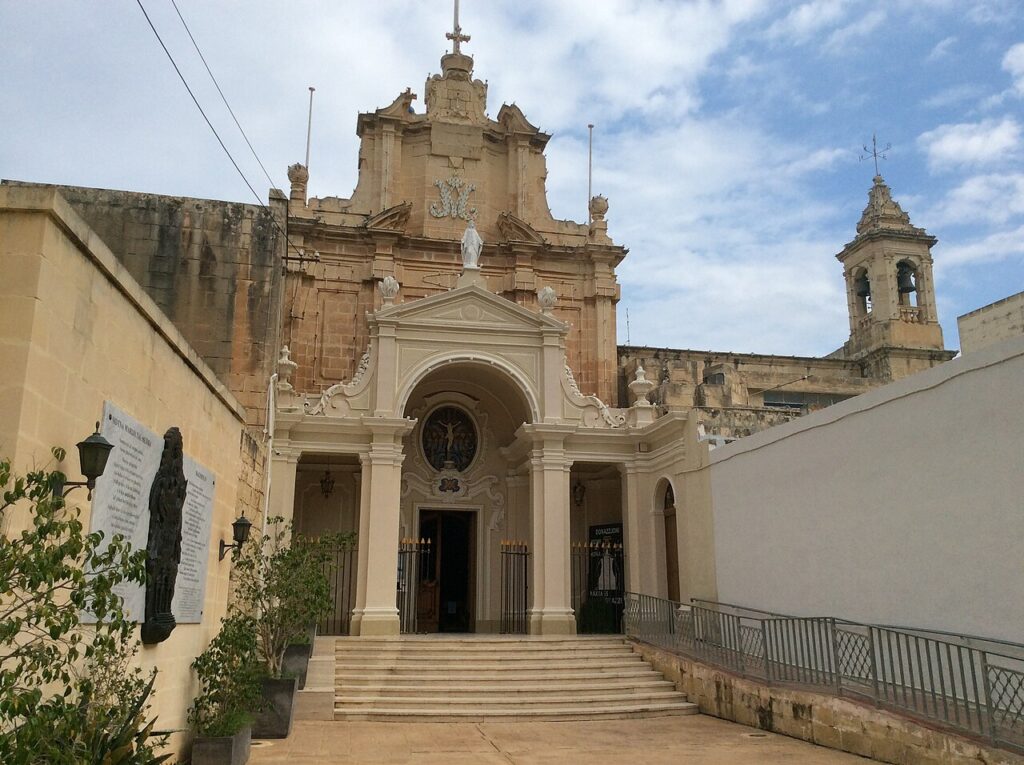
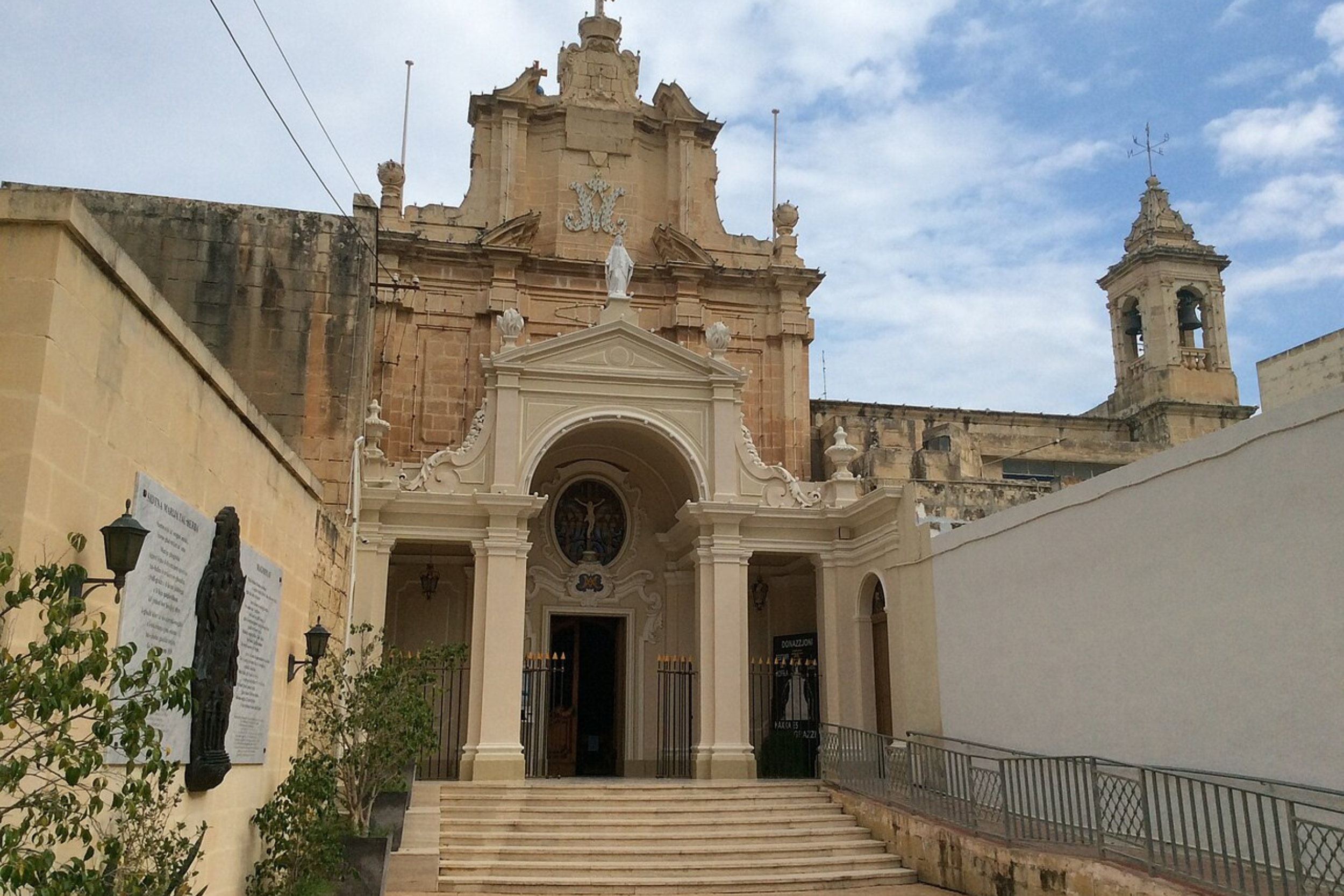
The design of the Sanctuary of Our Lady of Tal-Herba is a gem of the Baroque style, with a current structure dating primarily from 1610, though it was significantly enlarged in 1669. Situated in a quiet area of Birkirkara, this sanctuary stands as one of the oldest and most venerated places of devotion in Malta. Unlike the large parish churches of the city, this temple stands out for its atmosphere of recollection and its fame as a place of miraculous healings, having been built over a much smaller 15th-century chapel to accommodate the thousands of pilgrims who arrived from all over the island.
A Center of Faith and Miracles
The Sanctuary of Tal-Herba represents the deep connection of the Maltese people with the Virgin Mary. Its facade is an example of restrained Baroque elegance, with stone details that invite prayer and peace. The name Tal-Herba has a fascinating historical origin; according to local tradition, it comes from the Maltese word meaning the escape, referring to a legend about the miraculous flight of Christians during an attack, or according to other versions, related to the word meaning ruin, referring to the state of the old chapel before its reconstruction. Its dome and bell tower are visual landmarks that mark this sacred corner in the heart of the central district.
The interior of the sanctuary is a unique space in Malta due to its collection of ex-voto offerings. The central element is the venerated image of the Virgin and Child, a painting that has been the object of pilgrimage for centuries. What makes this temple truly special is the quantity of paintings and objects hanging on its walls, left by the faithful as thanks for favors and miracles received, especially those related to health and protection at sea. The interior decoration, with its marble altars and detailed frescoes, creates an atmosphere of gratitude and hope that is felt as soon as one crosses the threshold.
Beyond its architectural value, the sanctuary is a living testimony to the social history of Malta. Having been restored on several occasions to preserve its artistic treasures, it remains today one of the most visited Marian shrines outside of the massive tourist circuits. Visiting this temple allows one to discover the most intimate and devout side of Maltese culture, away from the hustle and bustle of Birkirkara's commercial areas. Consecrated as a spiritual refuge, it is an essential piece to complete the 300 points of historical interest in Malta.