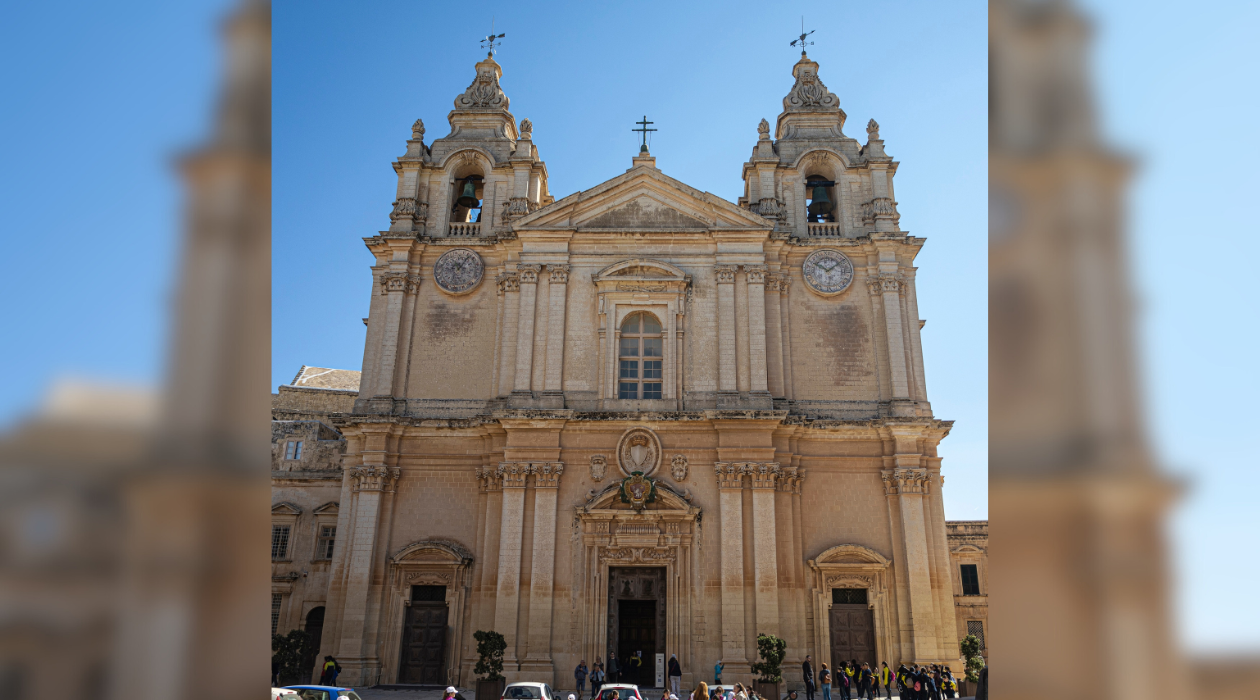
The Metropolitan Cathedral of Saint Paul in Mdina was built between 1694 and 1705. It replaced the medieval cathedral after the earthquake of 1693 caused severe damage to the building. According to tradition, the cathedral stands on the former site of the palace of Publius, the Roman governor of Malta and later its first bishop. Originally, the church was dedicated to the Assumption of the Virgin Mary.
Historical Detail
The old cathedral underwent several modifications over time. At the beginning of the 17th century, a sacristy was added, and between 1679 and 1682, the Maltese architect Lorenzo Gafà built a new choir. After the earthquake of 1693, that section remained standing and was later incorporated into the new cathedral, whose design was inspired by the Roman church Il Gesù.
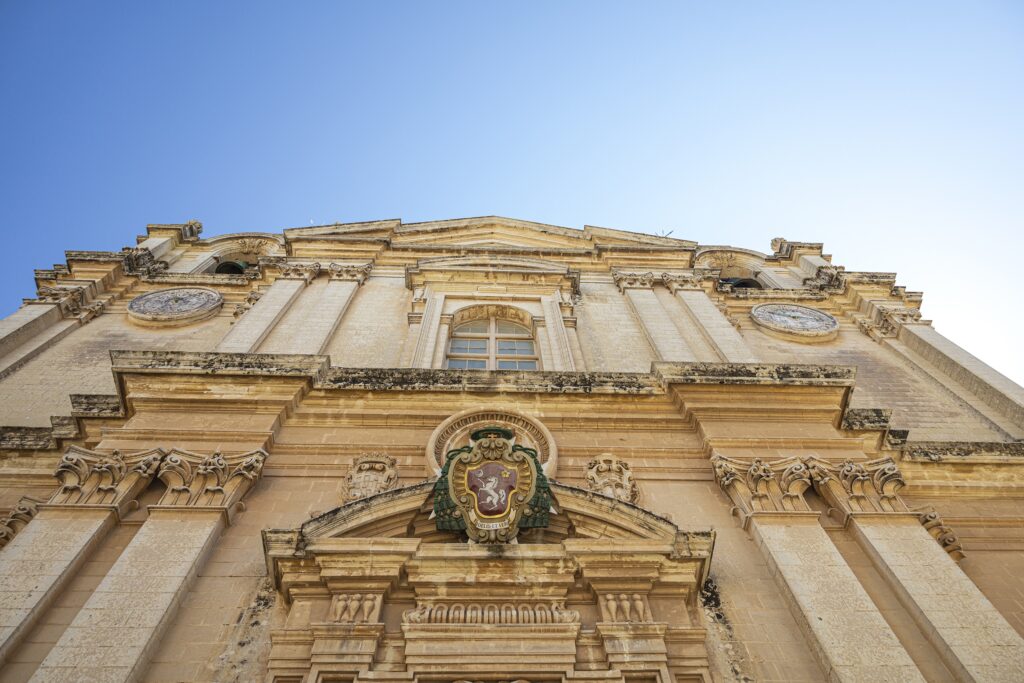
The new façade is characterized by its monumental composition, featuring a central dome and two bell towers. Situated at the highest point in the center of Malta, it symbolized the importance of the Church and the bishop. The façade has two levels divided into three sections, decorated with Corinthian-style pilasters on the lower level and composite pilasters on the upper, although large unadorned surfaces predominate. On the ground floor are the main entrance and two side entrances.
Above the central entrance appear the coats of arms of Bishop Cocco Palmieri and Grand Master Ramón Perellós, under whose mandate the church was rebuilt. The main door is decorated with statues of Saint Peter and Saint Paul, created by the Maltese sculptor Melchiorre Gafà. On the upper level, a large central window stands out, flanked by two bell towers housing six bells; the oldest in the country, called “Petronilla,” was cast in Venice in 1370. The clock was installed in 1888 by the Maltese clockmaker Michelangelo Sapiano, and in 1713 an elevated plaza with a staircase was added in front of the building.
The dome, built in 1705, is the most prominent feature and is considered Gafà’s masterpiece. It rises on a semicircular drum decorated with large volutes and is crowned by a lantern fitted with small windows.
Art and Conservation in the Cathedral of Saint Paul in Mdina
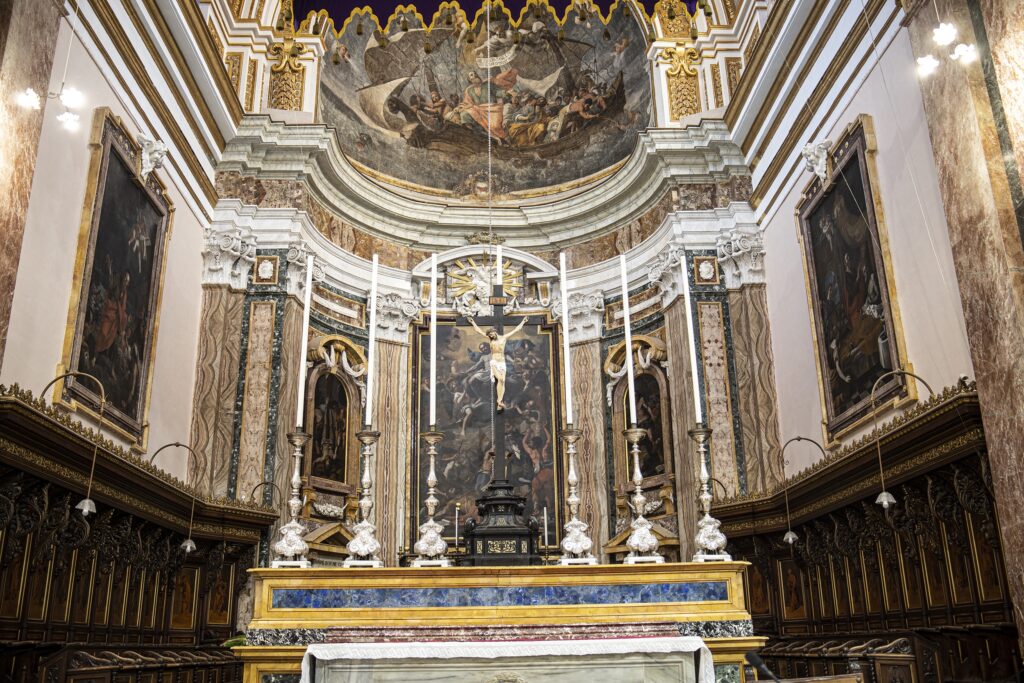
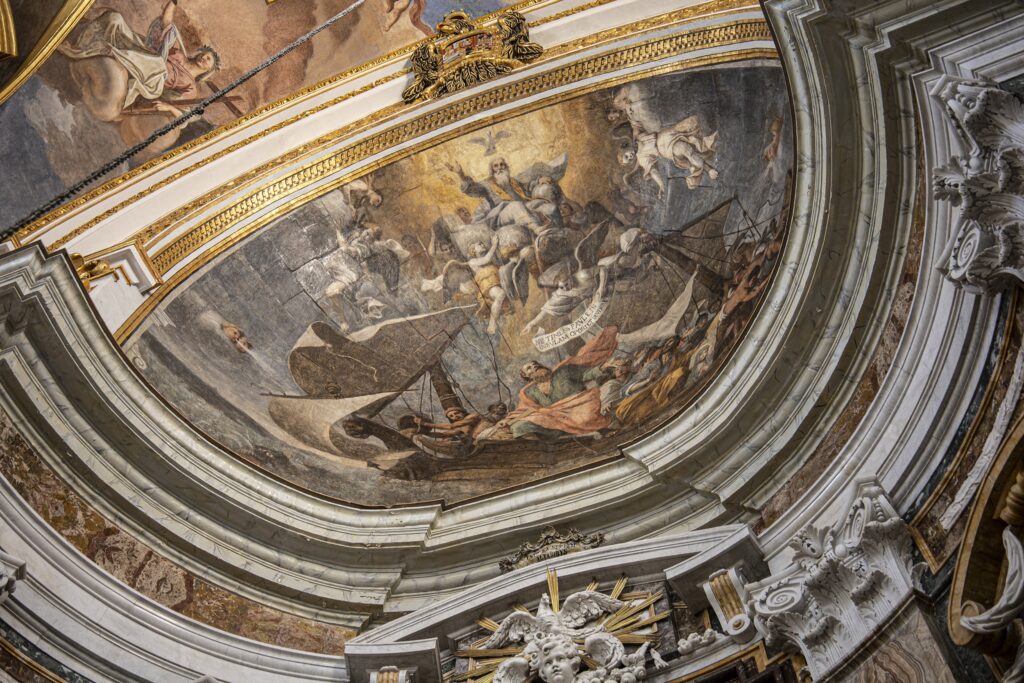
The Cathedral of Saint Paul stands out for its great artistic richness, evident in its decorative marbles and mural paintings. Notable among these are the works in the choir by Mattia Preti, one of the most important artists in 17th-century Malta. Equally remarkable is the large fresco on the central vault, depicting scenes from the life of Saint Paul, painted in 1794 by the Sicilian brothers Vincenzo Manno and Antonio Manno, who also decorated the side chapels and the choir.
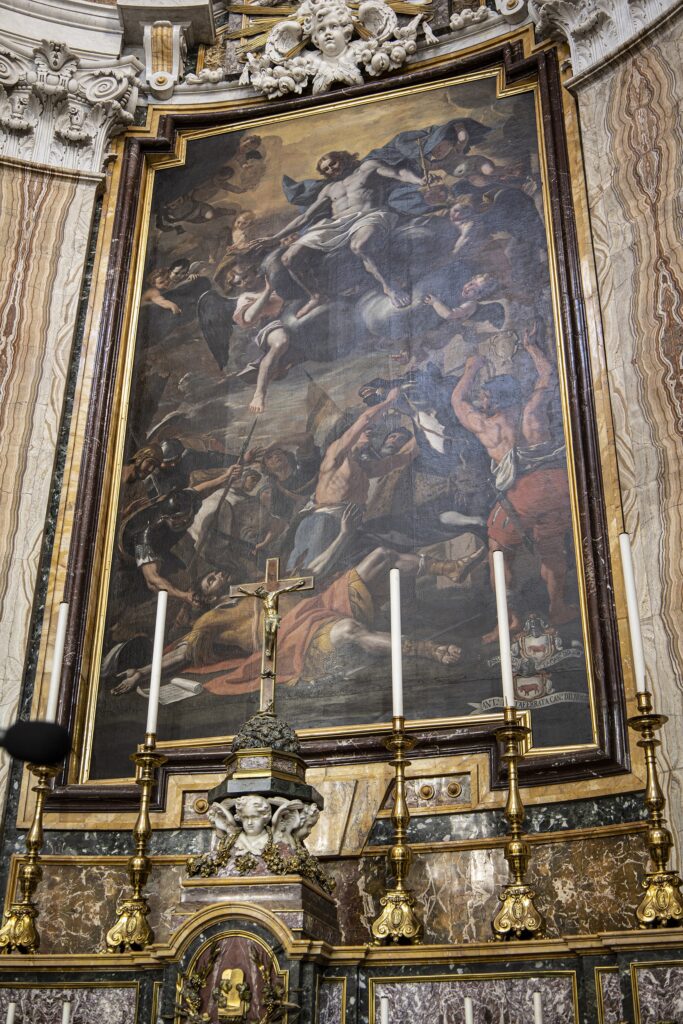
The main work of the church is The Conversion of Saint Paul, a Baroque oil painting created in 1682 by Mattia Preti. The painting depicts the moment when Paul falls from his horse, blinded by a divine light on his way to Damascus, while Christ appears in the sky surrounded by angels. The commission was made by the Testaferrata family, whose coat of arms appears at the bottom of the painting.
Recently, a project co-funded by the European Union promoted conservation work to restore the frescoes and the apse, aiming to halt deterioration and ensure the preservation of this valuable artistic heritage for the future.